The pan in our kitchen has been in near-daily service for two years. My wife cooks everything in it — stir-fries, braises, whatever the meal calls for. When I finally looked closely, the coating was in bad shape: scratched, patchy, barely recognizable.
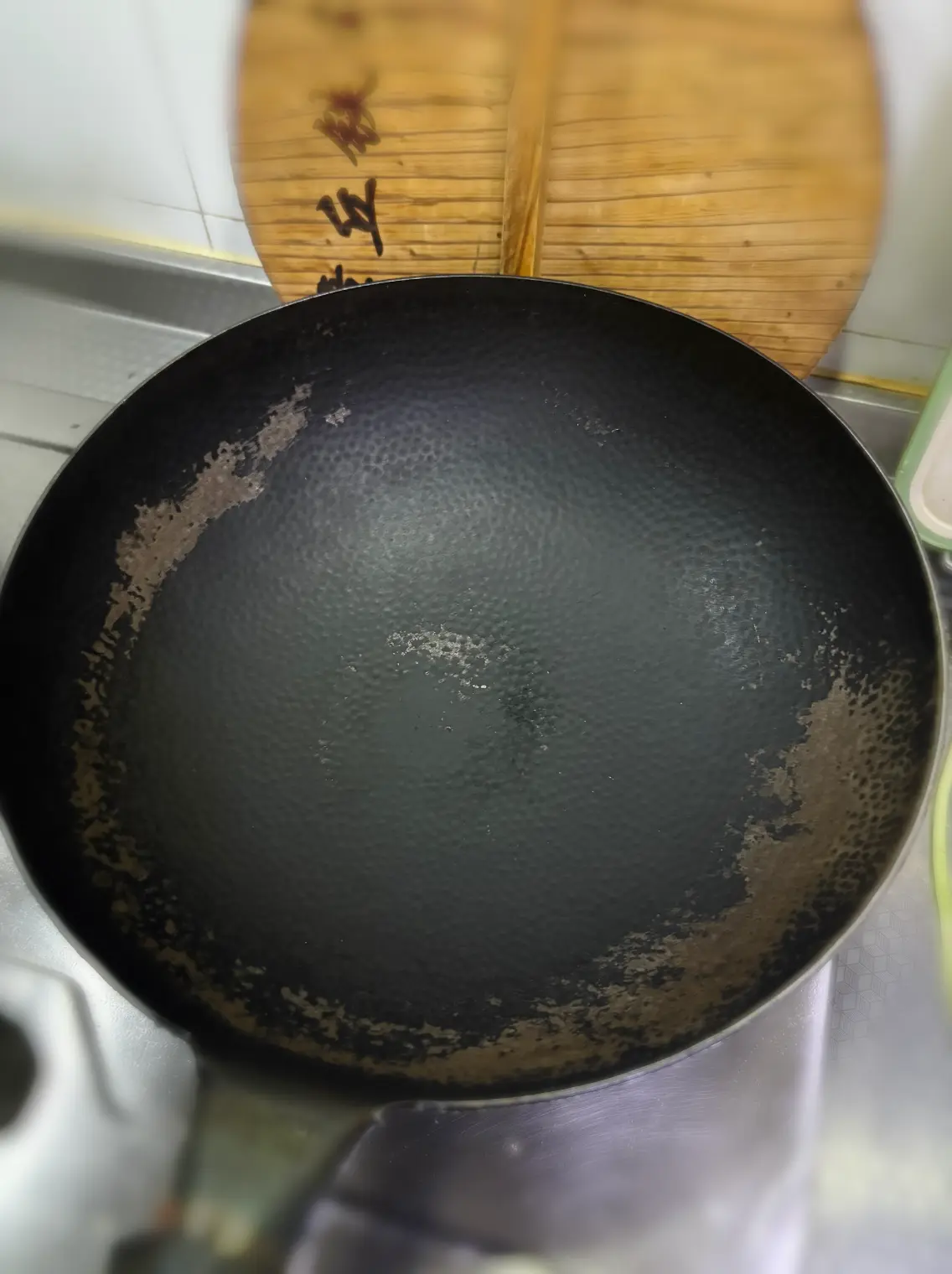
A new pan would have been the easy answer. But the body itself is iron, so it seemed worth trying to bring the thing back. There's that saying about clothes — three years new, three years old, three more years of patching — and it applies to cookware more often than people admit.
One warning before anything else: a pan with a damaged non-stick coating should not be re-seasoned. Once the coating is compromised, the usual advice is to replace the pan. I went ahead anyway, on the reasoning that the iron underneath was still sound.
I worked from a tutorial by an experienced cook from the northeast, who walks through stripping, re-seasoning, and oiling a worn pan so it behaves like new. Start to finish, it took about two hours.
Burning off what's left
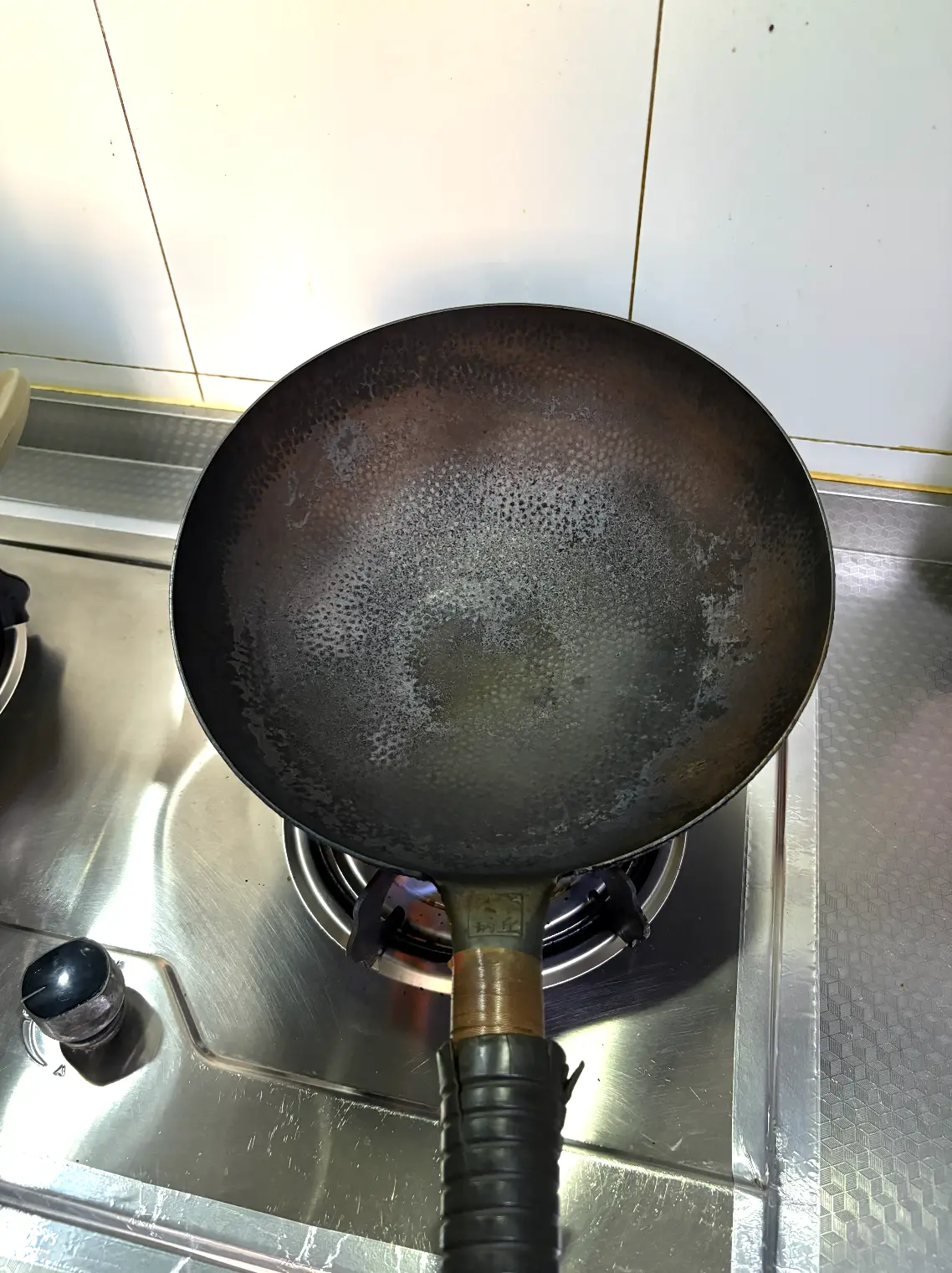
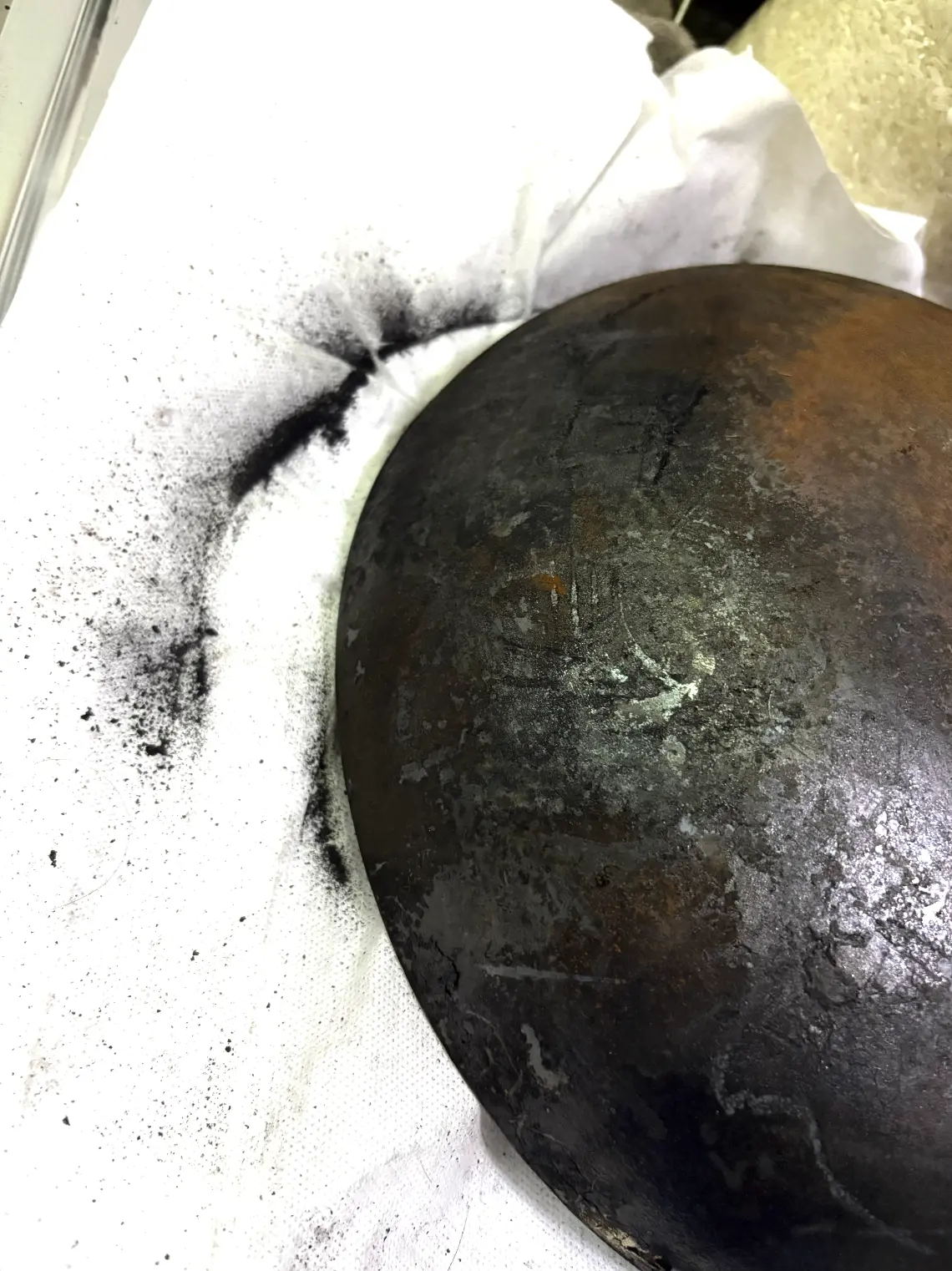
Holding the pan over the burner and rotating it constantly, I watched the coating carbonize — visibly, in patches, as it turned to ash.
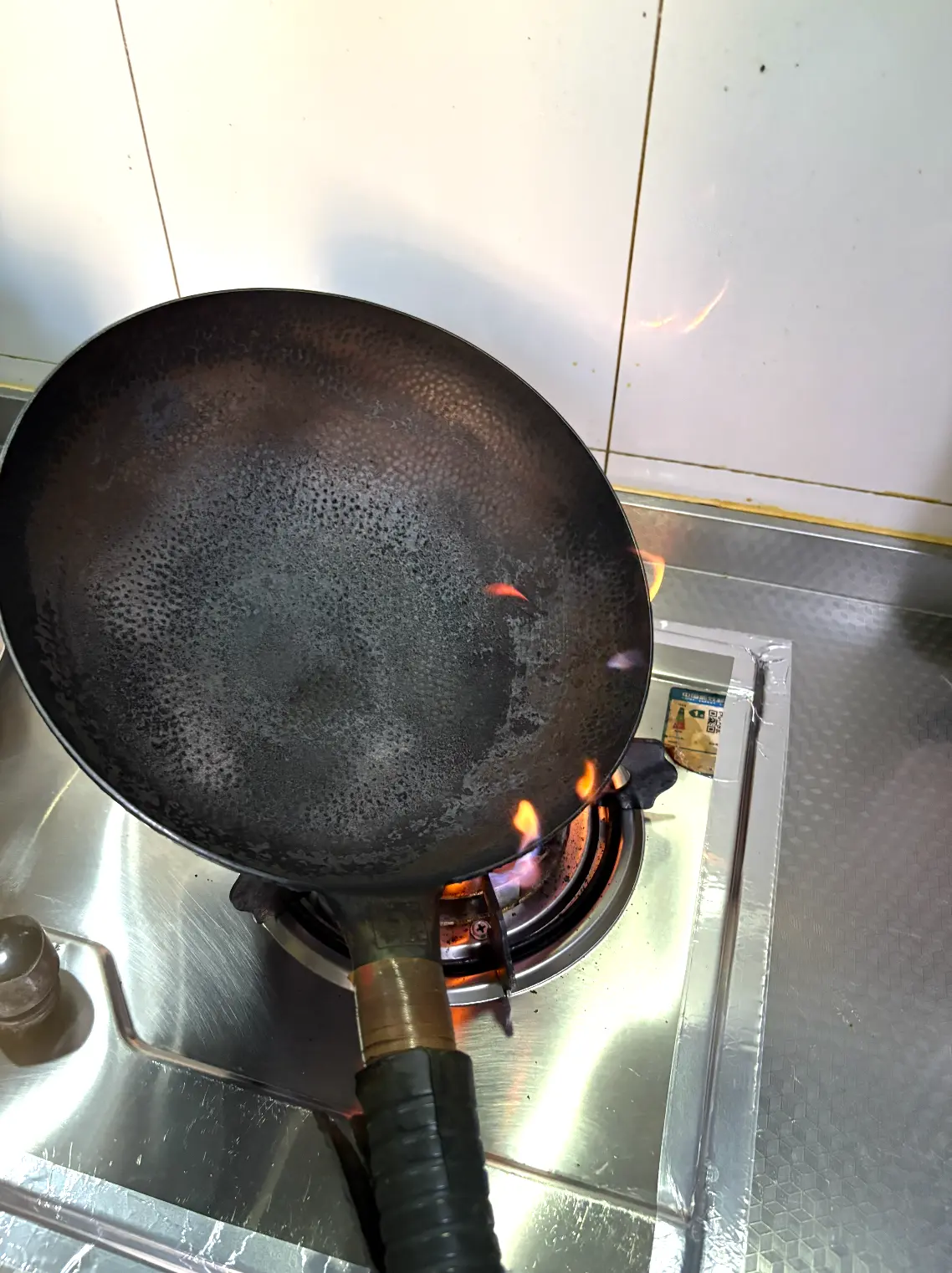
After a good long burn, I went at the inside with sandpaper. Steel wool isn't really recommended, but it was what I had on hand, so steel wool it was.
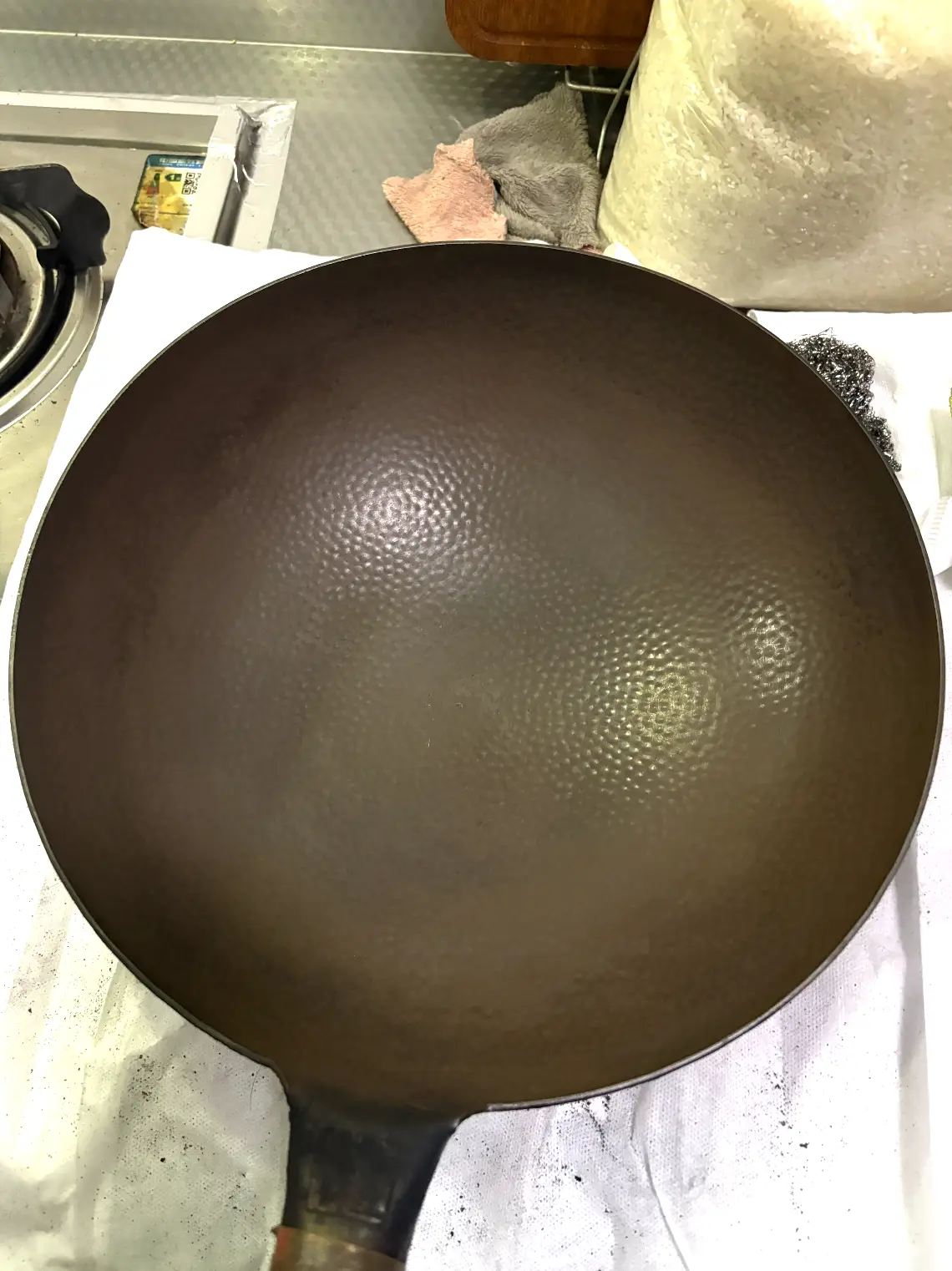
Scrubbing left obvious rust streaks. A rinse under water deals with those — every pan bottom carries its share of grime, and you just keep scraping until it's gone.
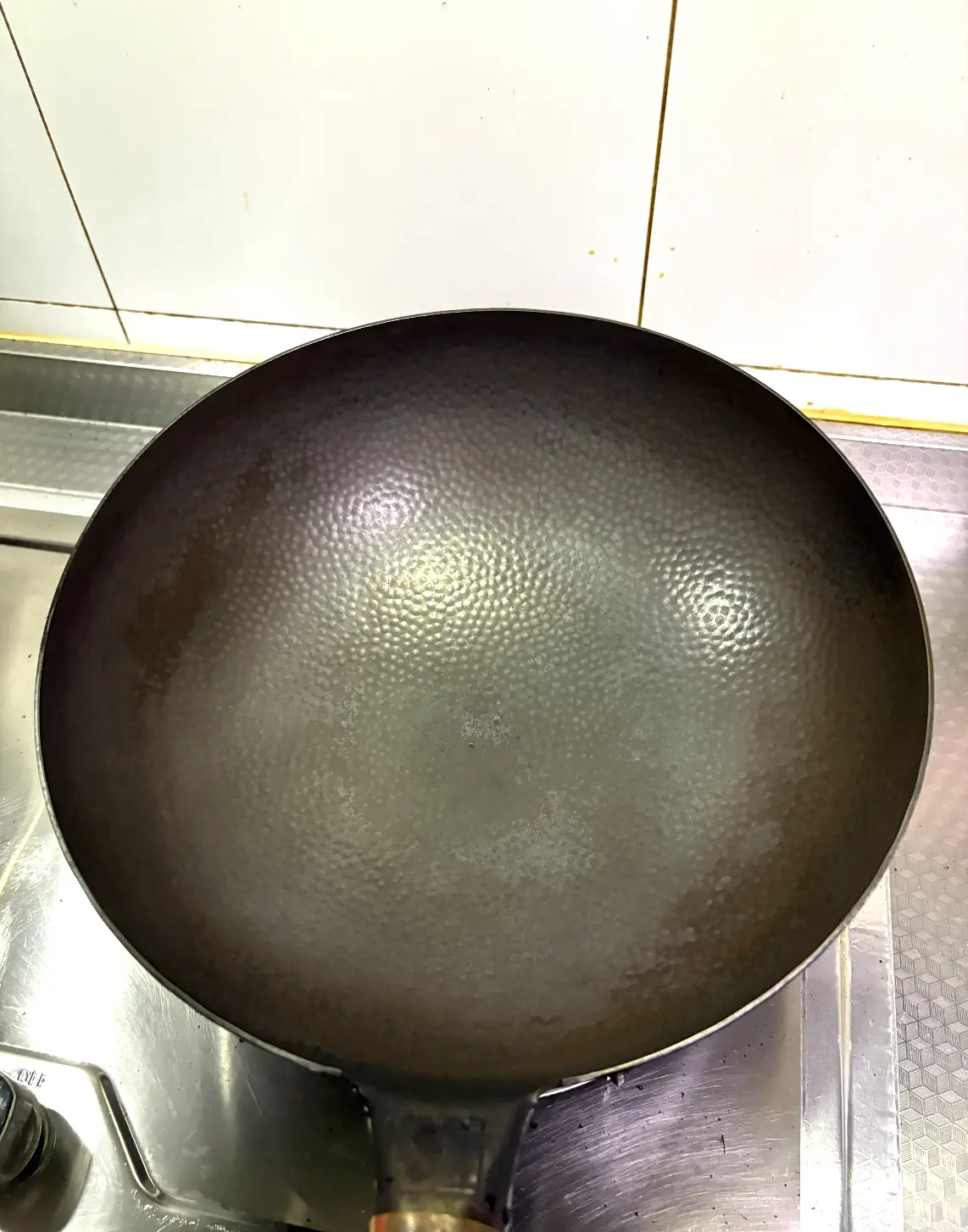
Then wash the inside with water — dish soap is fine at this stage — scrub it clean, and dry it thoroughly.
Rebuilding the surface with fat
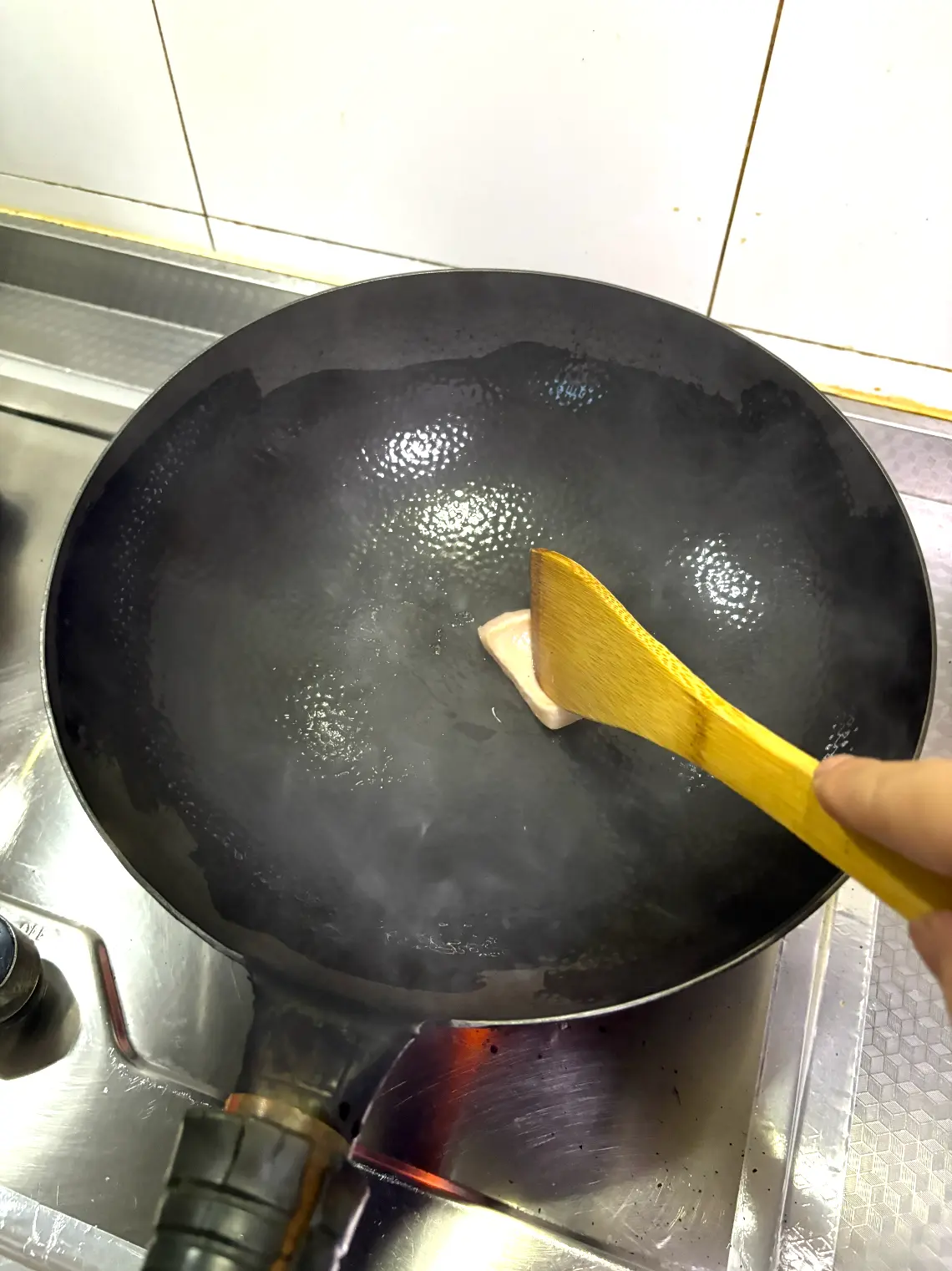
Get the pan hot and rub it down with pork fat. Two rounds.
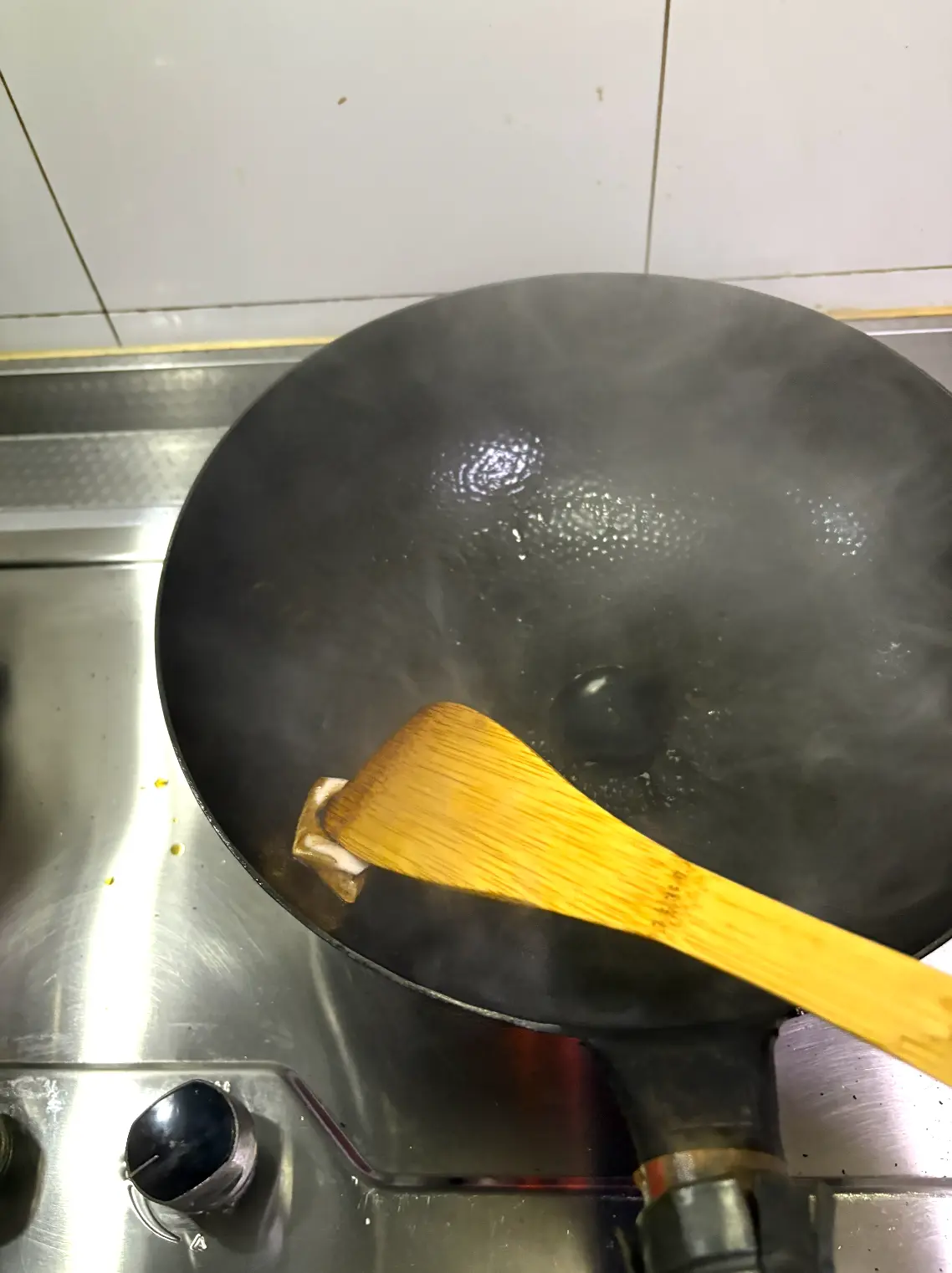
Wipe, wipe, wipe.
Pour off the excess fat and rinse with water. Hold off on the dish soap this time.
There's one step I didn't photograph: a final pass with cooking oil. Press a paper towel against the pan with a spatula and push the hot oil around the whole interior so it coats evenly.
Pour off the oil, rinse with clean water, and the pan is seasoned again.
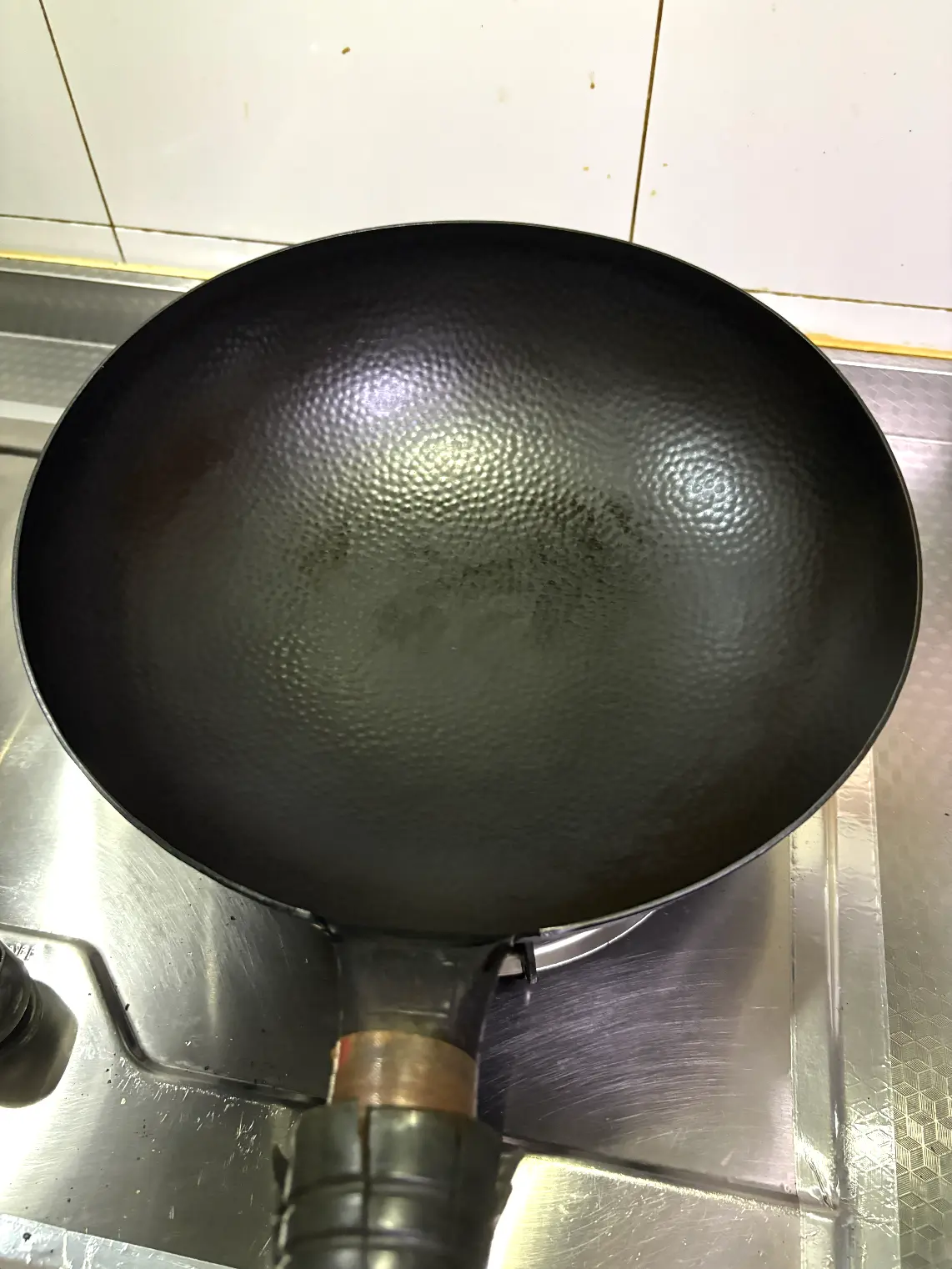
Keeping it that way
- A stir-fry pan stir-fries. Don't use it for boiling or stewing — long stretches of liquid strip the oil layer back off.
- Wash it promptly and dry it right away. If you don't mind the extra step, wipe the inside with a paper towel and a little oil.
- Dish soap is fine. Steel wool and other hard abrasives are not; they'll take the seasoned layer right off.
Back to full strength.
Skill +1
Sense of accomplishment +1