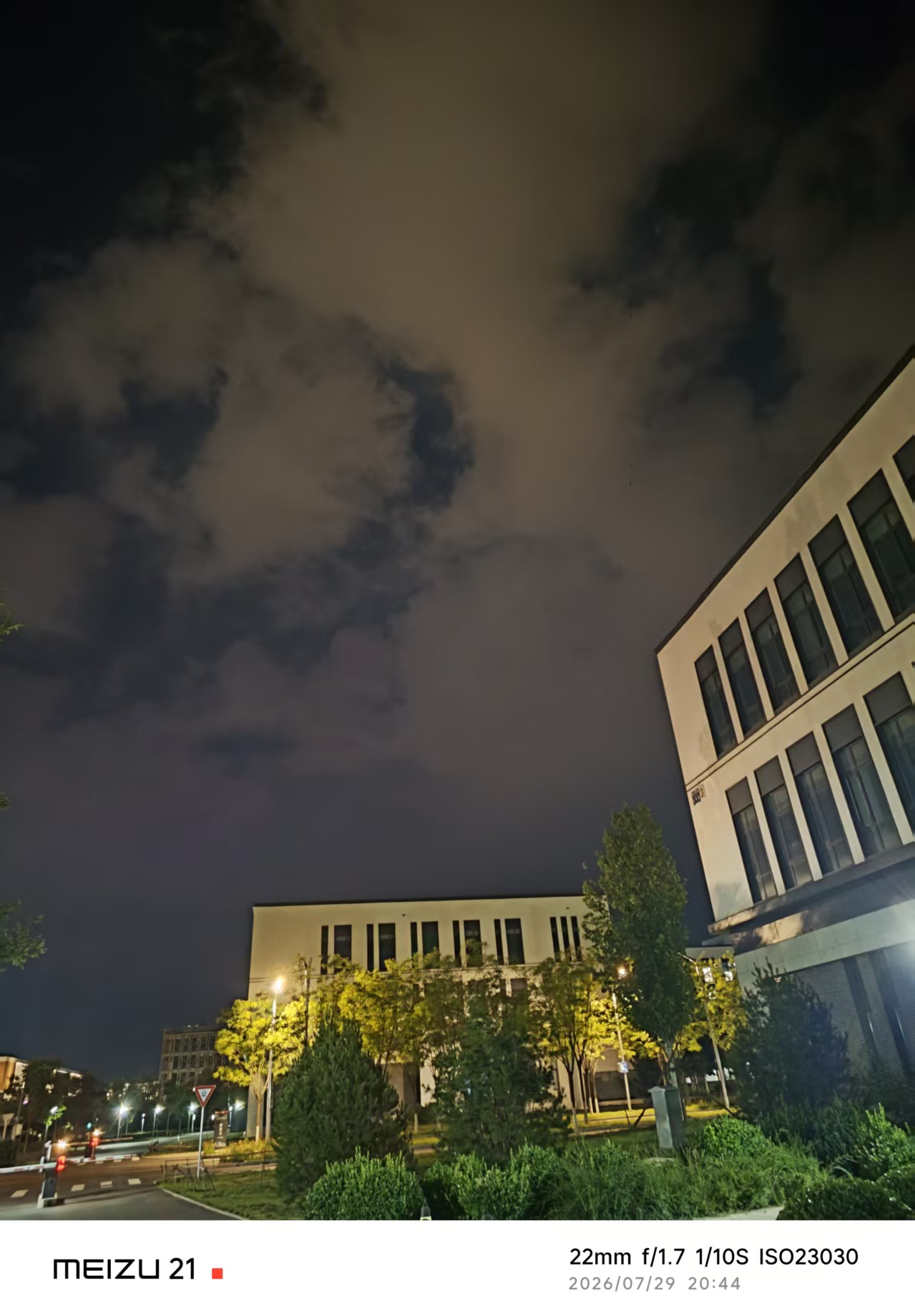
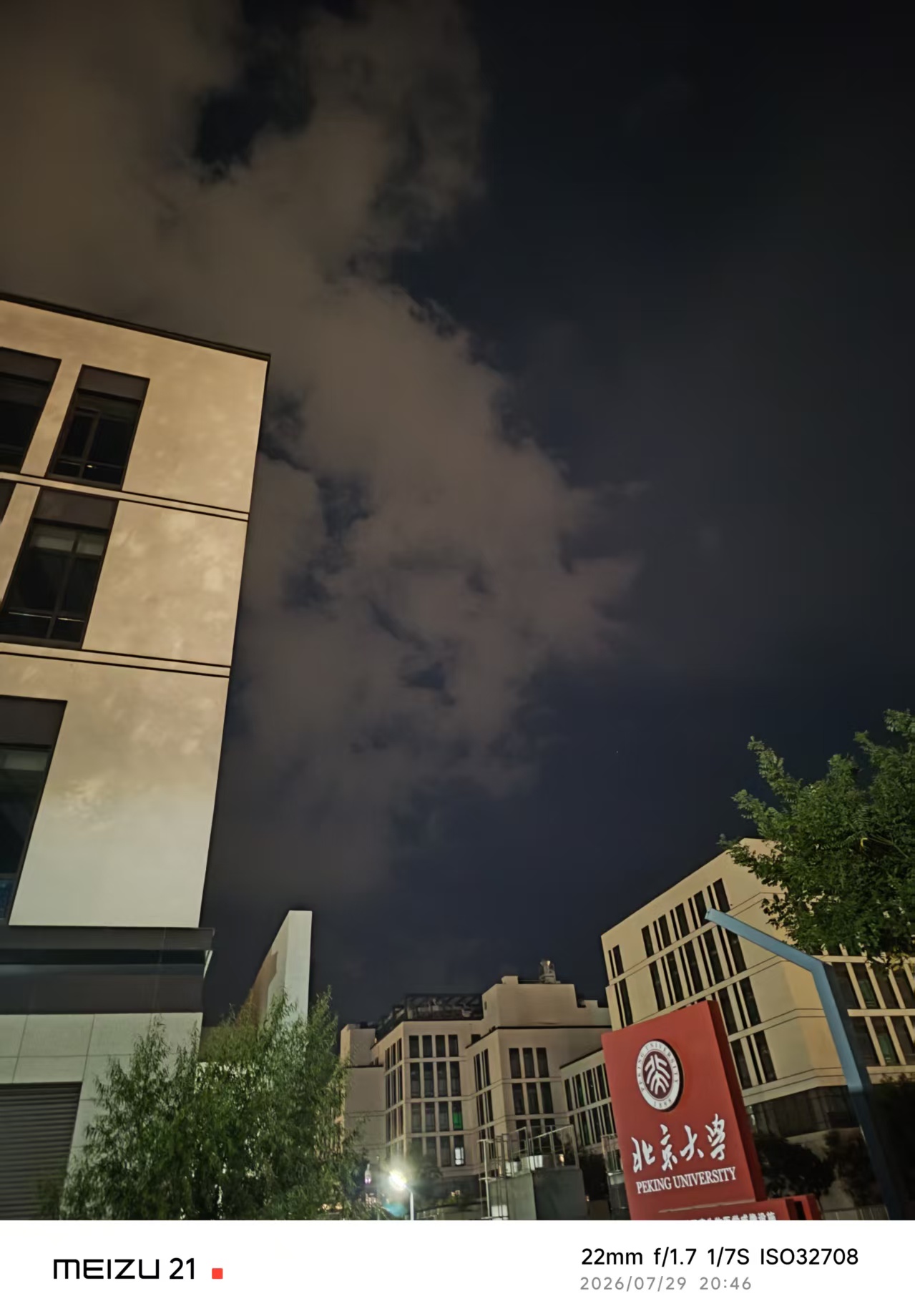
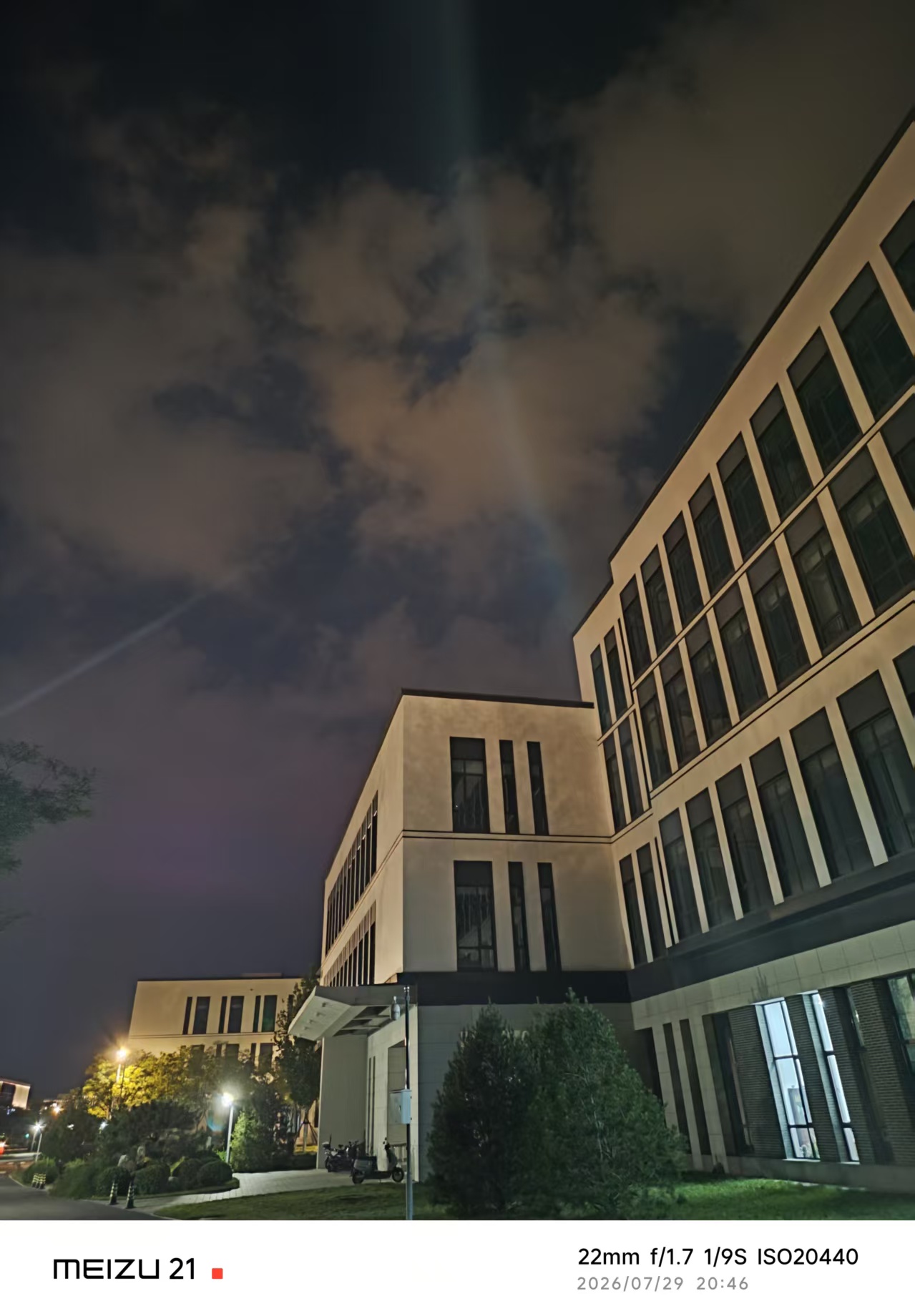
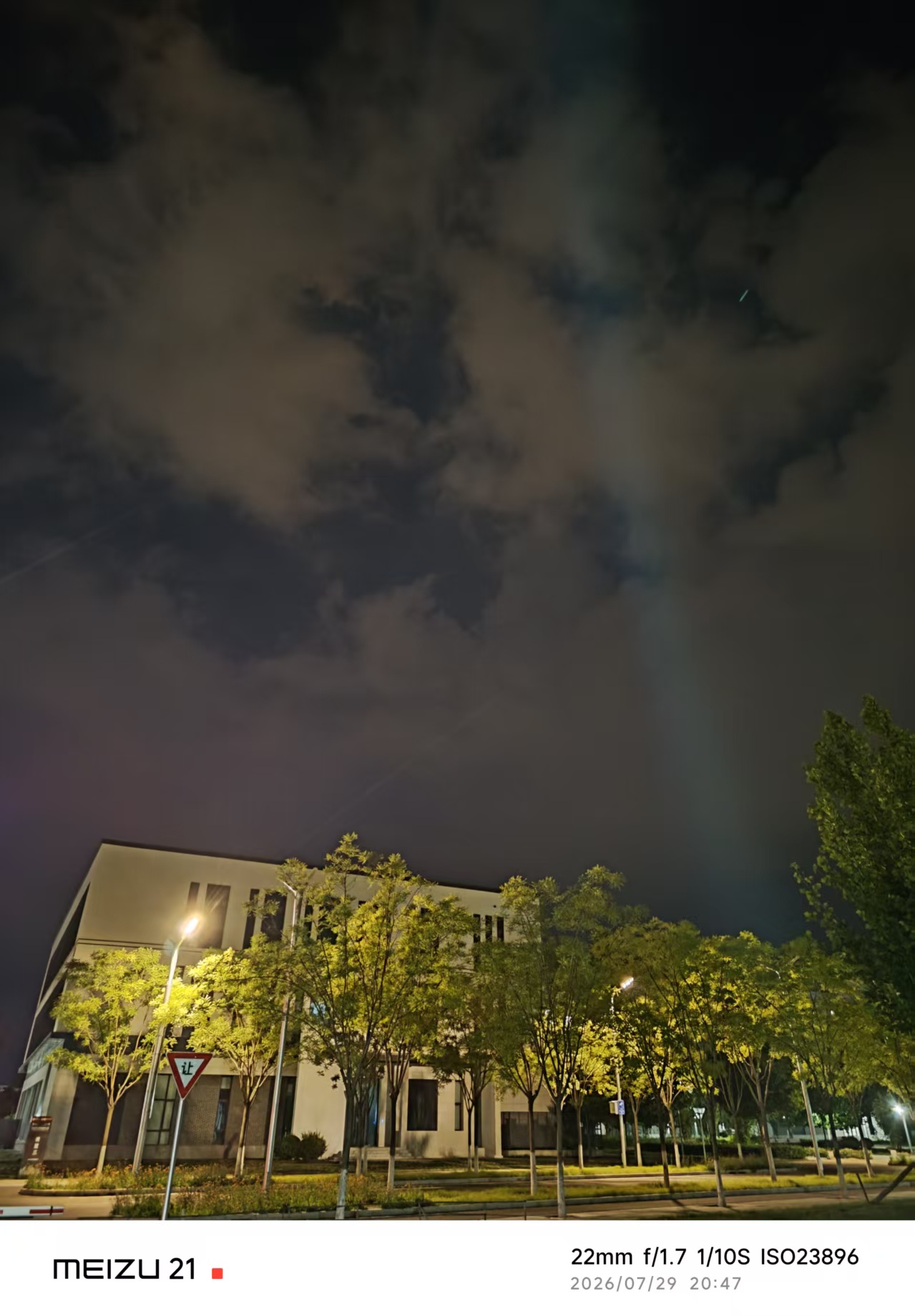
It was the first time in my life I had ever paid attention to clouds at night — and the first time they felt so close, hanging just overhead. That was the evening of July 29, 2026, in Huairou.
By then I had been in Beijing 220 days. It was the fifth day of the middle phase of the year's hottest stretch, the sanfu. At nine o'clock the room read 26 degrees Celsius, close and damp, perhaps left over from the thunderstorm that had passed through the night before.
In the small park in front of Building 4 at NBIC, the cicadas that had been shrilling all summer from the tall plane trees had gone quiet — most of them, anyway. They were nearing the end of their lives. I had heard that these small summer singers see only spring and summer, never autumn or winter. As brief as that.
The larger cicadas had started up in the past couple of days, loud but breaking off every so often. After a whole summer in Huairou listening to the smaller ones, I had come to prefer their sound.
The streetlights came on and lit up this stretch of suburb in Huaibei Town. Everything was still. Only the scattered cicadas, and now and then the far-off drone of a plane somewhere high above. I walked out of Building 4, glanced up, and there it was — a ceiling of cloud dropped low over my head.
Behind it, the sky was a dark blue. Across the lower air above the research buildings drifted great pale sheets of cloud, thin as mist, scattered and loose, filling most of what I could see. The lamps may have tinted them: overhead, these night clouds carried a faint dull red.
I walked slowly out and south along the empty Huiyun West Road, a dozen meters or so, and took from my trouser pocket the pack of Baisha with three cigarettes left in it. I had picked it up two mornings earlier outside the dining hall, when it still held four. In a city that isn't yours, it doesn't do to show too much goodwill to the people around you — so these few cigarettes would not be going back to their owner.
I lit one slowly, drew on it lightly, let the smoke out of my lungs at an easy pace. It spread around me and became its own little night cloud, curling at my side.
This was the first night cloud of my life, and it lay over the July sky of Huairou. Standing beneath it, the smoke I exhaled mixed with what was on my mind and thinned into a pale white haze that seemed to drift south with the plane overhead. My hometown, Henan, is a thousand kilometers south of Huairou.
Seas turn to mulberry fields; the place remains and the people are not the same. In a world that changes this fast, perhaps circumstances always outrun us, until even the things I might mourn have dissolved.
Standing at the crossing of a forty-five-year life, my feelings about home swing between wanting to draw near and wanting to get away. What I feel about where I am now — Huairou, Beijing — runs oddly parallel: sometimes I want to stay in this lonely, beautiful place, and sometimes I want to leave it decisively and go meet whatever scenery comes next.
Middle age: the heart's road is sometimes dark, sometimes lit; sometimes bewildered, sometimes very quiet.
On a night like this one, the soft yellow streetlamps scattered along Huiyun West Road, the insects chirring in the tender green Kentucky bluegrass, the blanket flowers swaying at the roadside in the wind, the July night wind of northern China, the white research building standing silently — and the night clouds over Huairou — all of them listened to the tangled thoughts of a man far from home.