If you only want the short version, here it is: most fashionable consumer walkie-talkies sold under popular brands—including, but not limited to, Xiaomi and BeeBest—use the 430–440 MHz band, and in some models the 144–148 MHz band as well. These are often marketed as “long-range channels.” In ordinary consumer use, those frequencies are not general-purpose walkie-talkie channels. Using them without authorization is illegal.
Under the Regulations of the People’s Republic of China on Radio Administration, unauthorized use can lead to an order to correct the violation, confiscation of the equipment and any illegal gains, and a fine of up to 50,000 yuan.
People usually ask the same question right away: if using them this way is illegal, why are they openly being sold? The answer is less mysterious than it looks.
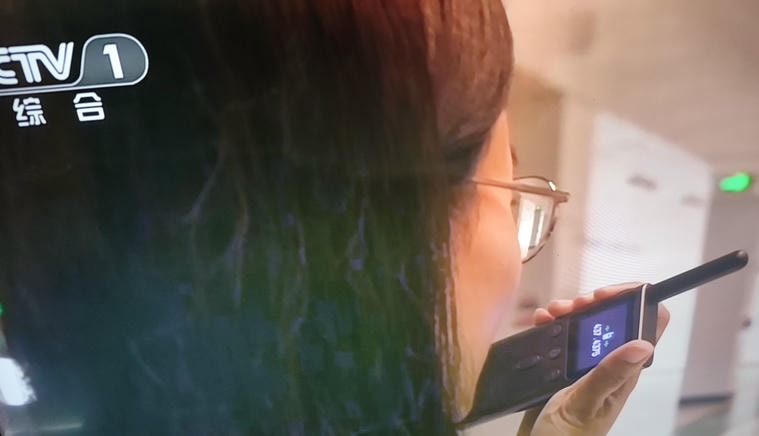
Why this is illegal
The issue starts with frequency allocation.
According to the current national radio frequency allocation rules in China, the 430–440 MHz band used by these so-called long-range channels is mainly assigned to three radio services:
- radiolocation
- aeronautical radionavigation
- amateur service (secondary)
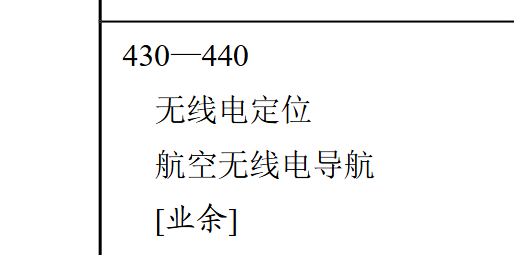
Some models also support 144–148 MHz, and that band likewise includes the amateur service.
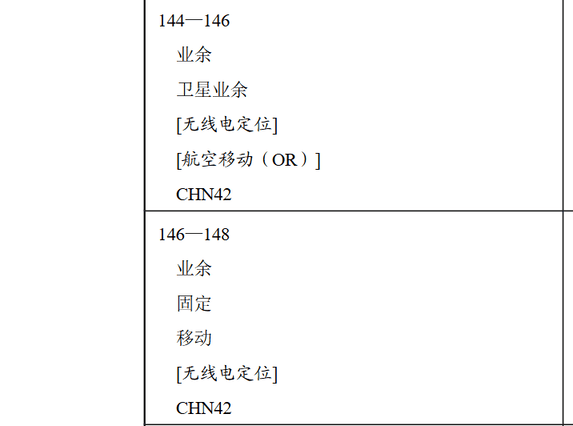
The key word here is “amateur.” In this context it does not mean casual use by the public. It refers specifically to the amateur radio service.
The official definition of amateur service in the same regulatory framework contains two points that matter most:
- it requires formal approval
- it must not involve communications for profit

So what counts as “formal approval”?
A handheld walkie-talkie is, legally speaking, a type of radio station equipment. Under the current 2024 rules governing amateur radio stations in China, anyone setting up and using an amateur radio station must apply to the radio regulatory authority and obtain an amateur radio station license. The operator must also demonstrate the required technical competence by passing the relevant examination and receiving a certificate.
That means if you want to use the 430–440 MHz or 144–148 MHz channels on these devices lawfully, you are supposed to do so under the amateur radio framework: pass the exam, obtain the operator qualification, and apply for the station license. On top of that, the communication itself cannot be for profit-making purposes such as business dispatch, taxi operations, or other commercial traffic.
If you use such channels without authorization, the legal risk is not theoretical. Besides confiscation and fines under radio regulations, China’s Public Security Administration Punishments Law also contains related provisions. Unauthorized establishment or use of radio stations can, in some cases, lead to administrative detention.
So the bottom line is straightforward: using these internet-famous walkie-talkies on those bands without the required authorization is illegal.
Then why are they allowed to be sold?
This is where most of the confusion comes from. Many people assume that if a product can be purchased through normal retail channels, then ordinary use must also be legal. But that assumption does not hold.
The device itself is not automatically illegal to own. If a licensed amateur operator uses it within the proper regulatory framework, there is no problem. That is why the product can be legally sold.
The simplest comparison is a car. Anyone with enough money can buy one. But if you buy a car and drive it without the required license and registration, that is still illegal. Owning equipment and using it lawfully are not the same thing.
Some people try to dismiss this with jokes like, “Do I need an eating license too?” But the logic is flawed. Eating affects only yourself. Unlicensed driving can hurt others. Improper radio use can interfere with lawfully operating stations and services.
Manufacturers understand this distinction very well.
If you check the manual, the online documentation, or even some product pages, you may find a disclaimer in small print saying the device is an amateur radio product and that lawful use requires the proper qualification.
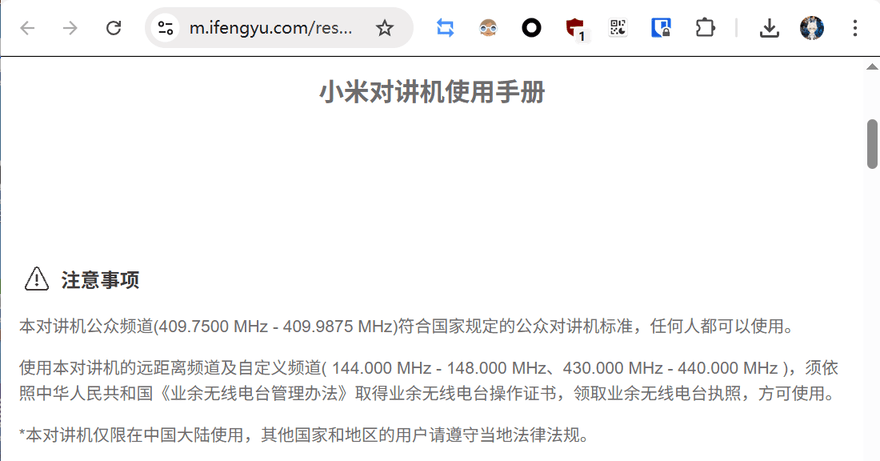
That tiny note is doing a lot of work. It suggests the manufacturer knows perfectly well that legal use requires a license, but the warning is often buried where few buyers will notice it. Many users either never read the manual, misunderstand the term “amateur walkie-talkie,” or simply trust the brand and assume a mainstream company would not sell something that needs special authorization.
If trouble comes later, the manufacturer can always point to that one line and say the warning was there.
The problem gets worse when marketing pushes these radios into obviously commercial scenarios. Some advertising has presented them as suitable for work settings, even though amateur radio rules explicitly prohibit profit-related communications.

So it is not just user misunderstanding. Manufacturers deserve part of the blame as well.
Why this odd situation keeps happening
The deeper reason is that light-duty walkie-talkie use in mainland China has been distorted for a long time. Several factors overlap:
- The public walkie-talkie standard in the 409 MHz range went a long time without meaningful updates.
- The legal shared-use 406 MHz walkie-talkie framework arrived very late, with the new standard only appearing in 2025.
- After the 2009 shift from analog to digital in certain compliant commercial radio segments, production of compliant analog commercial radios was no longer allowed, which did not align well with real industry demand.
- Manufacturers saw compliant 409 MHz public walkie-talkies as underpowered and hard to sell, so fewer of them were produced.
- Digital radios cost more, which encouraged some makers to cut corners by wrapping cheap analog sets in the label of amateur radio equipment.
- Public education has been weak, so many buyers do not even know that some radio use requires licensing.
Put together, these factors created the strange market now seen online: noncompliant or easily misused radios are everywhere, while fully compliant mainstream alternatives are harder to find and less attractive to casual buyers.
It is not an exaggeration to say that, aside from cellular-network walkie-talkies, a large share of radios sold on major e-commerce platforms exist in this gray area. And once trendy brands turned them into lifestyle gadgets, the problem became more serious because users naturally trusted the branding.
That is how you end up hearing the same excuses over and over: “I didn’t know,” or “I’m only using it over a short distance, surely nobody cares.”
What legal alternatives are available?
There are lawful options. They are just less aggressively marketed.
Public walkie-talkies
These are the traditional license-free public units often associated with the 409 MHz range. The legal frequencies are 409.750 MHz to 409.9875 MHz, with 20 channels and 0.5 watt power.
The drawback is that there are not many models on the market because manufacturers have little enthusiasm for making them. But if you can find one, this is the simplest fully legal option for ordinary short-range use. Some early Xiaomi models also included “public channels”; if those channels are actually in the 409 MHz band, they can be used legally.
Shared-use walkie-talkies
Another legal category uses 406.2–407.7 MHz, offers up to 5 watts, does not require paying spectrum occupation fees, and provides 120 channels.
Because this standard is relatively new, there are still not many products available. Xiaomi has its own shared-use digital model, but there is an important caveat: it uses a so-called self-developed vocoder and is not compatible with standard DMR, so protocol compatibility needs to be checked before buying.
Cellular-network walkie-talkies
These are often called SIM-card walkie-talkies, nationwide walkie-talkies, or 4G walkie-talkies. In practice they communicate through mobile network infrastructure rather than direct radio links, so they can be used without a radio license and do not violate radio administration rules.
You do have to pay ongoing network or data fees. And if you do not need off-grid communication in remote areas and can tolerate a one- or two-second delay, they are often the best practical choice—especially for urban vehicle fleets.
There are still things to watch for: devices from different brands may not interoperate if their cloud platforms are incompatible, and adding new units may require dealer provisioning. It is worth asking these questions before purchasing.
Apply for dedicated commercial frequencies
If you need interference-free business communications and you have a legal business entity—for example, a property management company, hotel, or KTV venue—you can apply to the local radio administration authority for dedicated frequencies and pay the required spectrum occupation fees.
The commonly cited cost is around 100 yuan per radio per year. Some regions, such as Guangdong, may offer exemptions or reductions for small businesses. Specific policies vary by location.
Retuning an ordinary radio to 409 MHz
Strictly speaking, this is not a fully compliant solution. But as a practical compromise, it is still better than occupying other frequencies and interfering with legitimate users.
For people determined to use common handheld radios in a lower-risk way, programming them into the 409 MHz public band is often seen as the least bad workaround.
The real takeaway
The central issue is not that all walkie-talkies are illegal, or that buying one is forbidden. The issue is that popular consumer models are often sold in a way that blurs the line between legal ownership and legal operation.
These 430–440 MHz and 144–148 MHz “long-range channels” are not ordinary public channels. They sit in amateur radio bands, and amateur radio comes with licensing requirements and limits on how the equipment may be used.
So if a stylish, internet-famous walkie-talkie looks like a simple gadget you can buy and start using anywhere, that appearance is exactly where the trap lies.