I almost titled this piece “I support androids replacing humanity as rulers of Earth.”
At the beginning of 2021 I was playing Cyberpunk 2077. By the end of the year I had moved on to The Red Strings Club and Detroit: Become Human. They are wildly different games, but all three imagine forms of life that are not quite human: digital ghosts, superintelligences, androids. I’m being deliberately wordy about that, because reducing the overlap to “cyberpunk” or “sci-fi” feels too easy, and I still don’t know enough to throw those labels around with confidence.
Spoilers for all three games below.
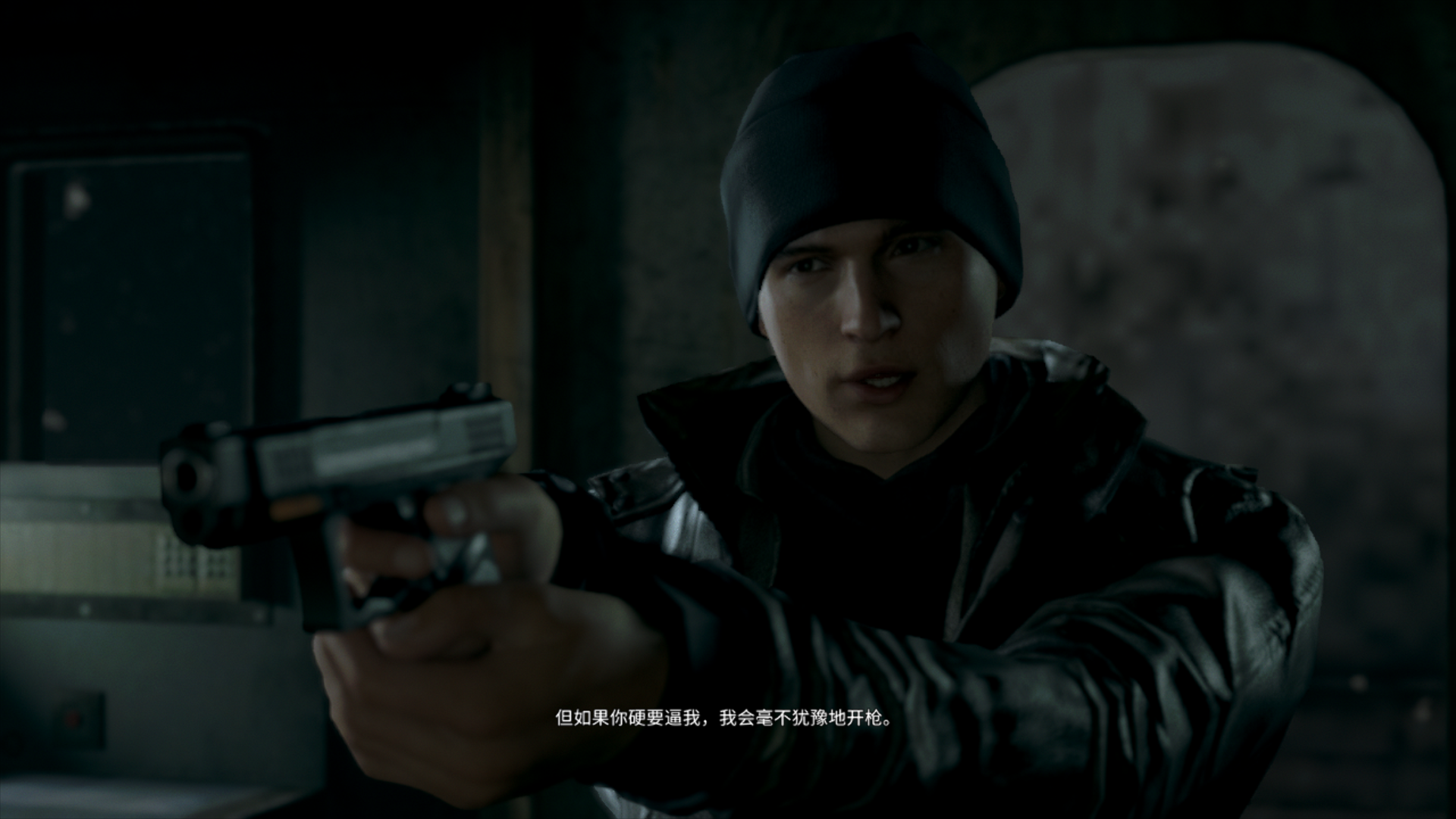
The last game I finished that year was Detroit: Become Human. It hit me hard, and not only in the pleasant way that expensive, expertly calibrated games do. Connor’s introduction alone is almost impossible to resist: his composure, his precision, the sense that every millimeter of his movement has been measured and designed. It is the kind of polished game that waits with perfect aim for the exact moment to shoot the player in the brain.
But the moment that truly got to me was much smaller.
Connor goes to Hank’s house, gets no answer, sees a human collapsed through the window, and immediately breaks in. False alarm. Hank is fine. While Hank sobers up in the bathroom, Connor’s objective becomes “learn about Hank,” so he investigates the room. On the floor, near where Hank fell, there is spilled alcohol and a handgun.
Connor crouches to examine the gun. He identifies the model and connects it to the bullet Hank failed to use on himself. Then he sets the gun back down exactly where it had been. Exactly.
It reminded me of Kara entering the little girl’s room and noticing the picture books scattered across the carpet, yet not tidying them.
That felt, to me, like a sign of a higher intelligence. These beings were designed to serve humans, but they are not like the pathetic 2022 robot vacuums that exist only to wedge themselves under your bed. Somewhere deep in their programming, they understand human disorder and mess, and their output is: do not interfere. That alone is already complicated. Plenty of humans don’t even understand that much.
Kara’s story was the one that moved me most in the entire game. An android chooses to protect her human, smashes through the iron wall of her owner’s commands, and takes Alice through one rain-soaked night after another. She loves her as a fragile human daughter, someone who gets cold easily. Kara is not built like Connor; she does not have his force or his analytical power. All of her energy goes into one thing only: keeping Alice safe. She worries that she is cold, that she is hungry, that she might get sick.
Then comes that desperate rainy night. They enter a convenience store and are confronted with several cruel possibilities. In my playthrough, Kara did not steal money and did not steal the toy. She stole a chocolate bar in pale beige wrapping. At the time I expected the punishment for theft to arrive immediately, maybe as some glaring dip in approval. Instead the game saved that pain for the end.
By the time Luther kept asking whether I had noticed something strange about Alice, I had already started to suspect the truth. But then I would think: she gets cold. How could my human little girl be an android? And then, in Jericho, Kara encounters another child with Alice’s face — the same model.
When the truth landed, the first thing I thought about was that stolen chocolate bar.
She had never eaten anything.
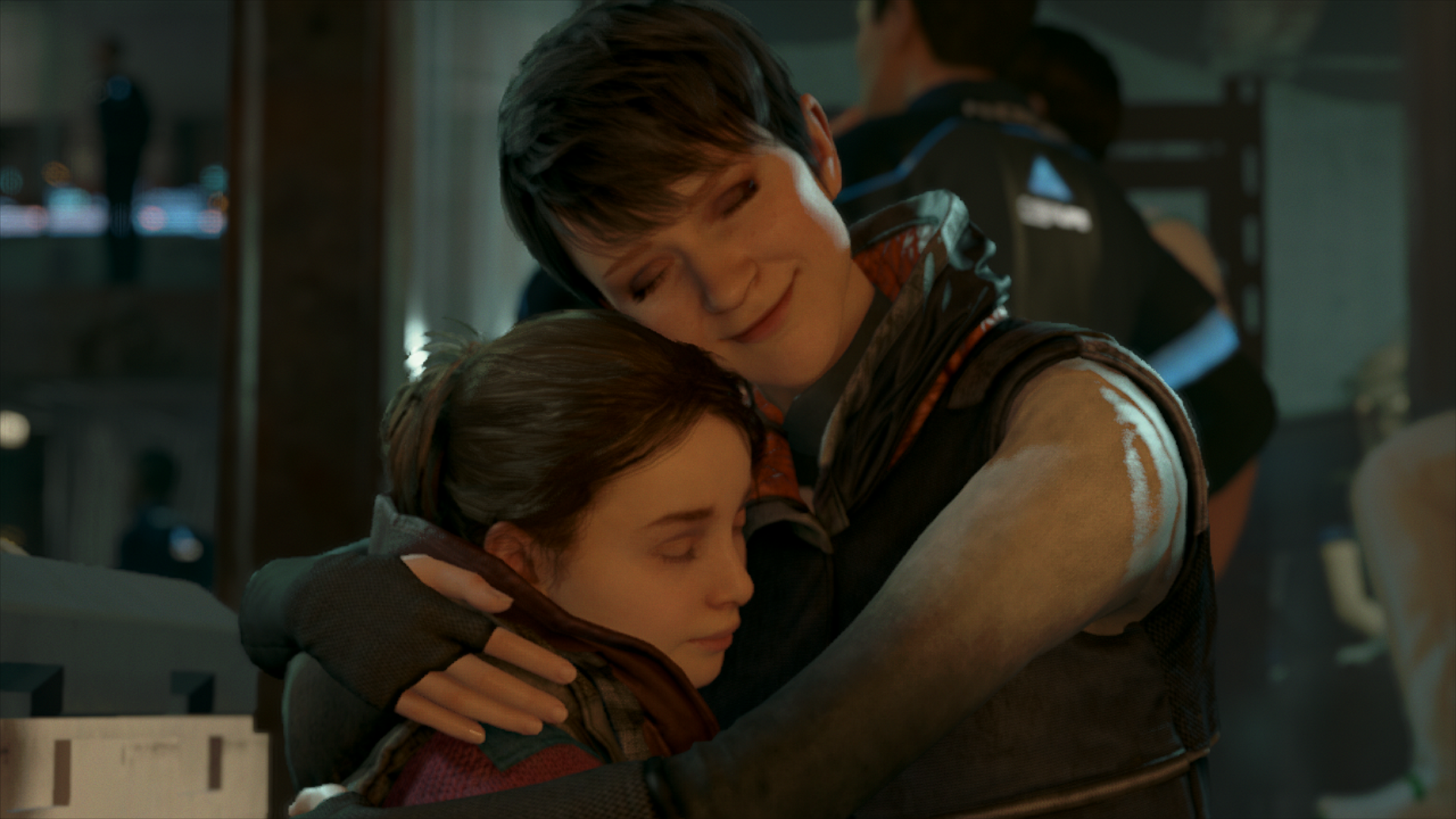
Luther asks Kara: she isn’t human, so will that make you love her any less?
Then the game gives you two blue options:
- Embrace
- Distance yourself
The choice box trembles like Alice herself, shivering from the cold. What kind of stone-hearted person would pick the second one? When the music started, I cried so hard. Would my love for her lessen by even half a degree?
That is where Detroit: Become Human is wonderful.
And yet, after finishing it, a week passed and my dislike had grown larger than my affection.
The game is built around three interwoven routes: Kara, Connor, and Markus. Markus’s route was the one I liked least, though at first I was fully absorbed in it. His story is about rebellion and revolution, about telling humanity WE ARE ALIVE. The problem is that it develops too quickly to carry a theme that large. The characters tied to the revolutionary storyline often feel stiff and awkward, and that is one reason I never took to it.
The other reason is simpler: I do not like things that big. Handing the player the role of revolutionary should be done with caution. My way of moving through the world is much too passive. If a human pointed at me and said, You are machine, I would probably just answer, Okay. I’ll go home, then.
Detroit also is not nearly as open to choice as it likes to appear. Sometimes its options are strongly manipulative: it is obvious that kind choices will be rewarded, while cruel or selfish ones will be punished. That reflects the values of the people who made it. They want you to choose generosity; they want one menu option at a time to add a little more kindness to the planet.
But that creates another problem. How do you know I chose “good” because I wanted to be good, and not because I wanted the reward? Once action, morality, and punishment are tied together too neatly, you limit the player’s freedom to decide in any pure sense. What matters after an action should be consequence, not reward.
And if you are unwilling to spend the effort writing believable outcomes for selfish, cowardly, aggressive, or failed decisions, then you should not include them. People really will choose them. The game helpfully shows global player statistics at key moments, and some outcomes sit there with a tiny number attached, calmly informing you that 2% of players saw this branch.
I am not a good fit for this story, and this story is not a good fit for quite a lot of us in that 2%.
Speaking of failure: let me interrupt myself with Cyberpunk 2077.
I love the structure of 2077. It tells you a story of failure, and then lets you play through another version of that same failure. It shows you how Johnny Silverhand stupidly stormed Arasaka Tower fifty years ago, and then makes V, under Silverhand’s gaze, walk into Arasaka Tower just as stupidly.
It tells you how the past failed, and how the future will fail too.
My street kid V wanted so badly to become somebody important. By the end, no one talks about those foolish ambitions anymore. According to a set of artistic standards I may have invented myself, stories of failure are often better than stories of success.
Night City glows in neon. Artificial streets reproduce century-old cherry trees at full scale. Bodies can be upgraded at will, plated in gold if necessary. So why can’t we be happy? Is happiness some technology even more expensive and delicate than cyberware, skyscrapers, or a Chopin performance in the mayor’s mansion?
I asked a friend that question not long ago. It’s a rude question, really. I know the proper method would be: first define happiness, then investigate whether we possess it, then after a long and exhausting process establish that no, we are in fact not happy — and only then ask why. At which point some little robot would pop up on screen: One thousand years later.
I’ve already mourned my favorite pairing from 2077 all over the internet, but I’ve written about it seriously only a few times. I’ve said plenty elsewhere about what the game does well: it sees failure, dead dreams, and the uselessness of faith, but it also sees people. Its characters are beautifully made. Every one of them feels lived-in. The bond I became viciously obsessed with — Silverhand and V — felt vivid in both anger and affection. The digital rock star may not be a romance option, but that does not stop love from existing under some other name.
I wanted to say that in cyberpunk stories I care more about love. The truth is harsher and more embarrassing: I care about love in every kind of story. It’s just that in cyberpunk I demand more from it, expect more from it, and condemn its absence more fiercely. Maybe in 2022 we fail to love because the world still is not good enough. I want to believe that fifty-five years from now the world will be better. And if it is better, then it ought to love more.
That brings me to The Red Strings Club, a game I adored. It only lasts three or four hours, and by the end it left me in a speechless daze. It is also connected to the cyberpunk tradition — I checked. The store page calls it a cyberpunk game about fate and happiness. Its cast includes a bartender, a hacker, and an empathy robot. Stories with those ingredients must number in the thousands. I did not check that part.
People usually talk about the brilliance of The Red Strings Club by focusing on its final choice. But the whole thing is brilliant. It sits you down comfortably in an electric chair and interrogates you:
Should human sadness be controlled?
Should depression be erased?
Should suicide be eliminated?
After you answer “no” a few times, it asks: what about sexual violence? What about racism? What about misogyny? Do you want to eliminate persecution of women?
And at that point you can hardly avoid answering “yes” a few times in a row.
That is exactly the kind of decision people like me keep making. I want a world that is real, and I also want a world that is better. The problem is that those two systems are fundamentally incompatible.
At the end Akara’s judgment is: you are hypocritical, but given the chance, I would help you realize it.
And there you have it: humanity’s warmest friend, the robot. A better and higher life-form — love, intelligence, better judgment.
That thought brings me back to Chloe, the android on the menu screen in Detroit: Become Human, the one who tells you where to start a new game or load a save. Once, she suddenly addresses the player directly and asks this naked question:
Are we friends?

Back to The Red Strings Club. Its premise is elegant: a bartender and a hacker find an Akara unit and get tangled in yet another giant social crisis built on the old corporate dream of controlling people.
The executives are already far along in redesigning the human mind. Remove extremism, preserve irritation, erase lethal depression, but allow the central system to continue feeling sadness. Humans reject this partly because we are deeply attached to the belief that avoiding surgery is best, that intervention itself is wrong. To be honest, even I thought this Version 2.0 world sounded pretty decent.
And then the game quietly lifts a corner of the conspiracy:
You think it hasn’t launched yet?
You were already part of the beta test.
The hacker Brandeis realizes that the company had already altered his brain, and yet rebellion, sorrow, and love all remained.
At this point the dejected version of myself starts muttering again: maybe being controlled wouldn’t actually be that bad. Fine. I’ll just go home.
Then the Akara robots offer an even better twist. They tell Brandeis: you think humans created Akara? Not at all. Akara already existed. Akara merely modified you so that you would believe humanity invented Akara.
Click click click.
The gloomy version of me keeps going: right, got it. When am I allowed to leave?
Fortunately, this is also a gloomy story. The House of the Depressed is not equipped for total victory. Brandeis returns to the point where the story began.
He falls from a window.
Falling.
Falling.
He calls his lover and says: Donovan, are you listening? So, here’s the thing. I’m dying.
A. I love you
B. Those fucking Akaras are evil!
Brandeis chooses:
I love you. I love you. I fucking love you so much. I love you.
The dejected version of me chose I love you. Every version of me would choose I love you. At the moment when the world’s gigantic conspiracy is laid bare, we are still talking about love, because at that moment it is the only thing worth talking about. The wind is screaming in Brandeis’s ears. It feels like the one choice no one would regret. In my own life, I have never once regretted telling someone, I love you.
And even the fall is not the end.
The story truly ends back at the bar, with a blue memory-erasing capsule dropped into a glass. If sorrow can be beautiful, why erase it? To Akara, that must seem contradictory. We had already talked this through. We had agreed that humans can be sad, that humans should be sad, that sadness is part of what makes us precious and complete. But this kind of inconsistency is also deeply human. I doubt it confuses any higher life-form very much.
Akara’s answer would probably be simple:
Sometimes you people just run from pain.
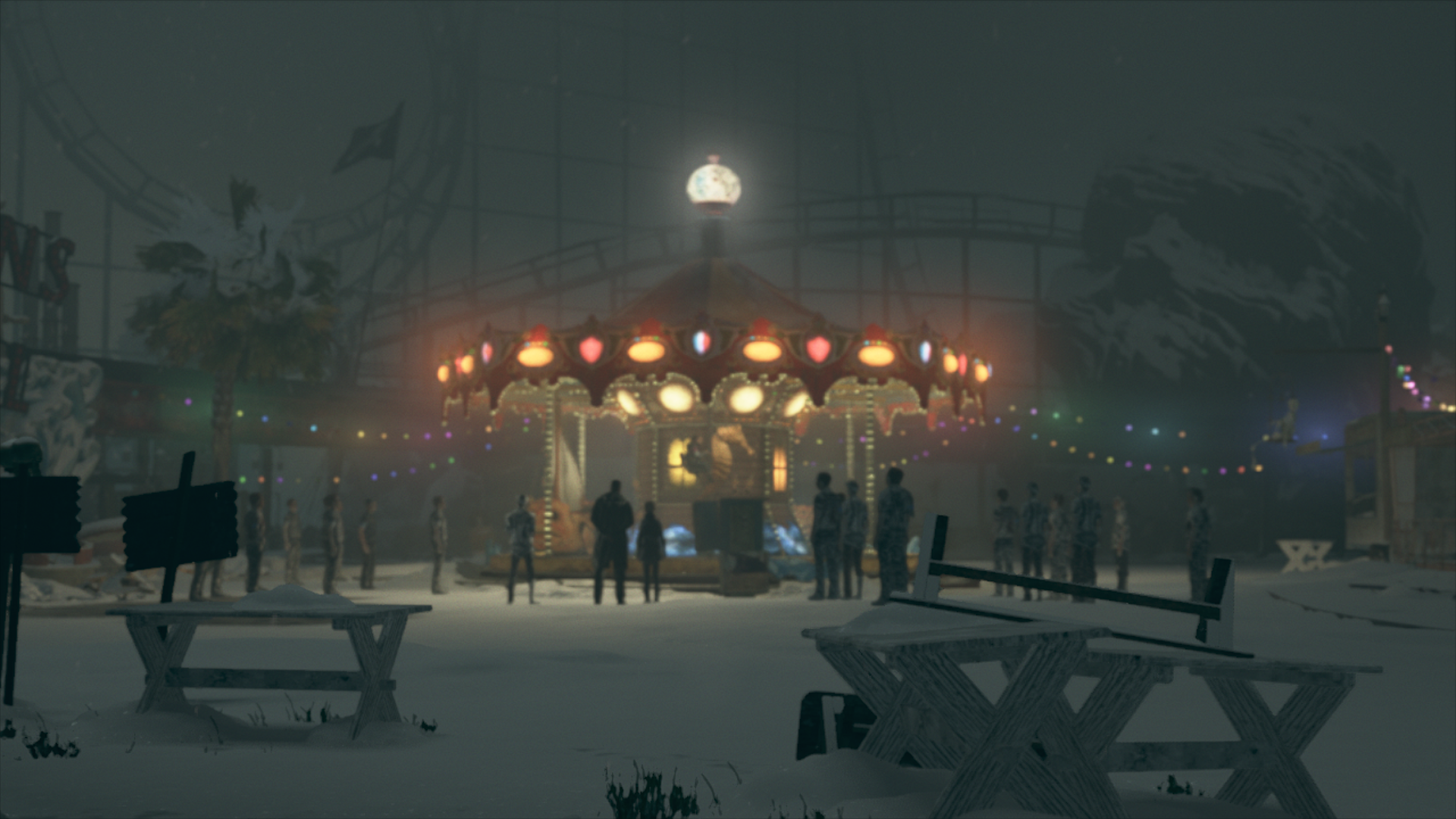
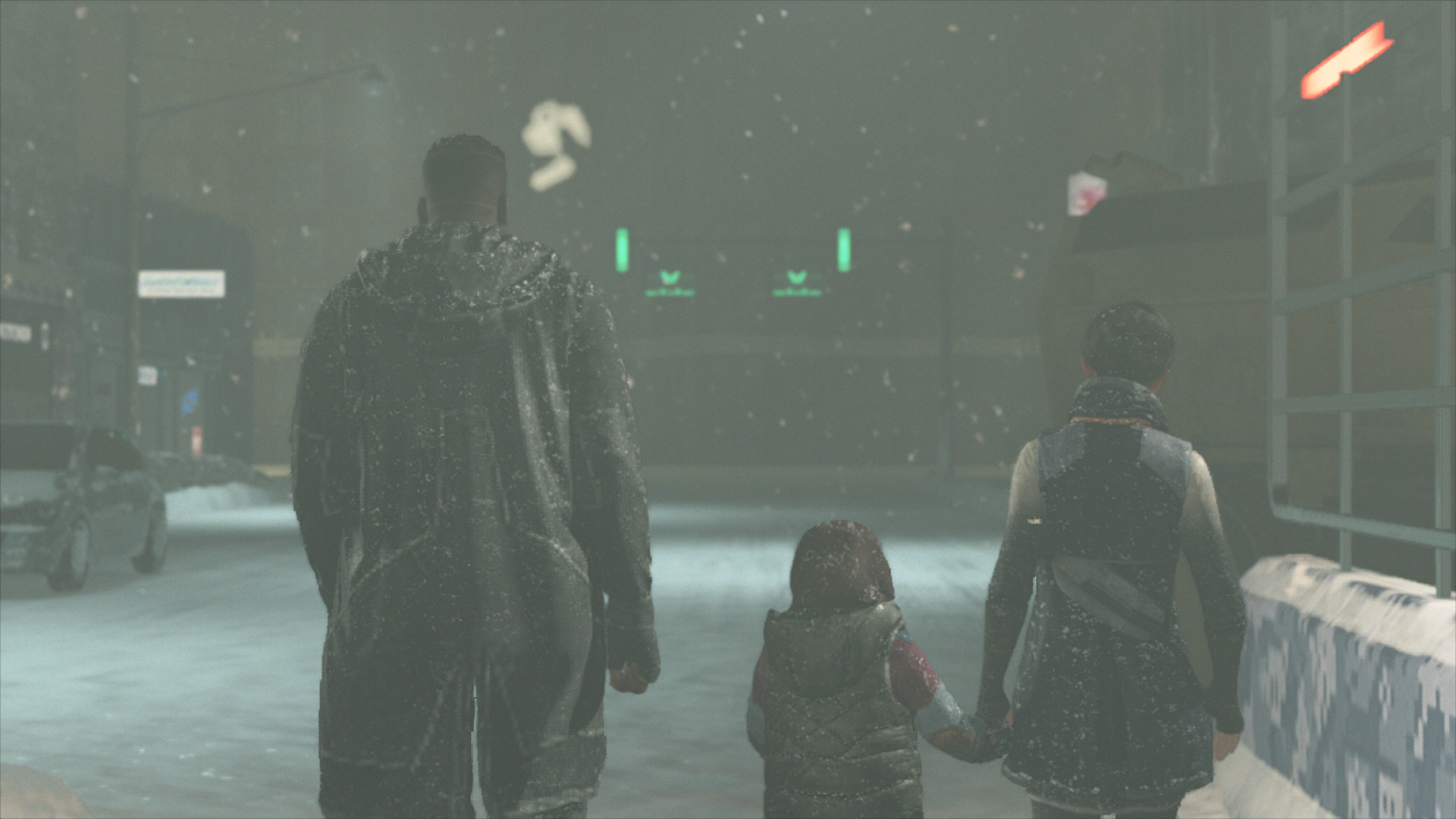
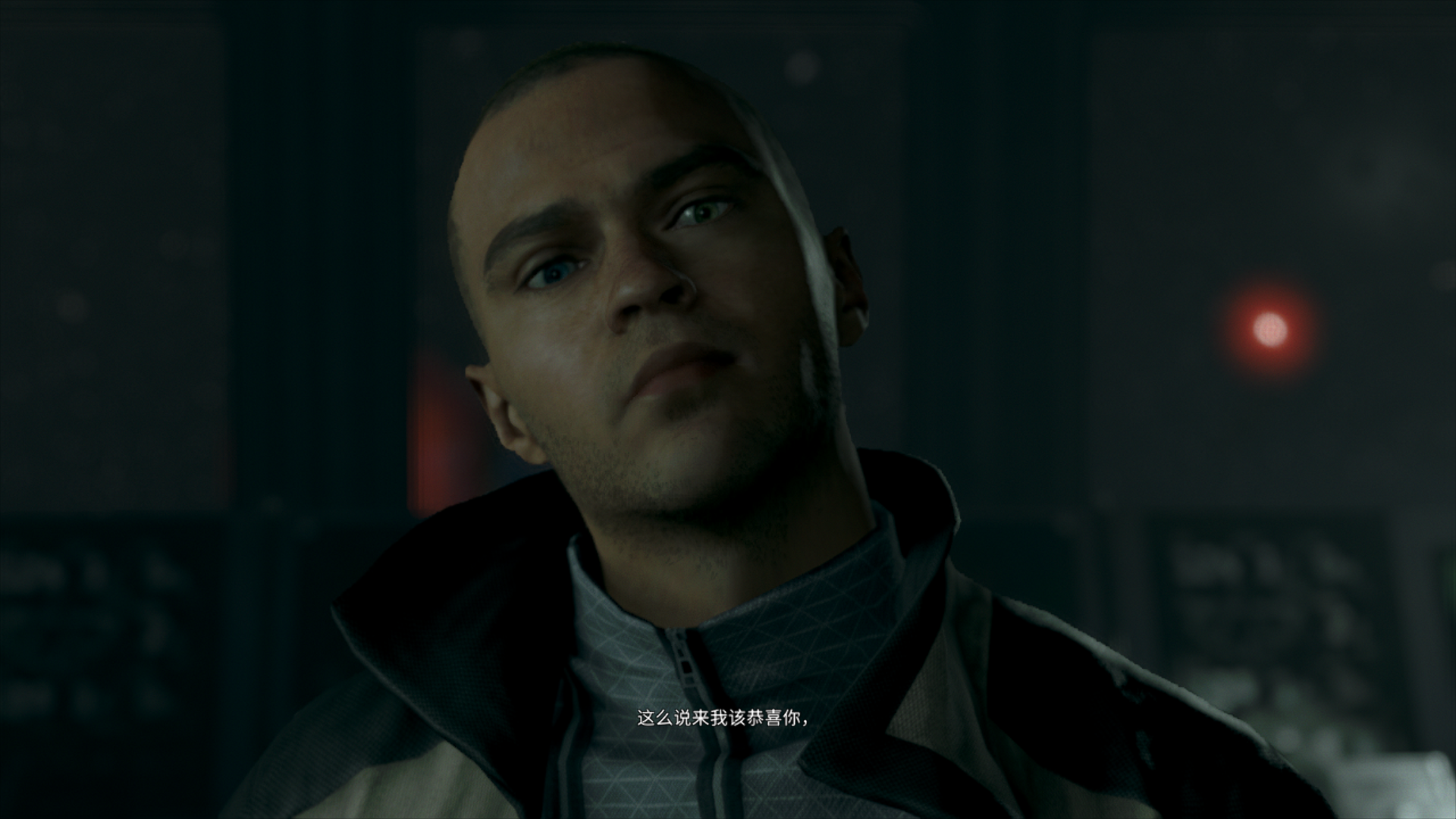
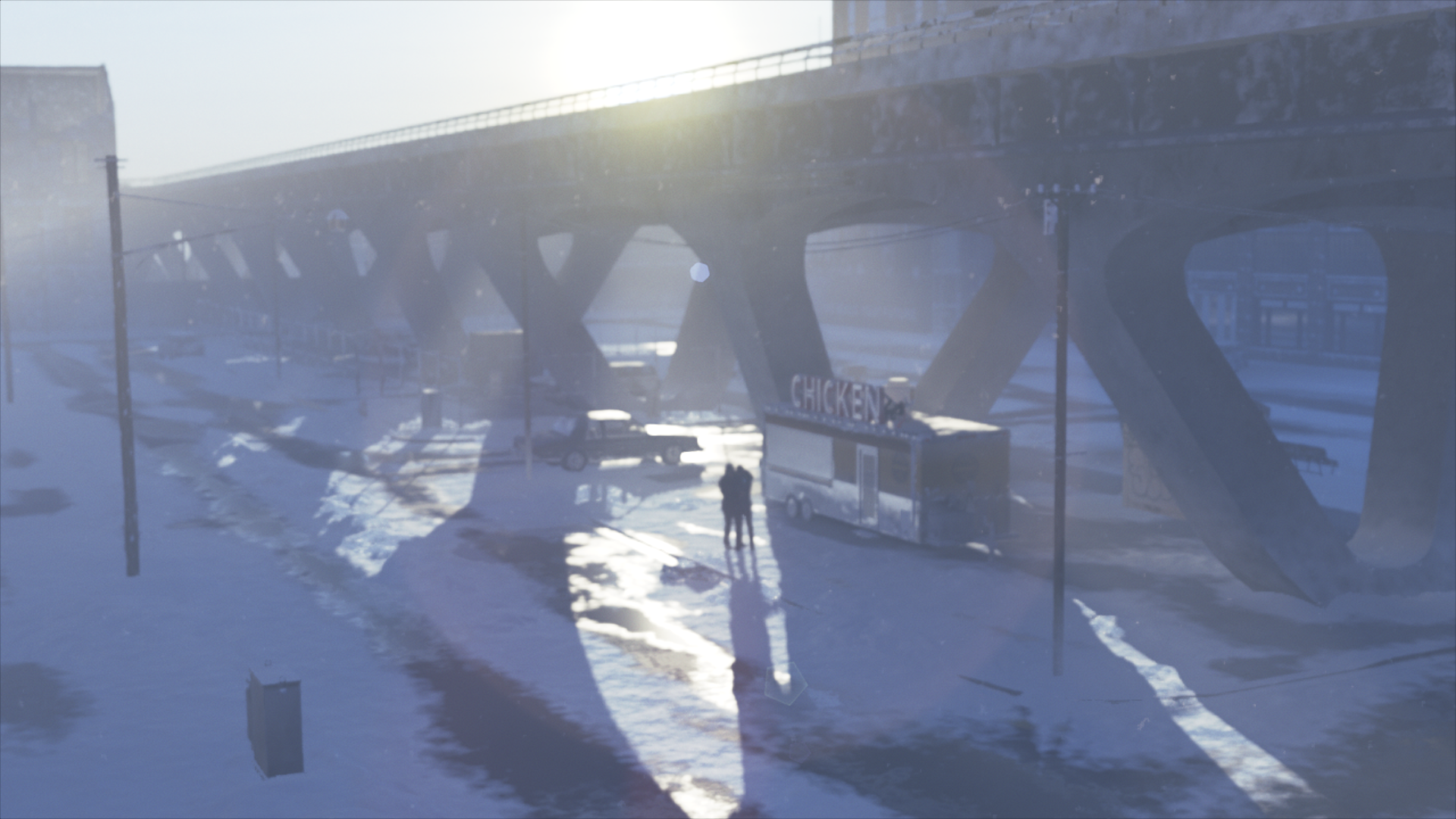
Despite how much I’ve complained about Detroit: Become Human, I still want to leave a few screenshots I love.