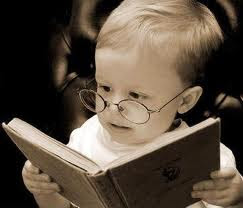
If books are the staircase of human progress, then the Kindle is the elevator. Once I realized reading on a Kindle was actually pretty comfortable, I slipped into a period of completely uncontrolled book bingeing.
At one point I had set myself a goal of finishing ten million characters in a year. Later it started to feel far too utilitarian to put reading under a quota like that. And honestly, if I had really gone all out to hit that supposedly ambitious target, well... then I came across a certain heavyweight reader’s four-year book list and decided to keep quiet. Since I’ve recently been planning to read more books related to farming, I thought I’d pull out a few of the books from the past several months that left the strongest impression on me.
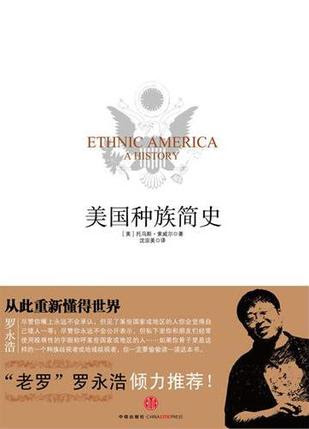
Ethnic America: A History
★★★★★
If I could recommend only one book from this batch, this would probably be the one.
I used to scoff at the claim that most Chinese people carry a kind of latent racism. I thought, racism toward whom, exactly? But the more I think about it, the more I suspect that this hidden form of prejudice is hidden precisely because people don’t recognize it in themselves.
Strictly speaking, this is a fairly academic history book. Unlike many classical Chinese histories, which are saturated with literary flair, American historical writing often feels more professional and methodical. What surprised me was that a history of just a little over two hundred years could still produce such a strong sense of breadth and depth, in a way very different from reading Chinese history.
The book carefully traces how different ethnic groups arrived on American soil, struggled through harsh material conditions and hostility from those already there, and gradually grew, survived, and eventually gained recognition. From the perspective of each group, these are one after another of sweeping American Dream stories. Viewed as a whole, though, the history of the United States becomes an epic of competition, exclusion, mutual adaptation, and eventual integration among many peoples, creating one American miracle after another.
China and the United States actually share quite a few similarities. Both are huge countries with abundant resources and many peoples. Both fought eight-year wars against invading powers. Both experienced civil wars between north and south before arriving at national unification. Yet the two countries ended up on very different developmental paths.
China officially has fifty-six ethnic groups, but because of long-term Sinicization, the distinctiveness of many groups is no longer especially visible. Regional differences, however, remain striking. Every part of the country has its own culture and language. I sometimes feel the differences among Chinese dialects are greater than the gap between London English and Indian English. In that sense, many ethnic tensions in the United States find an echo in China’s regional tensions instead.
You can see it in local pride, in the suspicion toward outsiders, in the resistance to newcomers settling in. Move across a province in China and, measured on a European scale, that’s practically migration. Then there are the stereotypes attached to people from certain places: people from one region are all scammers, people from another all work in coal, people from somewhere else all speculate on real estate, and people from yet another place are imagined as so alien they might as well eat children.
Perhaps China’s long tradition of thinking in terms of a unified empire has made us less tolerant of difference. It becomes too easy to look down on the traits of a particular region, to perform acts that are racist in spirit without feeling the least bit uneasy about them. Even at the policy level, there is often a strong preference for making the whole country move in lockstep through a single directive, replacing difference with uniformity. The promotion of standard Mandarin is an obvious example: the goal is often not to let local differences grow freely, but to smooth them out.
But in a country this large, difference is unavoidable. Look at Tibet, then look at Taiwan, and it becomes hard to imagine how they could ever move in exactly the same rhythm. A little more tolerance, and a little more respect for difference, would probably serve us better than reflexive self-importance.
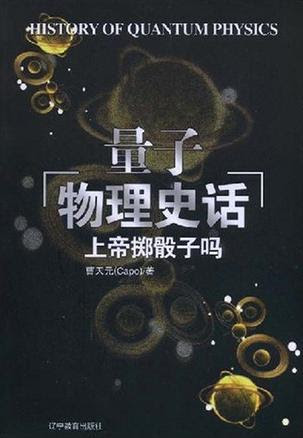
Does God Play Dice?
★★★★★
The title comes from Einstein’s famous stance on quantum mechanics: God does not play dice. According to mainstream physics today, though, God apparently turned out to be a gambler after all.
This book was far better than I expected—one of those books that not only teaches you things, but opens up ways of thinking you had never really imagined before. I almost never hand out five stars to science books, but this one easily got them.
The literary strength of Chinese writers really shows here. Even though the subject is the history of science—more specifically, quantum mechanics, one of the most obscure and intimidating areas of physics—the book remains vivid and readable. In my own experience, it was much easier to understand than A Brief History of Time. A lot of concepts I had simply memorized in high school without ever truly grasping them—wave-particle duality, the uncertainty principle, the Schrödinger equation—suddenly began to make sense.
My own feeling, perhaps a presumptuous one, is that once the uncertainty principle entered the picture, theoretical physics had already started approaching its limit. Much of modern quantum theory feels like an enormous inferential structure; proving some of its conclusions may lie beyond the range of human capability. If that’s true, then the old claim that humanity can ultimately exhaust all truth does not look especially scientific.
The book is organized almost like a grand historical saga: things divided must eventually unite, and things united must eventually divide. One after another, superstar scientists charge into battle like heroes from a classical epic, driving their theories to the limit, only to falter, lose ground, and often spend their later years in frustration.
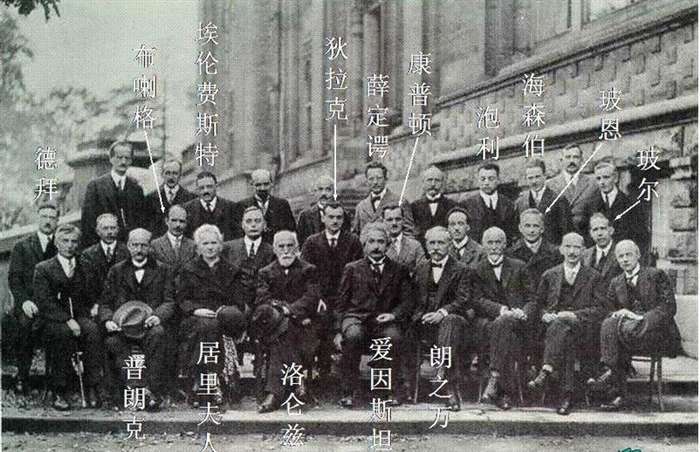
Quantum mechanics feels like a swamp from which nobody escaped cleanly. Newton, Bohr, Schrödinger, Heisenberg, Einstein—these giants all found themselves dragged into it, and none emerged with their legends entirely intact. It is a history of brilliant minds battling each other, but also a winding record of humanity’s pursuit of truth. In intensity, it rivals wartime history; in the concentration of star figures, it feels almost like the Three Kingdoms. There’s a famous group photo of these physicists online, but once you know the background, it stops being a simple commemorative image. Underneath it, there is turbulence everywhere.
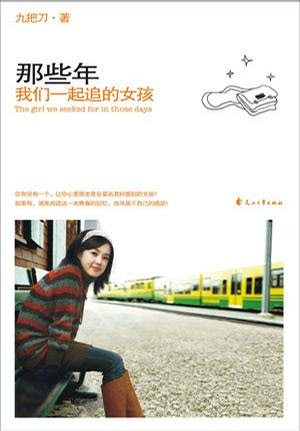
You Are the Apple of My Eye
★★★★★
Sometimes you pick up a book expecting it to be good, and then it turns out to be even better than expected. That alone can send your affection for it soaring. If it also happens to click with something deep in your own emotional life, that affection gets out of control very quickly.
The film adaptation has that odd mix of heavy-handedness and fresh-faced nostalgia, but the novel is pure and uncomplicated in its tone. In fact, calling it a novel almost feels slightly off. It reads more like a series of personal essays: small episodes, ordinary details, then a few lines of reflection.
Many of the lines that became iconic in the movie have more context in the book—either what came before them or what followed after. Several stories that the film left hanging are given proper endings here, and many of the vaguer transitions in the movie are handled much more smoothly in prose. There are also a few genuinely moving episodes the film never included, and some of Shen Jiayi’s scenes were noticeably pared down on screen.
Since spoiling a novel feels morally questionable, I won’t go into the plot any further. But if you liked the movie, the book is absolutely worth reading. There’s more there than you might expect.
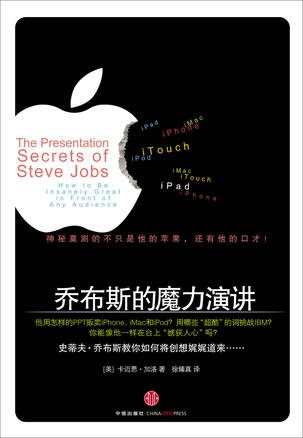
The Presentation Secrets of Steve Jobs
★★★★☆
I once heard someone say that the secret behind his successful public speaking came from this book. Seeing the title, I couldn’t help laughing—so you’re cloning Steve Jobs now too?
The first year’s recommended reading list I saw from him was packed with textbook-like material and nearly did me in. Fortunately, the next year’s two recommended books were both solid, and this was one of them.
People often call Presentation Zen the bible of public speaking, but I find that book too abstract, too intent on lofty principles. This one is much more practical. And as I read, I slowly realized something amusing: although Steve Jobs and that other famous Chinese speaker have completely different stage personas, the underlying mechanics of their presentations are startlingly similar.
Slide structure, the use of visual elements, the insertion of video, the rhythm of storytelling, the setup and release of punchlines, the way audience emotion is guided—they line up so closely that you could probably edit together a synchronized comparison video of the two. As I kept turning pages, I could almost feel black lines forming over my head. So that’s the trick you used on me back then.
Then again, both men had real content to work with, and both had the technical mastery to package that content in a way that left audiences stunned. That combination—substance on the inside, technique on the outside—is what makes a true master. And then, inevitably, I think about Lei Jun speaking at Xiaomi launch events... well. Too young, too simple.
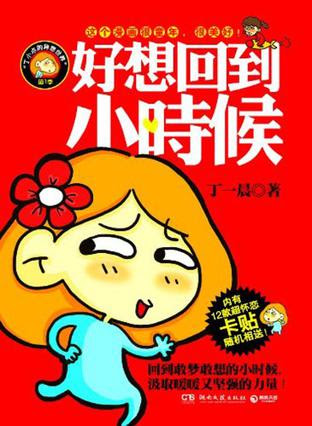
I Wish I Could Go Back to Childhood
★★★★☆
My childhood dream was to grow up and run a jianbing stall.
By the time I got to the fifth spot, there were actually quite a few contenders. Dark Time and Influence were both good, but I wanted to pick something more fun. I wavered between History Is What? and Guo Degang Talks About Beijing. Then I looked up and saw this one again—the only physical book I bought during this stretch.
I’m very fond of books with this kind of grassroots style. They feel close to everyday life, but they’re also inventive. There’s a bit of the same charm you get from Black-backed-style illustration work, except this one is in color. The book turns childhood anecdotes into comics, and in doing so brings back a great many warm, funny memories.
But as light as it seems, it also leaves room for reflection. Why were our childhood dreams so often things like scientist or soldier? Whose dreams were those, really? Maybe the most honest dream at the time was much simpler: to sell jianbing every day so you could always have an extra crispy cracker for yourself.