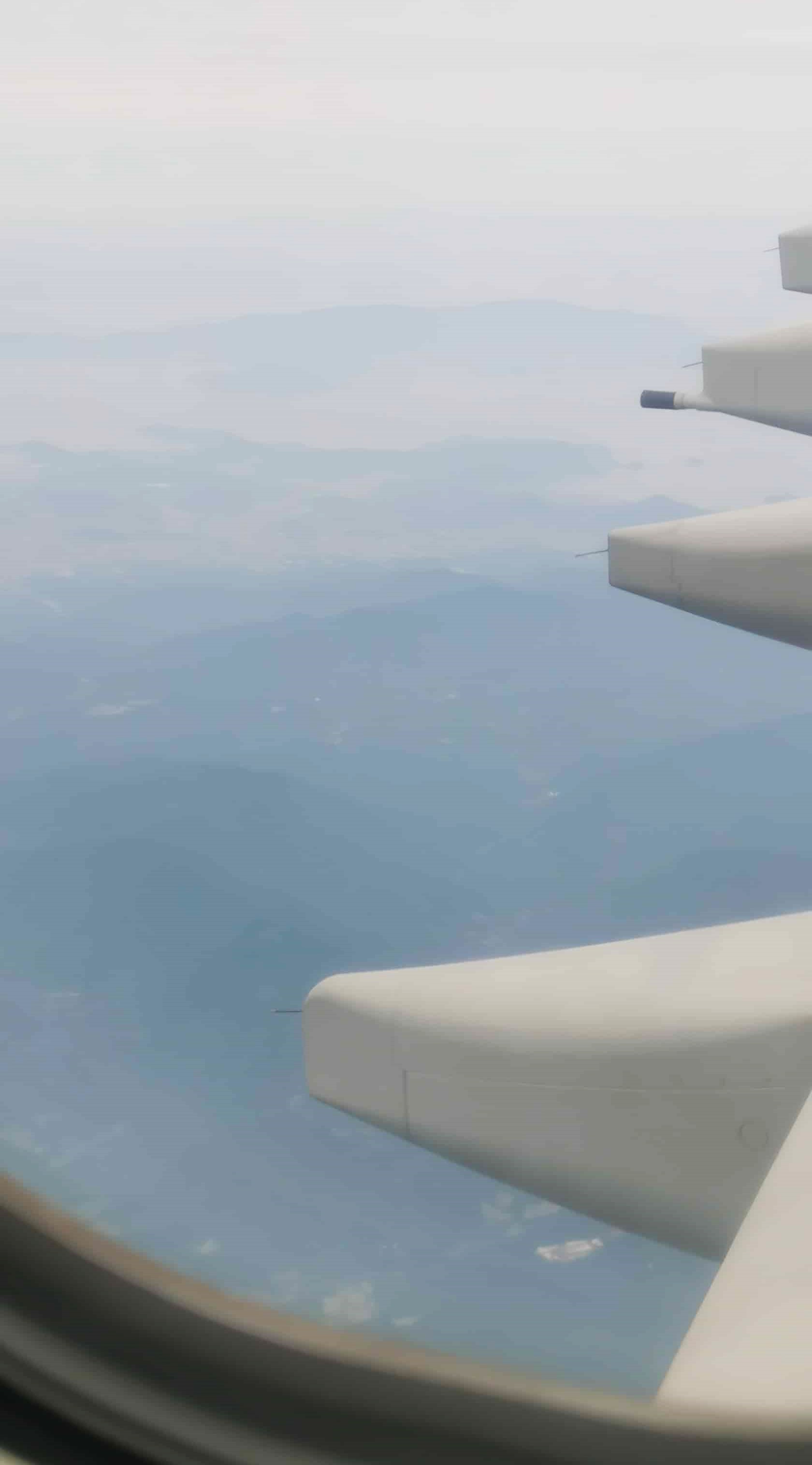
From Pudong to Kansai, the flight was so short that after one in-flight meal and a brief nap, I was already in Japan. No wonder some people I know go twice a year. From the plane window, I watched a sea of clouds give way to pale mist, winding mountains, and river mouths as we entered Japanese airspace. The ports along the coast looked almost unnaturally orderly, and the dense buildings near the shoreline had that slightly sun-bleached look. When the plane banked, the blue shadows of mountain ranges seemed to rise up beside the wing, and it suddenly became real: this is a mountainous country sitting on the edge of tectonic plates.
After landing, entry procedures were unexpectedly smooth. Using the VJW code made immigration much faster, and there was no need to fill out paper forms. The staff were all very polite. I got off the escalator and almost immediately picked up my checked luggage, then finished the customs declaration by scanning a code at a self-service machine. Topping up a transit card at another machine was equally quick.
My first real moment of confusion came on the Nankai Line platform, where my Android phone still hadn’t connected properly after switching SIM cards. I stared at the route map a bit blankly, but once I confirmed the right direction and train car, things were fine. When I transferred and exited at Kitahama, I passed a stamping spot and got my first station stamp in Japan. Kitahama’s stamp features a coffee cup.
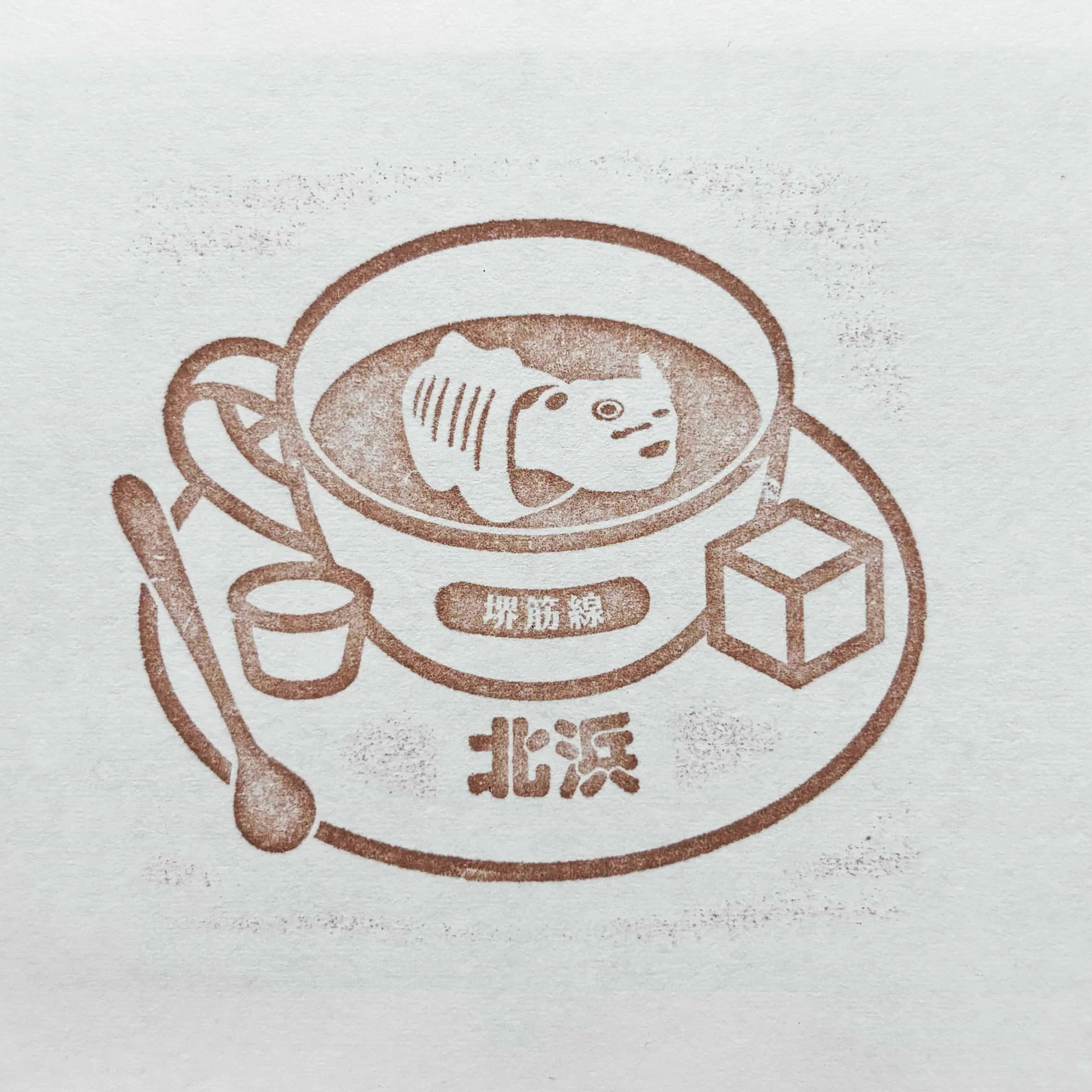
What exactly is melting inside that cup, though? I genuinely couldn’t tell.
For a first trip, I had heard that staying around Umeda can be a good way to get lost immediately, so I booked my first hotel in Kitahama instead. The area is full of banks and office towers, with easy subway access both to Umeda and Namba. Hotel check-in was almost entirely wordless, and the front desk staff were excellent. One thing worth noting: at Unizo, the front desk is on the second floor. Once you’ve checked in on the first day and received your key card and toiletries, after that you can just tap your card and go straight up to your room. Very friendly for people who do not enjoy social interaction. Some hotels apparently even use self-service check-in machines, though I didn’t stay at one of those.
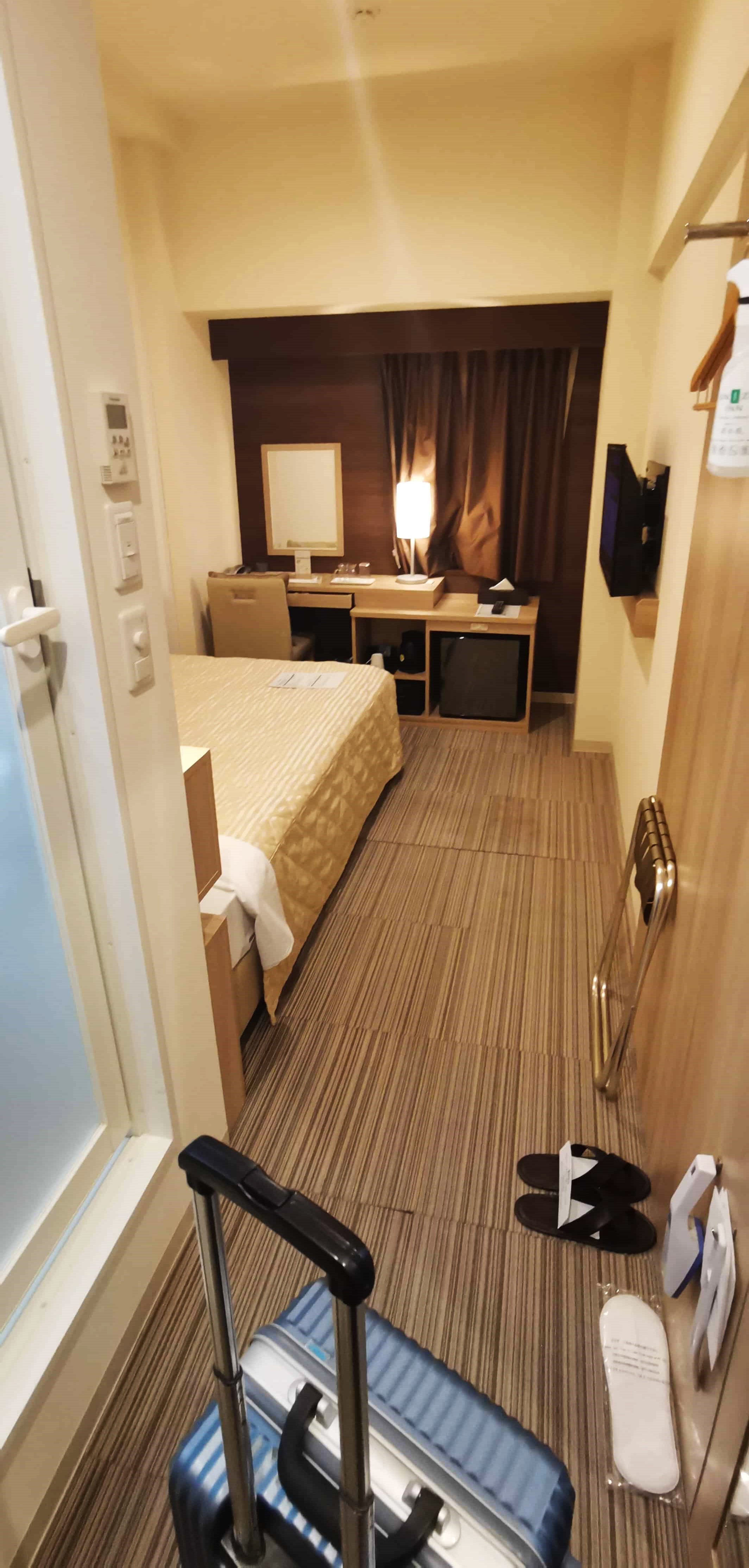
Japanese hotel rooms were as compact as people say, but my reaction was mostly: honestly, this is fine. The room had everything I needed—a vanity mirror, a desk, a chair—and there was still enough room to open a suitcase flat. For one person, it was completely sufficient.
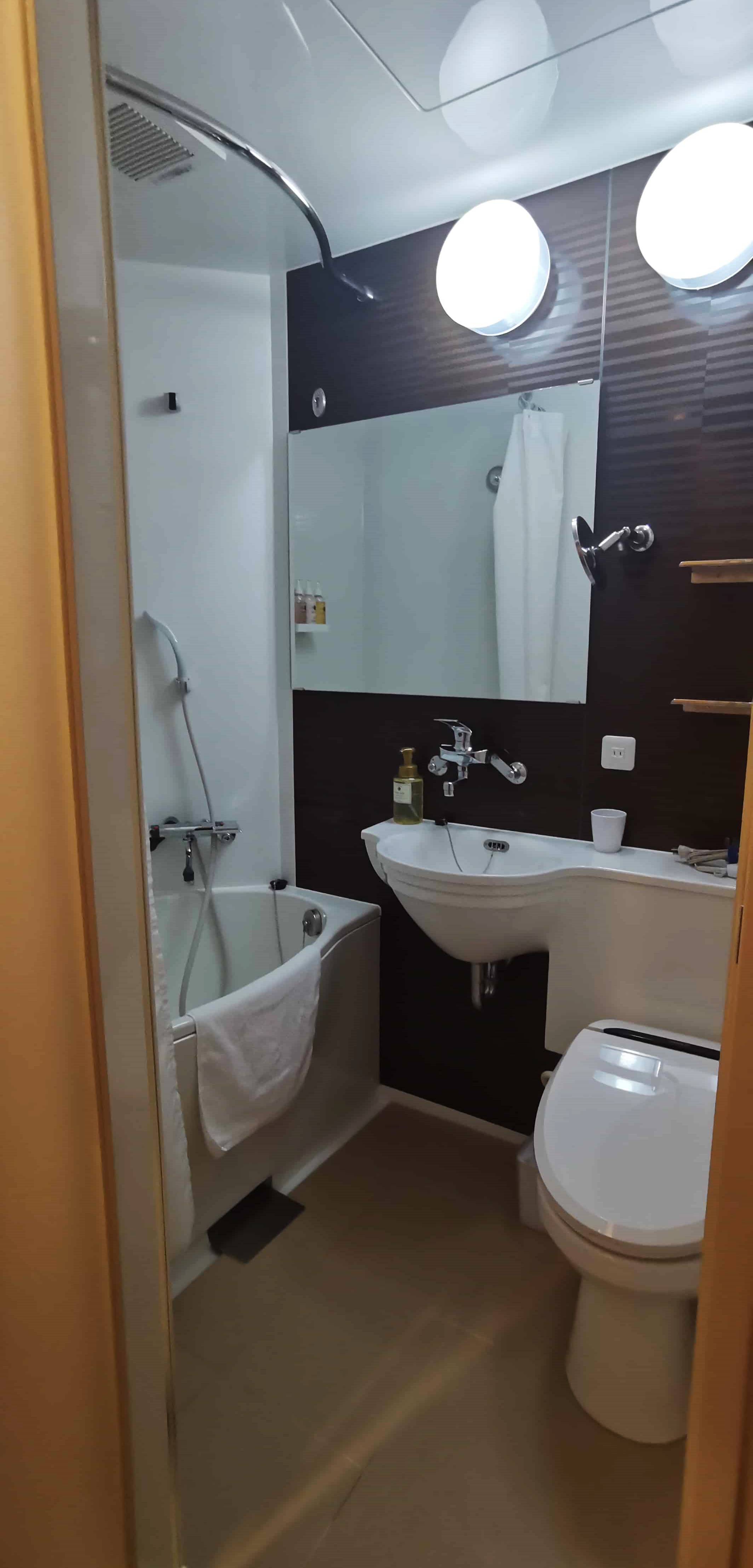
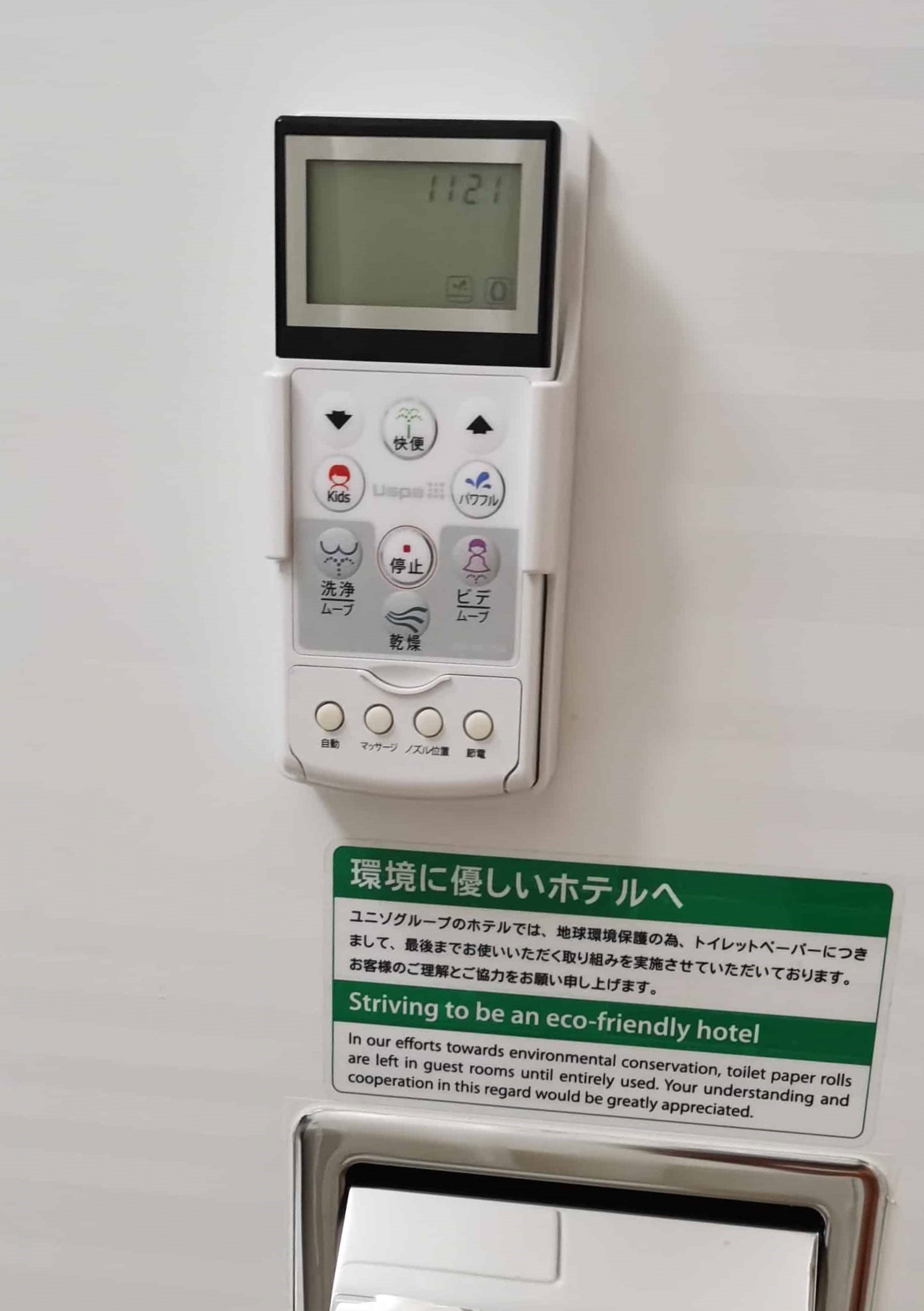
My first strong impression of Japan: heated toilet seats. They were everywhere, in the airport and the stations alike. I immediately fell into a philosophical spiral—do people actually use all the functions on these things? Doesn’t the nozzle get dirty? Mentally, I could not quite accept it.
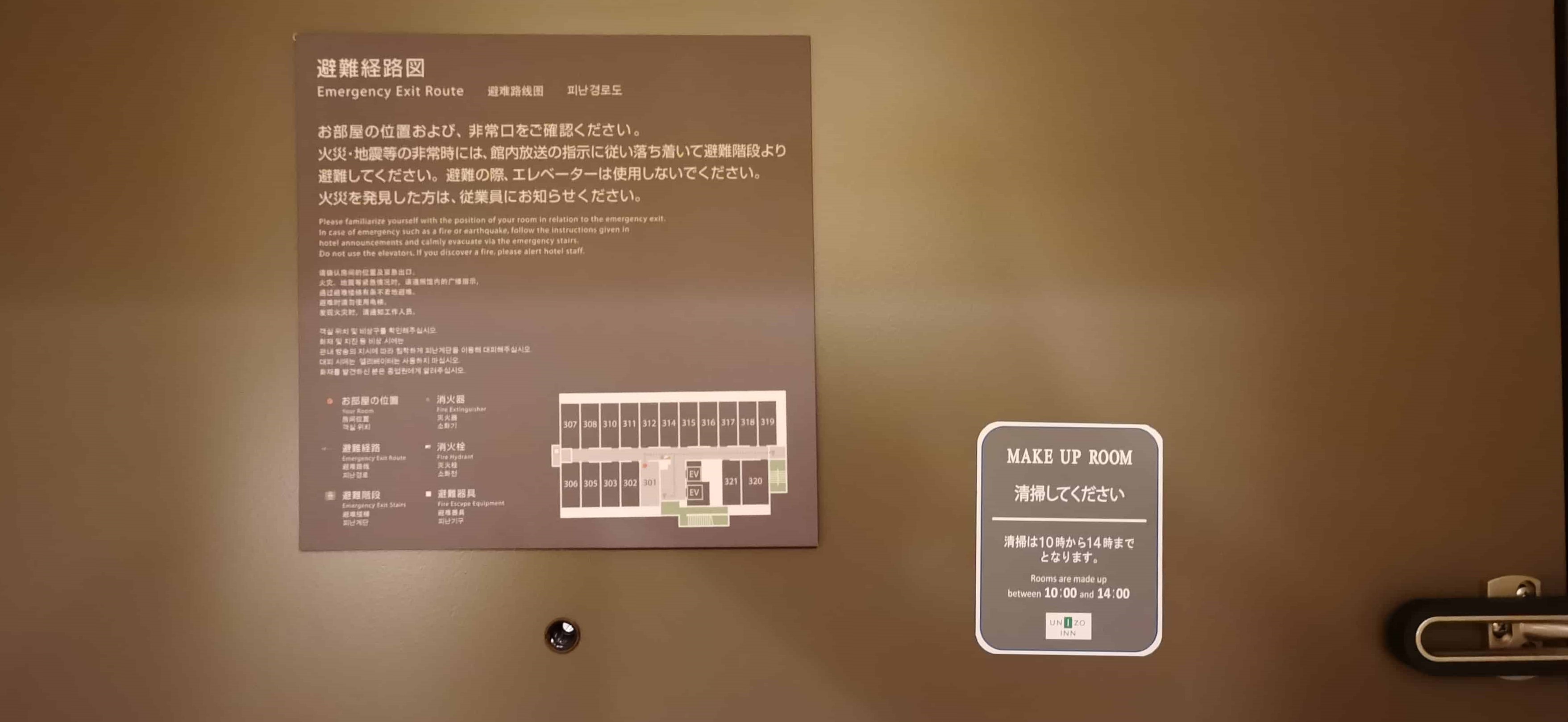
The most eye-catching thing on the hotel room door was the evacuation notice.
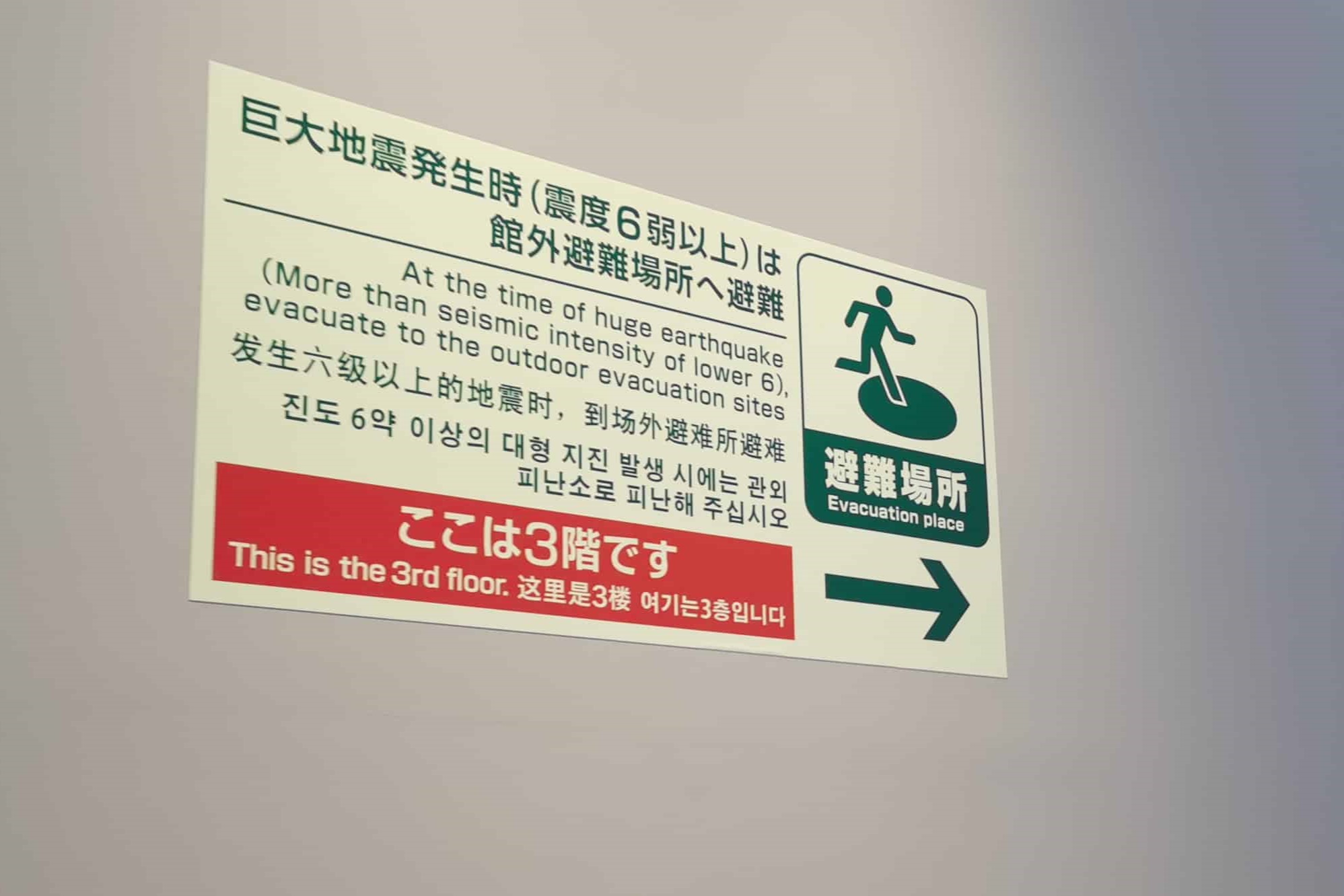
You could see the same kind of signage on the airport walls too.
Once I finally solved the SIM card problem on my phone in a very relaxed and unheroic way, I went out to explore the area around me. By then it was already late, so I settled for a simple curry rice fast-food meal nearby. In the evening breeze of May, I watched the flow of people heading home from work. What I remember most clearly from that first walk was how many shops had stacks of free printed materials at the entrance: postcards with maps for calligraphy and painting exhibitions, flyers for art shows, colorful promotional leaflets for stores. The design work was thoughtful, the printing was beautifully done, the layouts never looked careless, and most of it was on glossy coated paper. It surprised me a little. This really is a place with a thriving print culture. More than anything, I found myself unable not to envy that atmosphere.
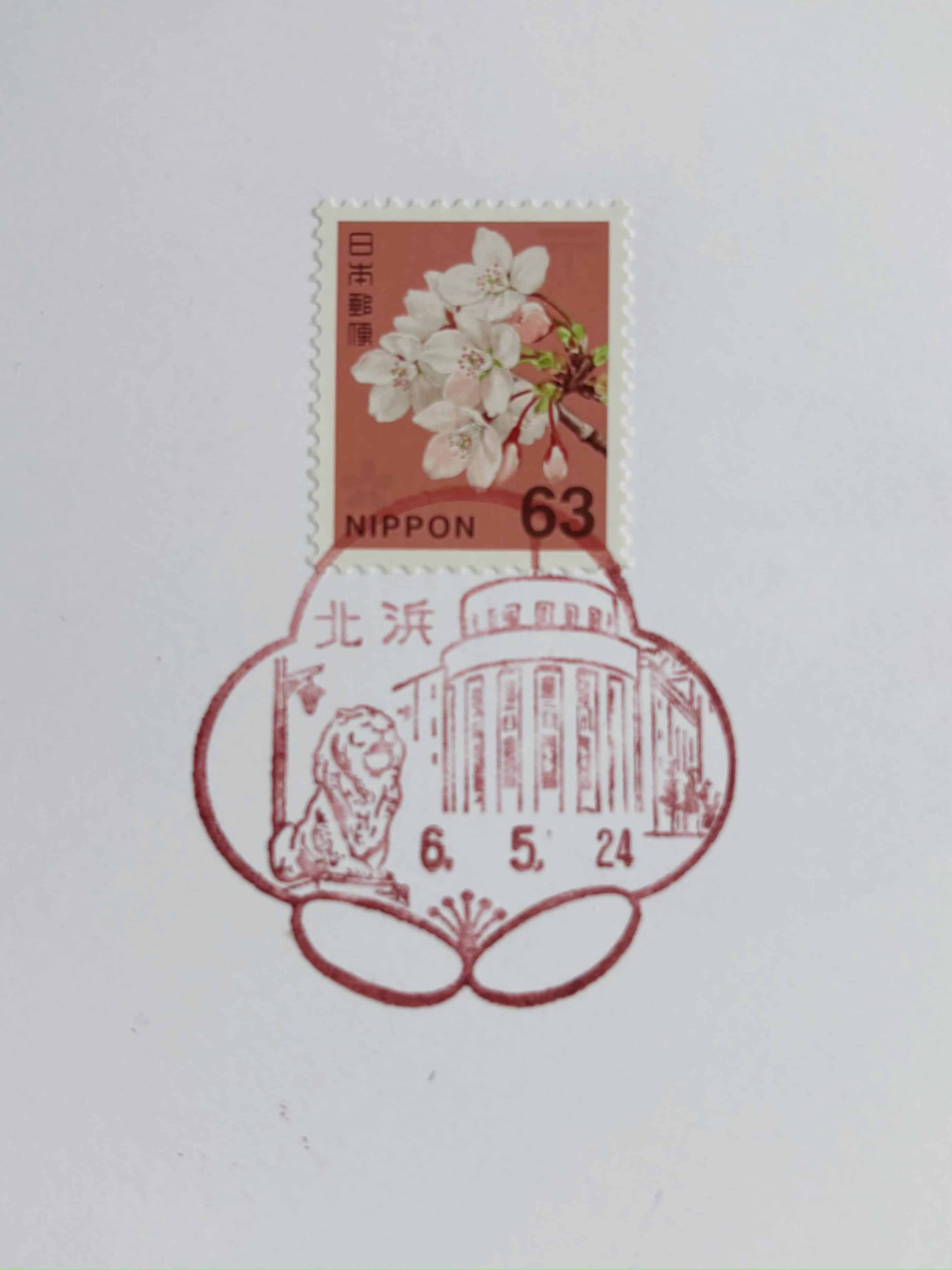
Later, I also visited the Kitahama post office on a working day to get its scenic cancellation stamp, and it matched my impression of Kitahama perfectly.
Since this was my first time in Japan, I was in full whirlwind-sightseeing mode. So when I got a sunny day, I set out to look around Osaka properly.
Umeda
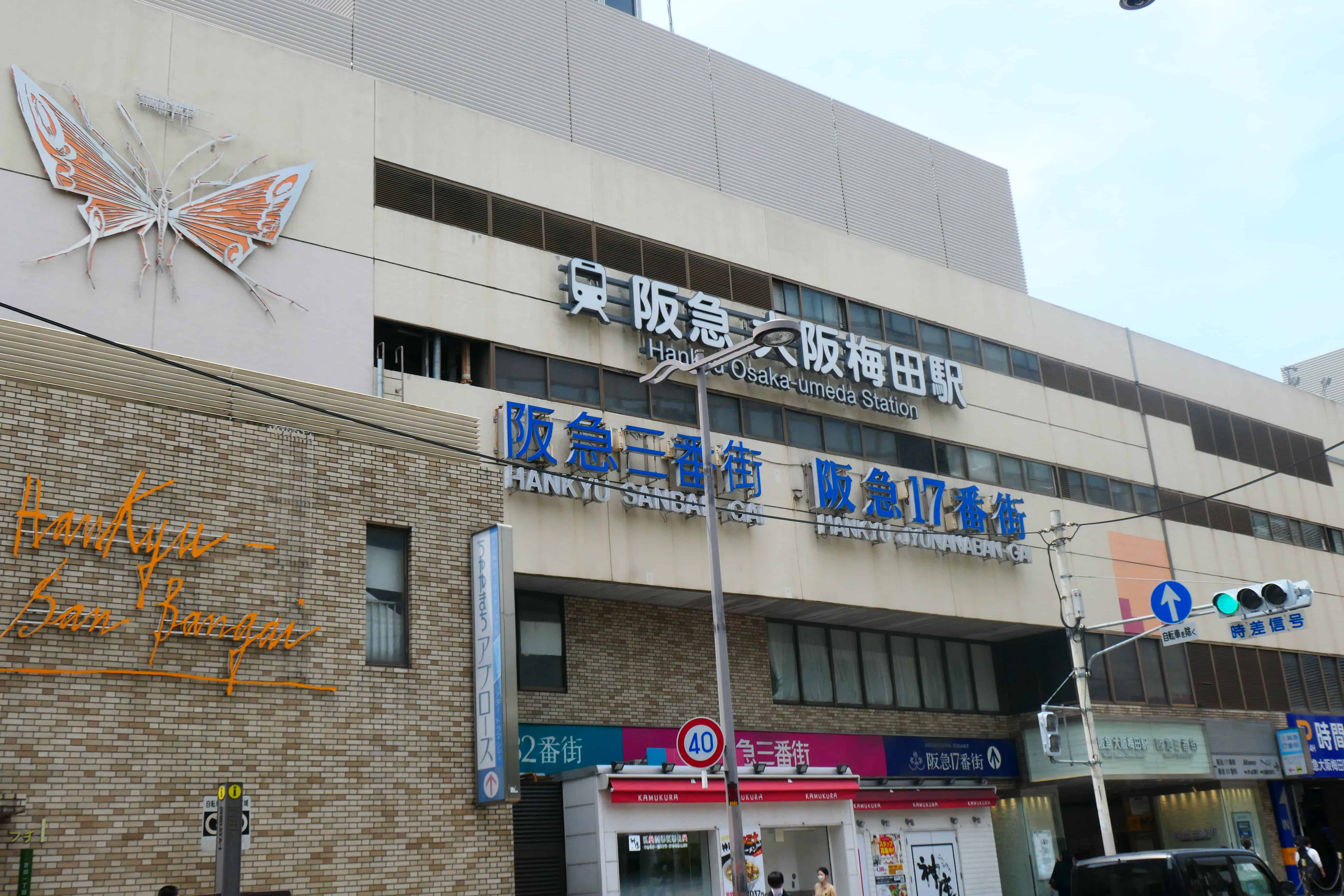
I went, but I had almost no desire to shop. The 100-yen store was enormous, and I ended up buying a phone case for my new phone while passing through. Hankyu Sanbangai has plenty of shops and places to eat, but underground it really is a maze.
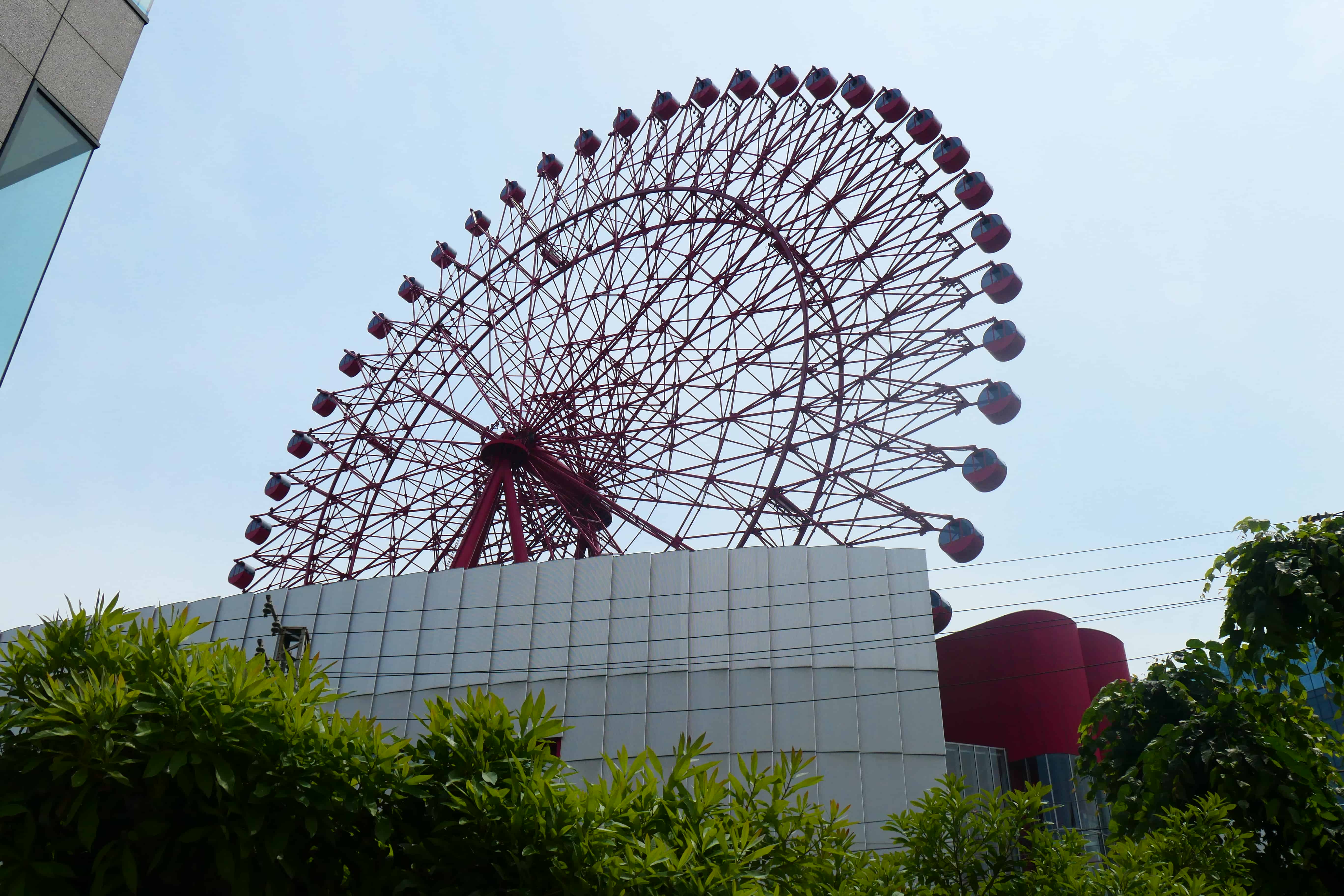
I saw the red HEP FIVE Ferris wheel, which seems to run until 11 p.m., but Umeda itself gave me the impression that stores begin shutting down around eight in the evening.
Osaka Castle
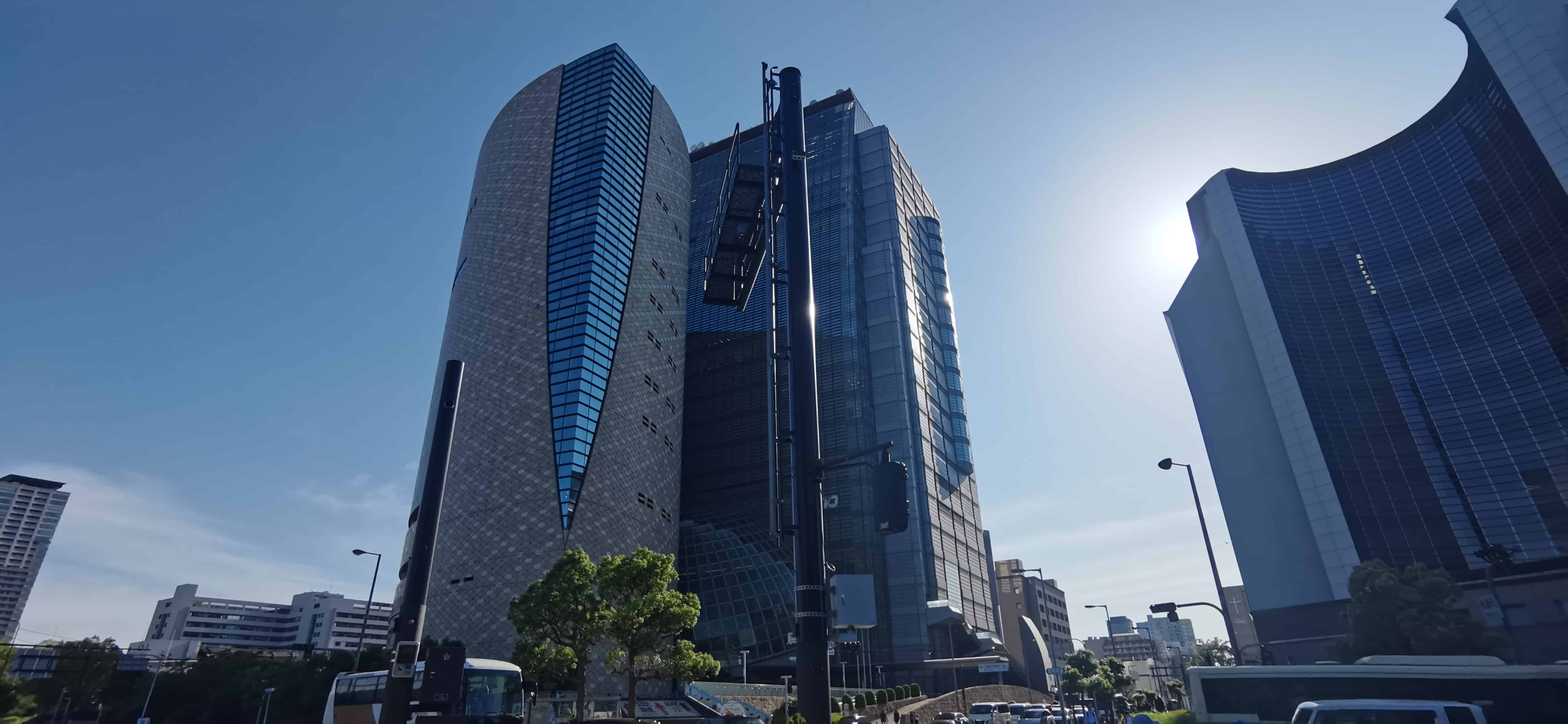
Right across from Osaka Castle Park are the Osaka Museum of History, NHK, and the Osaka Prefectural Police headquarters. Detective fiction did not lie to me, though I hadn’t expected them to be quite that close together.
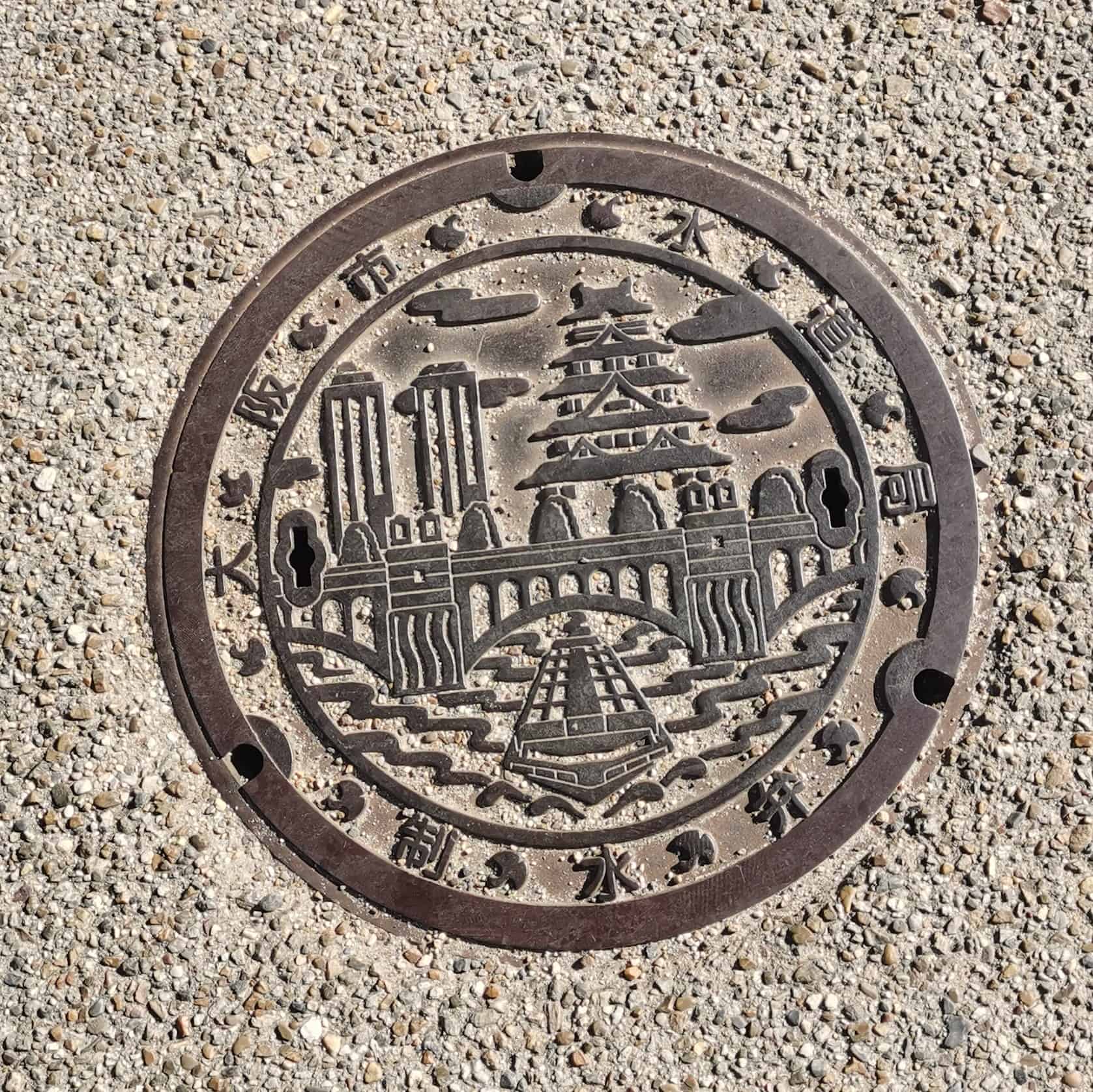
On the way, I also spotted a beautiful manhole cover.
Crossing over from the police building side, I could see the bright blue moat, watchtowers, and stone walls from a distance. The weather was glorious.
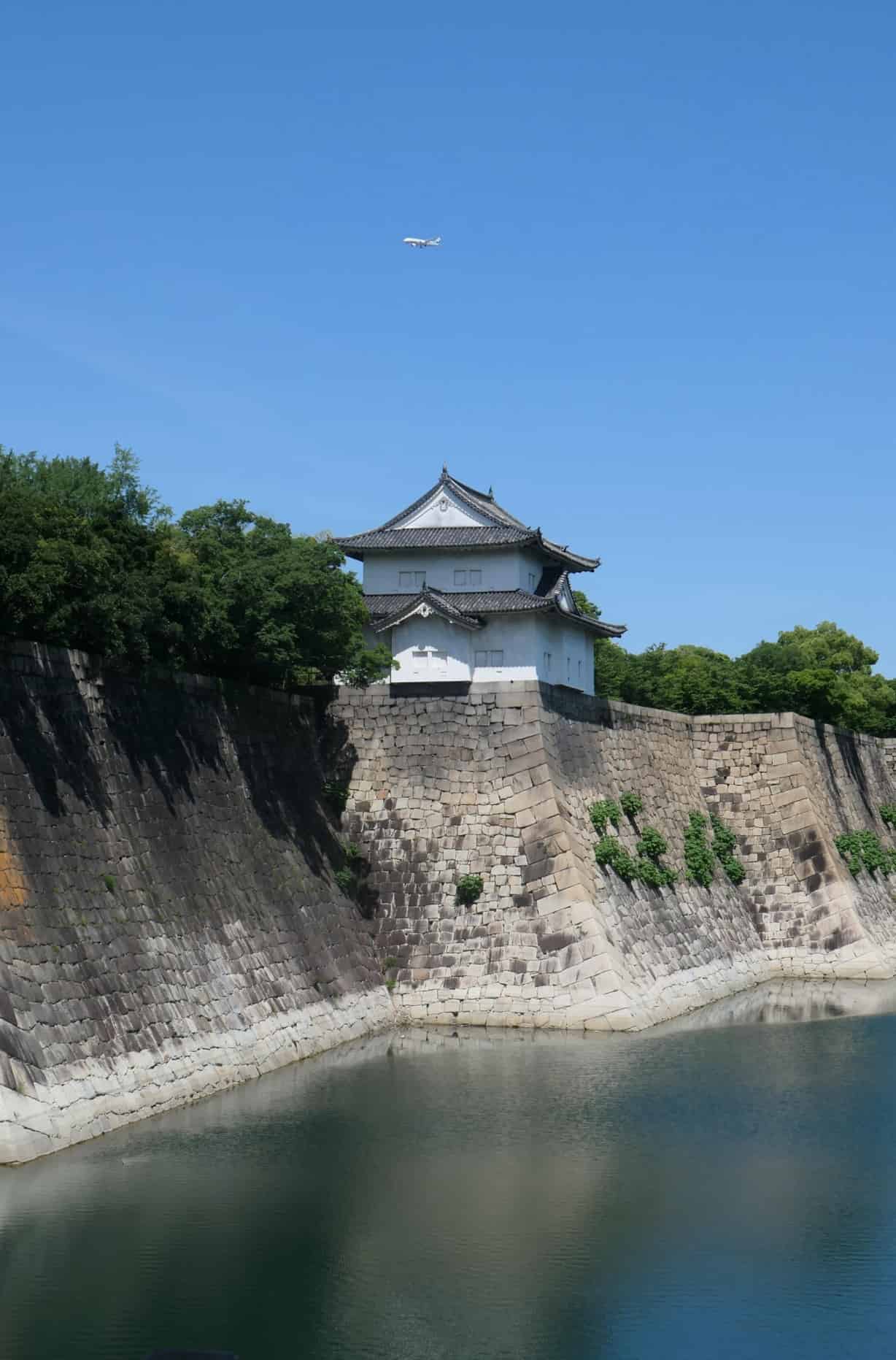
The Main Tower
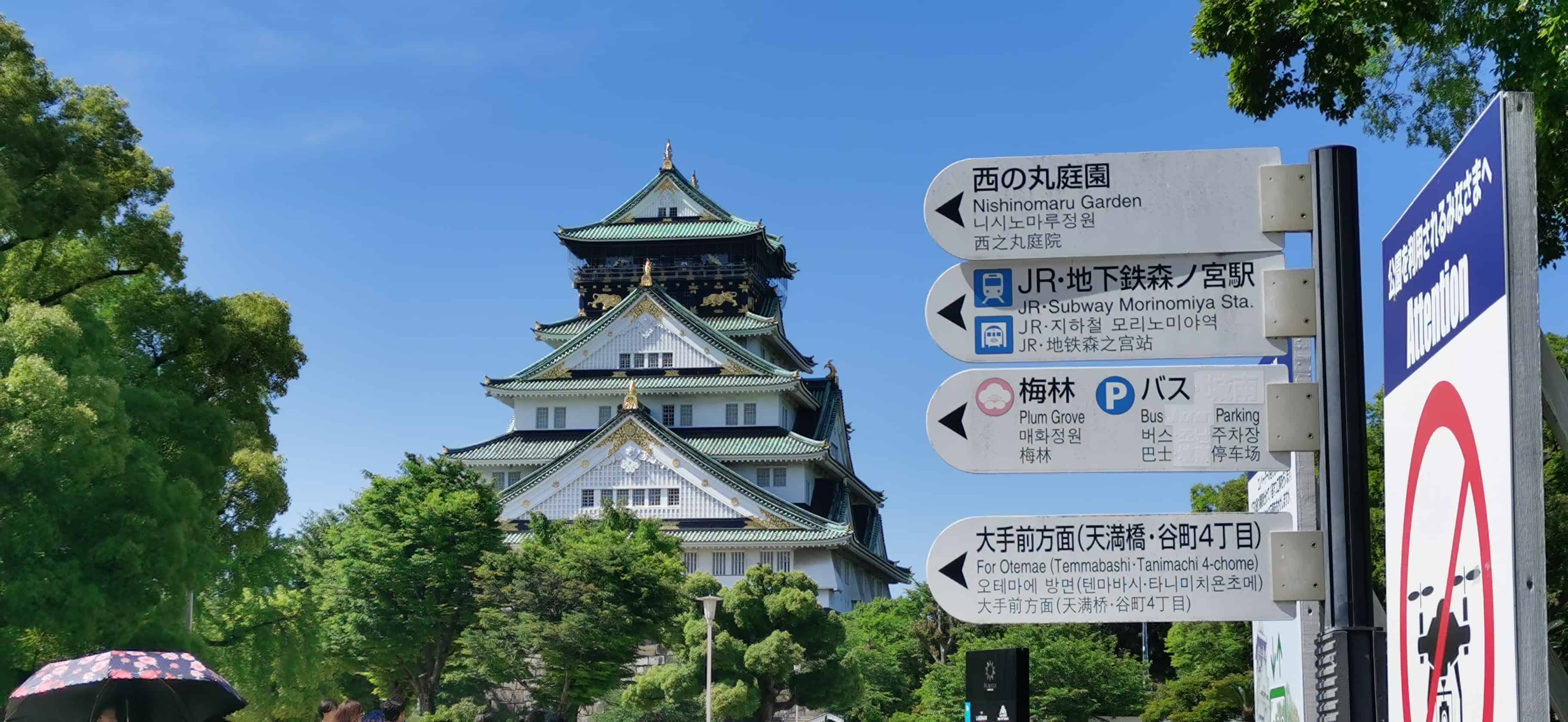
The Japanese term tenshu refers to the top tower structure of a castle—the upper stories and roof section. In premodern Japan it served a lookout function, but it was also a symbol of a lord’s authority. It is a strikingly native architectural form: a rare example of a multi-story building type in Japan that was not religious in origin. It is hard not to imagine that military rulers, looking up at Buddhist temple architecture, understood perfectly well that earthly power was fleeting, and so developed their own monumental form within the castle grounds to display rank and command.
Osaka Castle was first built in 1583 by Toyotomi Hideyoshi and served as the political center of his regime. After the fall of the Toyotomi in 1615, the main tower was burned down. It was rebuilt under the Tokugawa shogunate and completed in 1629, only to be struck by lightning and destroyed again in 1665. What survived were the stone walls, storehouses, and residential structures. The current main tower dates to a 1931 reconstruction. It escaped American bombing during World War II and later became a museum open to the public. Because of limited historical records, the scale and design of the reconstruction are said to differ somewhat from earlier versions.
Tickets were easy to buy from a self-service machine downstairs using Alipay. Outside, a crow sat in a tree watching the stream of tourists below with what looked like deep suspicion. The setting felt ecologically lively, and the exhibition booklet was available in four languages.
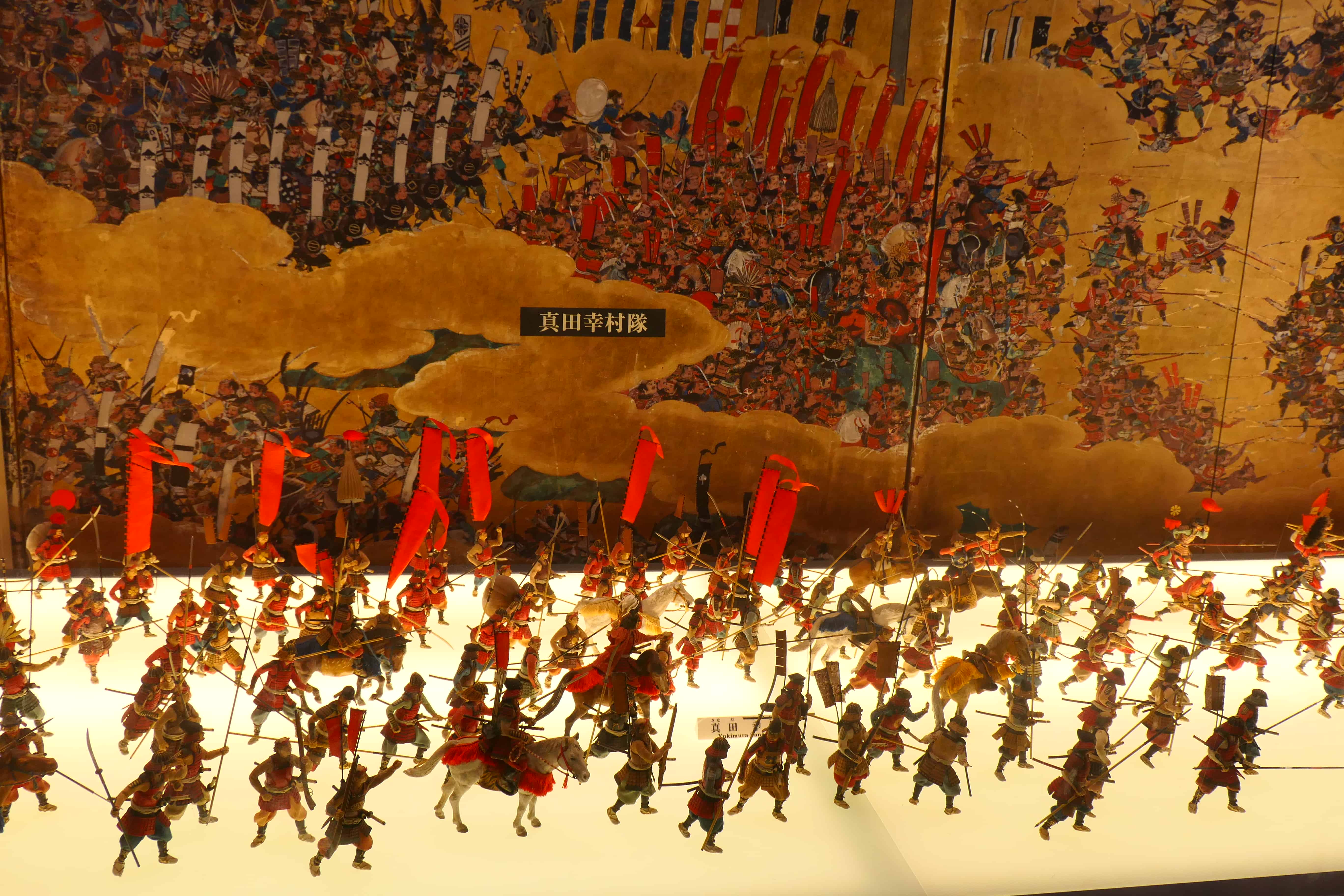
Inside, the exhibitions include many 3D explanations of the Sengoku period. On the fifth floor, a display centered on the Summer Campaign of Osaka folding screen uses video to explain many visual details. What stood out to me was not just the battle itself but the suffering it caused. The narration emphasizes the misery of displaced civilians: no matter what, it is always the vulnerable who are hurt most in war. From a distance the screen looks densely packed with tiny figures, but when enlarged, the painter’s observational precision is astonishing.
Power shifts and military conflict were the norm in fifteenth- and sixteenth-century Japan, and the era produced many famous warlords, which helps explain its enduring hold on popular imagination. Even so, I have never really understood the affection later generations seem to feel toward Toyotomi Hideyoshi. Perhaps people admire him because he rose from common origins and is remembered as the strongman who brought an end to nearly a century of civil war. But the historical record presents a familiar type of autocratic centralizer: heavy taxes on peasants, the sword hunt that tightened control over the rural population, the strengthening of status divisions, persecution of Christians, and the invasion of Korea. None of this came cheaply. It burdened the people, exhausted resources, and helped bring about the decline of the Toyotomi regime itself. People say he ended the age of disorder, yet he did not truly end it.
History preserves his name, and along with it, a grand and dramatic narrative. Perhaps this is not so different from the fascination many cultures feel for powerful founding emperors. People project admiration for authority onto buildings and legends with remarkable ease, while the ordinary civilians ground down by harsh rule and war vanish into the background. The heroic image of rulers on campaign has a way of washing the blood from the past.
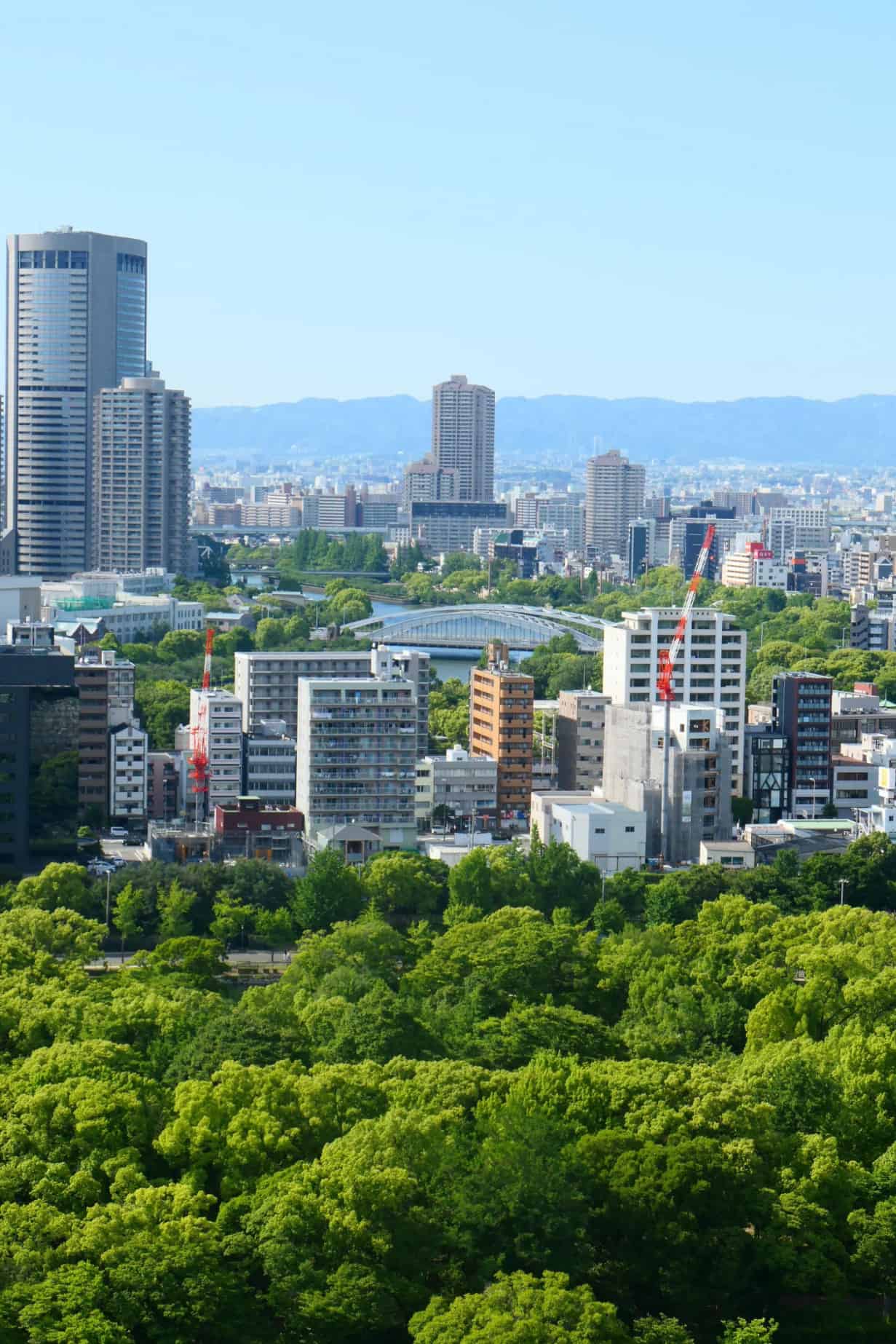
From the top, the view opens onto a thoroughly modern city and pale mountains in the distance. The landscape was here long before any of these political symbols, and the buildings themselves are not guilty of anything. What is dangerous is the meaning human beings impose on them. Generation after generation has seen this tower burn and rise again as an emblem of power and force. In the end, perhaps it has never been more peaceful than it is now, functioning as a tourist landmark.
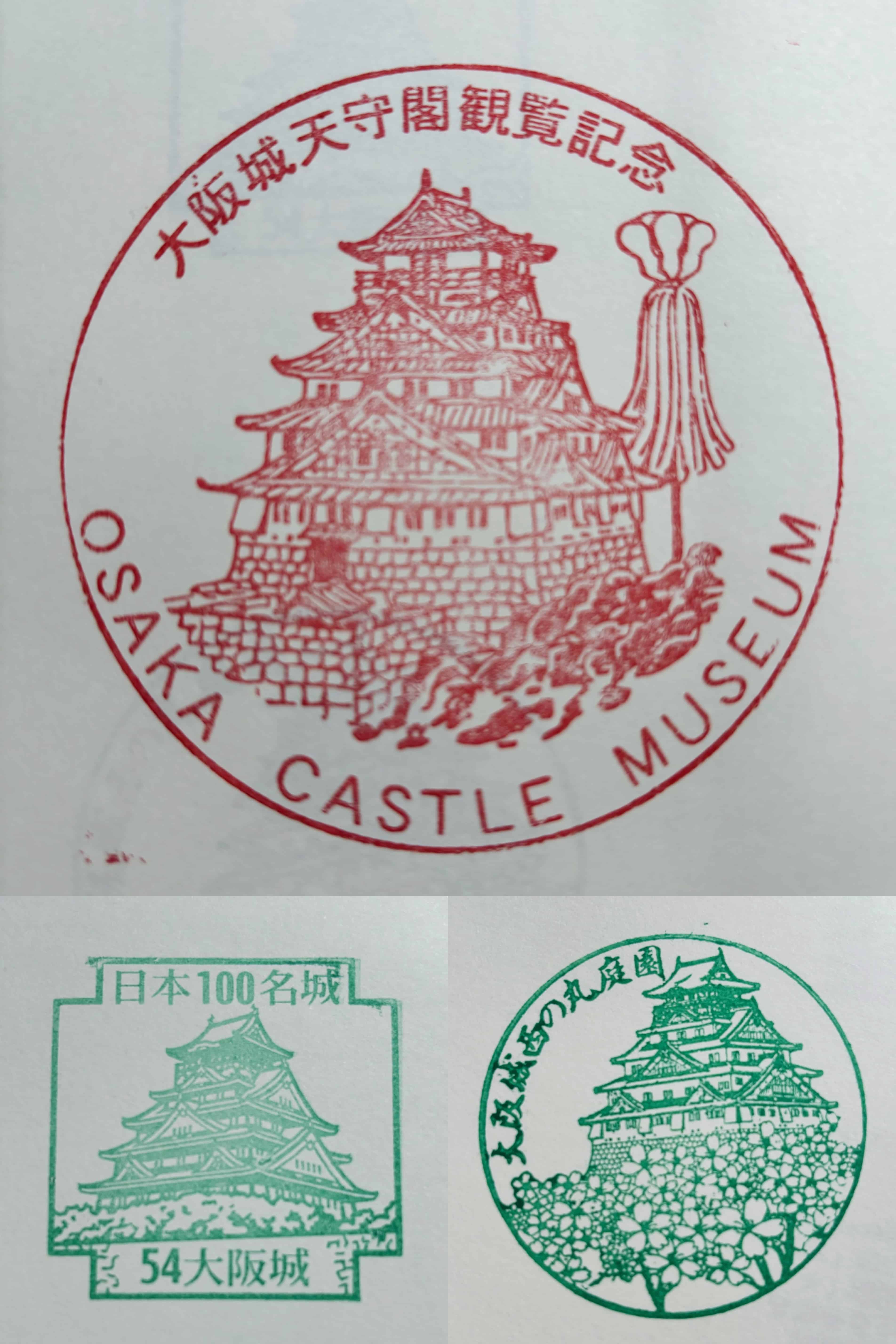
There is a commemorative stamp on the second floor and a stamp for Japan’s top 100 castles at the first-floor service counter. Since the time of Tokugawa Ieyasu, regulations limiting each daimyo to a single castle led to the dismantling of most of the country’s once vast number of domain castles. Later political changes only accelerated the destruction, and many old castles were sold off at extremely low prices. A few survived through support from former domain lords or local communities. In the end, only twelve original castle main towers remain in all of Japan. Osaka Castle’s reconstructed main tower was registered as a tangible cultural property in 1997.
Maybe in times of political upheaval, people tend to think first about simply surviving daily life; they do not stop to ask what aesthetic or historical value a building might hold. Often it is only after something has been damaged or lost that later generations begin to wonder what, exactly, should have been preserved.
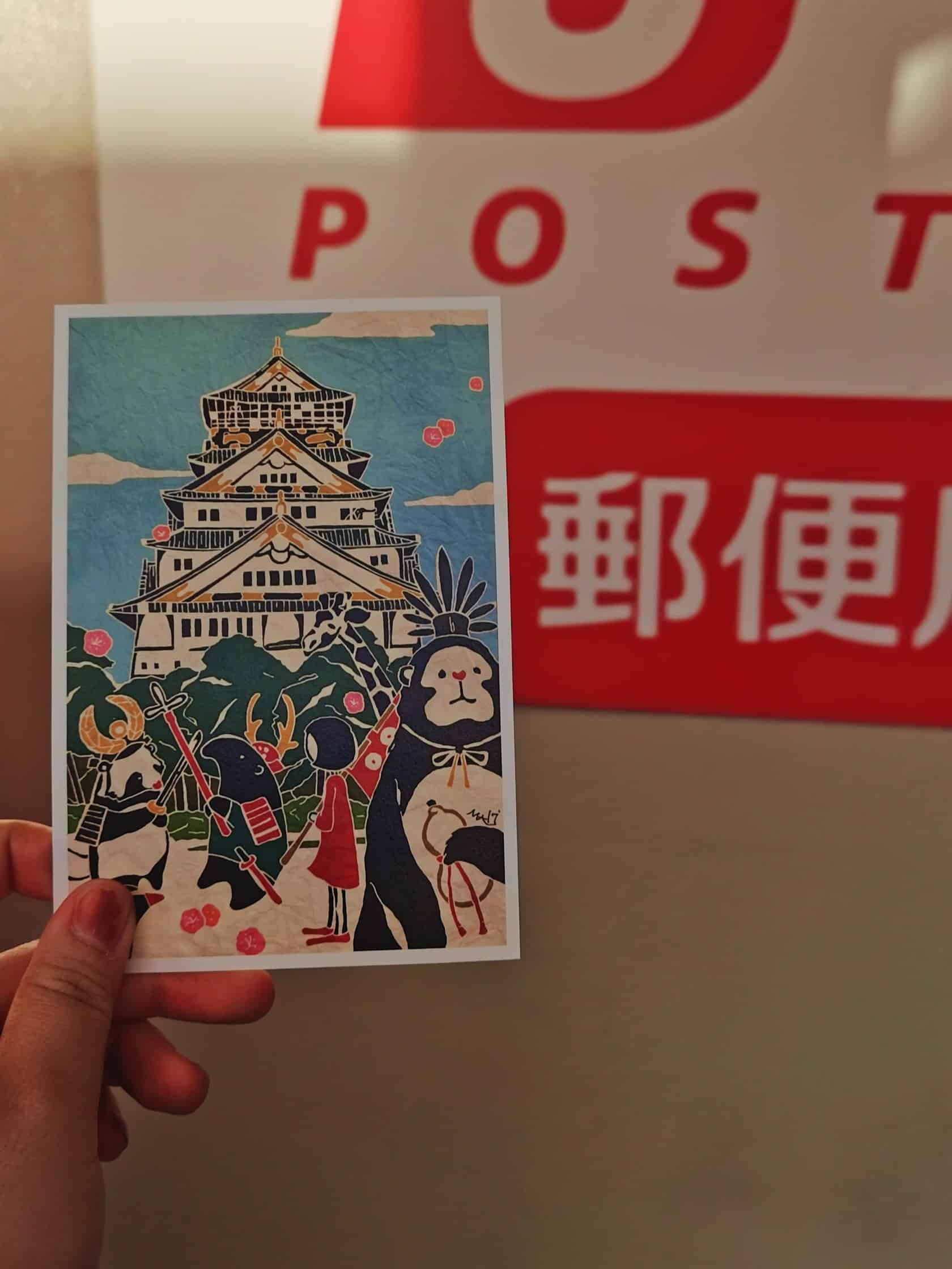
The commemorative postcard sold at the top floor was beautifully designed.
Nishinomaru Garden
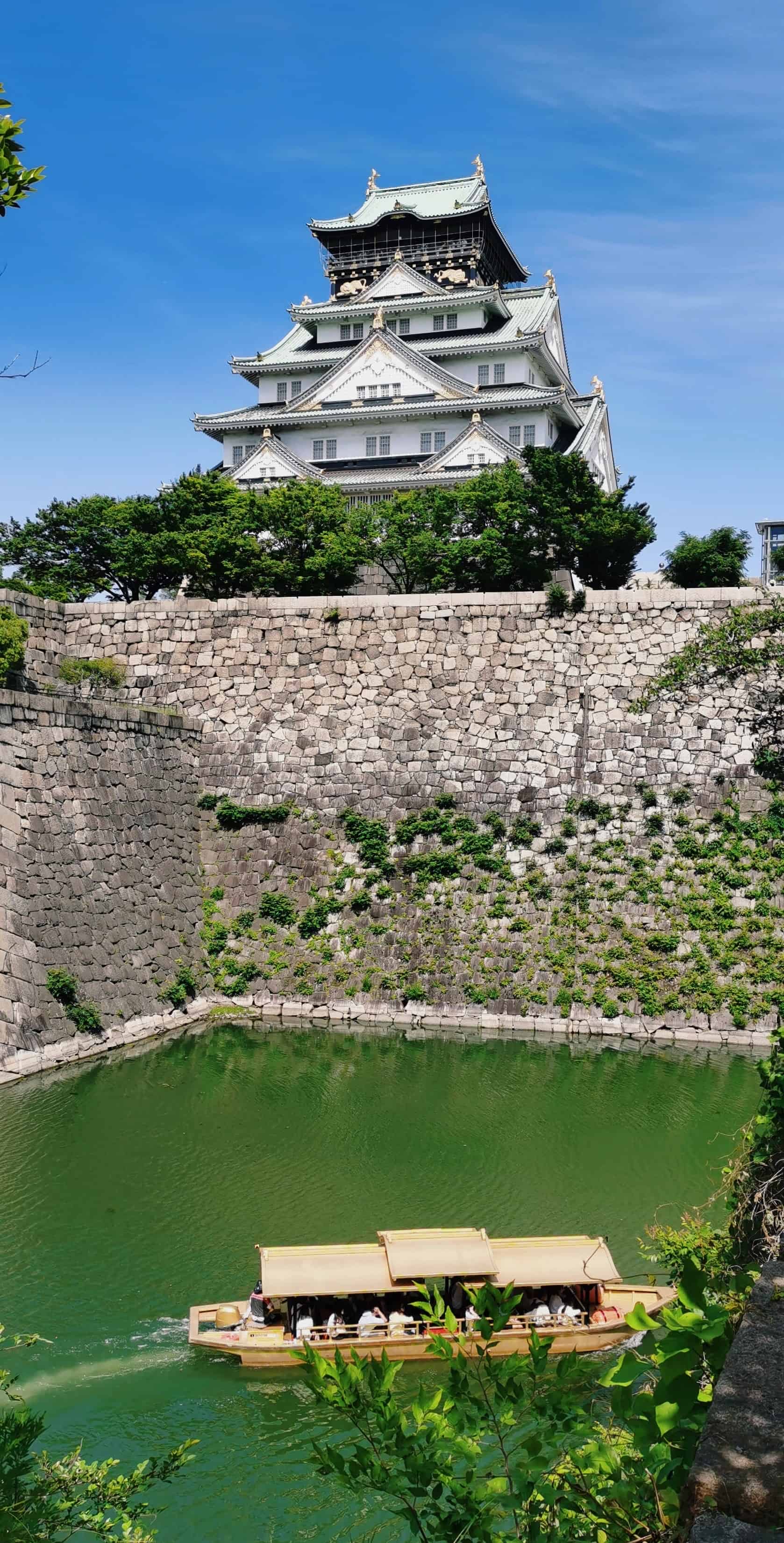
Nishinomaru Garden is a grassy garden on the western side of Osaka Castle. If you walk farther in, you can find one of the best angles for photographing the main tower. In spring, it is supposed to be an excellent cherry blossom spot; in May it was lush, quiet, and intensely green. Sitting on a bench by the water and watching sightseeing boats drift past below the railing is pleasant enough, though after a while it can also become a little dull. In the northeast corner there is a teahouse called Hoshō-an, donated by Konosuke Matsushita, but when I went it seemed almost empty. This is the sort of place you can visit or skip without much regret.
According to tradition, this area was once the residence of Kita no Mandokoro, Hideyoshi’s lawful wife, Nene. Looking out from the garden, I only then realized how far her residence had been from the castle where Hideyoshi himself stayed. Historical writing has never seemed reluctant to recount Hideyoshi’s romantic entanglements, but when it comes to the women around him, detail grows thin very quickly. Nene, as far as I know, was born into a warrior family and was married at fourteen to the still-low-ranking Hideyoshi by Asano Nagakatsu. She never bore him children.
Women of that period had little control over their own lives to begin with, treated as long-term investments in marriage and family strategy. Yet later historians still insist on forcing them into neat moralized types: Nene as the dignified, broad-minded lawful wife with a strong temperament and somehow a kind of romantic freedom, useful mainly as a contrast to Chacha the favored concubine. It is a flattening that I find hard to take seriously. There are also accounts suggesting that Nene and Chacha had a good relationship. Neither woman had much political voice, and after Hideyoshi’s death, the fact that Nene managed to protect her natal family and live out her life at Kōdai-ji may already have represented the limits of what was possible for her in that era. Praising her “grandeur” often says less about her than about a failure to imagine the actual conditions under which women lived.
Shinsekai in Naniwa Ward
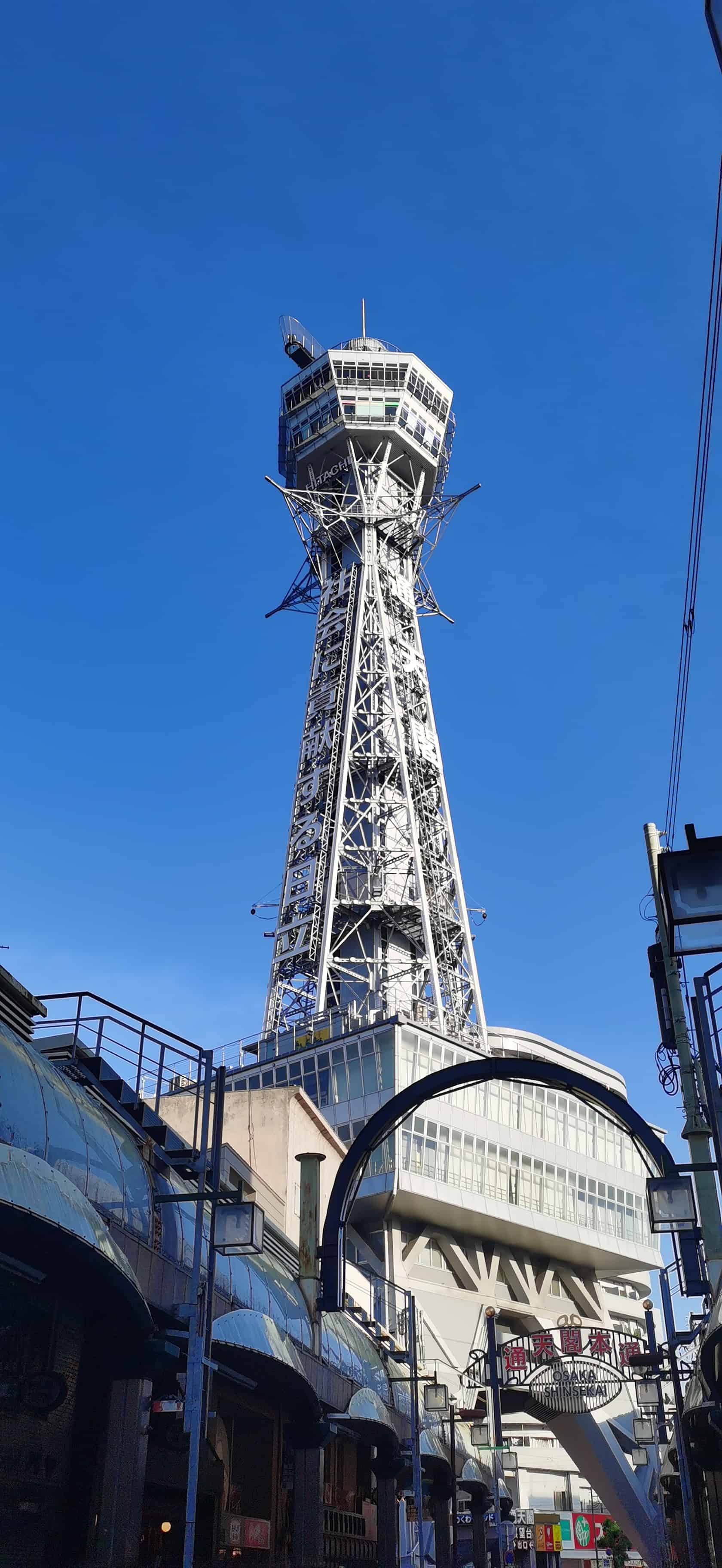
In the afternoon I headed to Naniwa Ward. The moment I came out of the subway station, I could already see Tsutenkaku in the distance.
I randomly walked into a small restaurant in Shinsekai and had a salmon rice-noodle set meal. My conclusion was that Japanese udon has a much better chew. The downside of the area is that when it gets crowded, many restaurants are not very welcoming to solo diners. Some charge a seating fee for one person, while others politely turn you away. If you are traveling alone, this is not the ideal place to show up right at peak mealtime.
Tsutenkaku
The Tsutenkaku standing today is actually the second generation of the tower. Including the lightning rod, it reaches 108 meters, and it was designed by the same engineer who designed Tokyo Tower. The first Tsutenkaku was built in 1912 and stood 75 meters tall—at the time, it really was considered the tallest tower in the East. Its exterior was modeled after the Eiffel Tower. By then Osaka had already hosted a major exposition, and the area around Tennoji even developed a theme park inspired by New York. Over the span of a few years, the city’s population surged and the economy boomed. The first tower was destroyed in a fire in 1943.
The present tower includes a weather-lighting system, and on the third floor there is a giant slide called the Tower Slider. When I entered, a long line of people was already waiting to try it.
Because it was the weekend, the line to go up took more than an hour. Once at the top, I watched the sunset.
From Tsutenkaku, you can even spot the Glico sign in Dotonbori—one of Osaka’s most recognizable landmarks. It is hard not to admire Glico’s success as a century-old company. Pocky really did conquer the world.
Shops were already selling merchandise for the next World Expo, and at first glance the designs were actually fairly distinctive.
By the time I came back down, night had fallen and the neon of Shinsekai was fully lit. The whole district had more atmosphere then. Tsutenkaku was glowing blue, which meant rain the next day.
I had originally planned to go on to Tennoji, but it was too late by then, so I headed back and left it for another visit. For a future one-day Osaka route, Dotonbori and Shinsaibashi plus the Tennoji area and the Abeno Harukas 300 observatory would probably make a good combination.
Compared with Umeda, Namba felt much better for evening wandering. Even after eight o’clock, the crowds were still heavy. There were electronics stores, secondhand shops, clothing stores, toy stores—exactly the kind of place to save for the end of a trip, when it is finally time to do all your shopping before leaving Osaka.