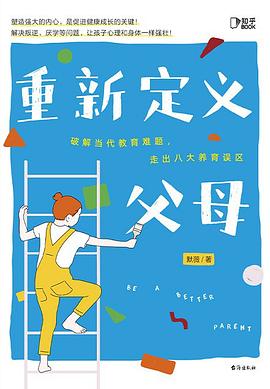
Redefining Parents is a guide to raising children from the perspective of psychological development—a kind of manual for the job of being a parent.
Just as physical growth has its key stages, ages 0 to 18 are the most important years for a child’s psychological development. What is formed during this period becomes the foundation of lifelong mental health. The book divides these years into five developmental stages and, drawing on psychological theory while also taking Chinese history and culture into account, offers a fresh explanation of what parents are responsible for, what the parent-child relationship really is, and what psychological nurturing is meant to achieve.
It lays out the developmental patterns, traits, and tasks of each stage in a systematic way, proposes a “53321” framework for psychological parenting suited to Chinese families, and discusses eight common misunderstandings about this kind of upbringing.
The book’s central idea is simple: only when parents understand how psychological nurturing works can they raise a child who is mentally healthy and fully developed in character. Such a child is inwardly strong, has self-respect and confidence, can regulate themselves, stay focused, tolerate setbacks, and retain both the motivation and capacity to keep learning throughout life.
The “53321” framework includes:
- 5 areas of psychological parenting: learning state, mobile phone and gaming habits, daily routines, character formation, and social relationships
- 3 kinds of developmental influences: parents, significant others, and interests or hobbies
- 3 ways to build the parent-child relationship: letting go, setting boundaries, and breaking limiting beliefs
- 2 ways to replenish a child’s psychological nutrition: affirmation and recognition, and unconditional fulfillment
- 1 principle for clearing psychological garbage: unconditional acceptance
One passage alone is enough to make the whole book feel warm and humane:
We are allowed to have emotions. We may lose our temper with our children, and there may even be moments when we do not like or accept them. But we should be honest. We should not simply dump our bad mood onto a child through blame. We can tell them, “I’m in a bad mood today.” Don’t put on airs, don’t force a justification, and don’t assume that parents are never in the wrong.
That kind of honesty feels more comforting than many grand parenting theories.
A few pages
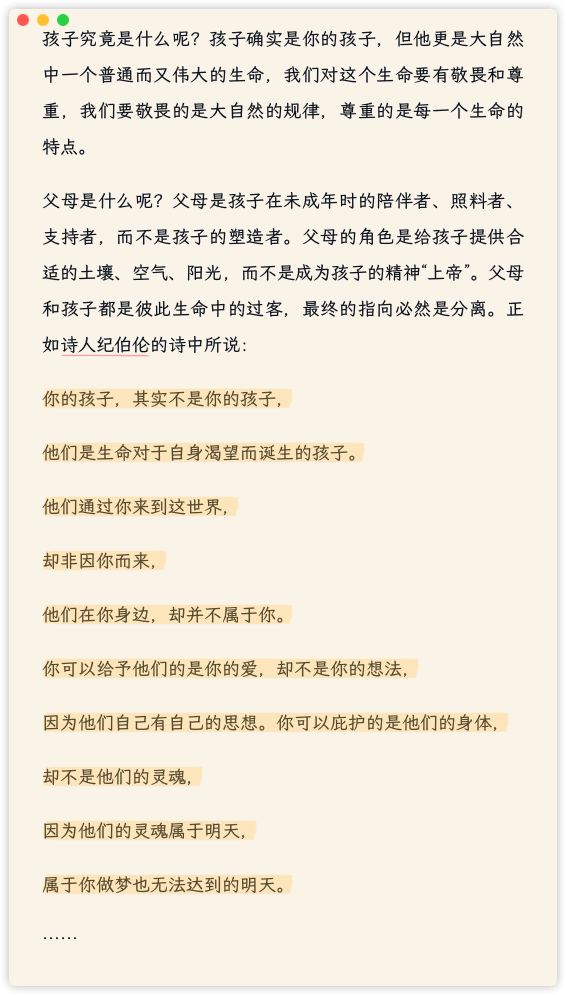
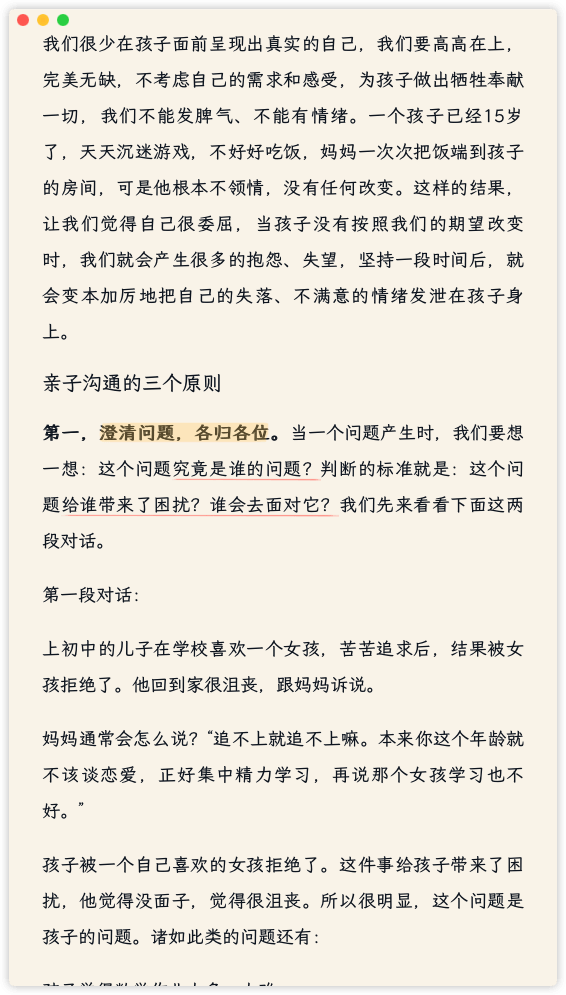
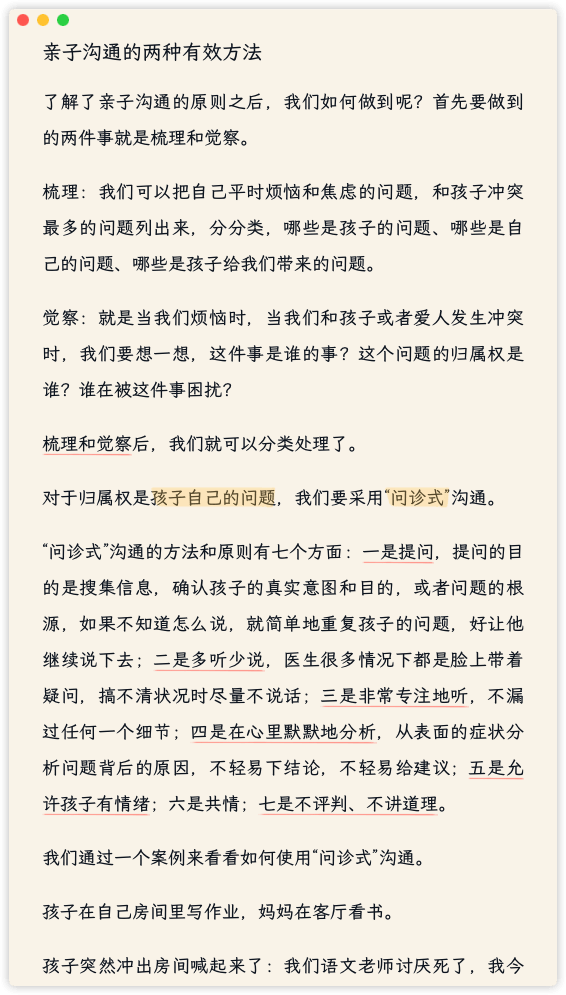
What stayed with me
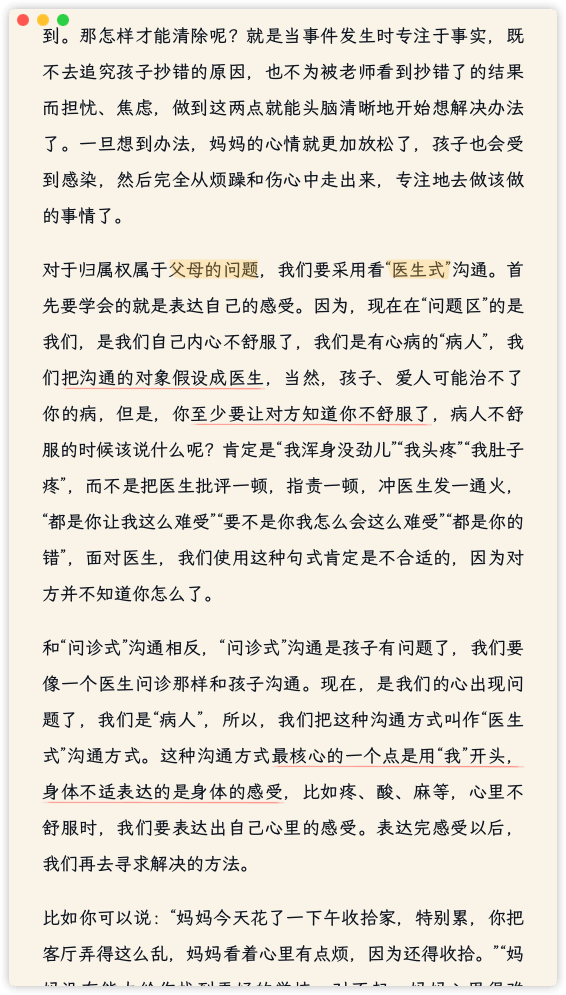
The distinction between “consultation-style” communication and “doctor-style” communication.
When facing a child’s problem, I often do not respond with straightforward concern or appropriate help. Instead, I first criticize, lecture, or provoke, and only then offer help as if I am doing something kind.
And when facing my own problems, I often redirect my frustration outward. I vent my emotions, complain that children do not understand how hard parents have it, and blame them for not being considerate of adult feelings.
A useful book does not only explain children. It also forces parents to look at themselves.
Self-reflection, again and again.