Anyone who has tried signing up for ChatGPT has probably run into the same obstacle: after email registration, OpenAI asks for a phone number, and a mainland China number will not work. For many people, that is where the process stops.
There are usually two ways past this step:
- use an SMS verification service and temporarily rent a non-mainland number to receive the code;
- buy a non-mainland SIM card and keep a real number for longer-term use.
Both can work, but they serve different needs.
SMS verification platforms
An SMS verification platform does exactly what the name suggests: it provides phone numbers that can receive one-time verification codes. In China, operating this kind of platform carries significant legal risk. A prosecutorial analysis of SMS verification platform activity describes the issue this way:
Parties involved in SMS verification platforms obtain large volumes of phone numbers and verification codes, then use them for mass registration and conversion into internet accounts, continuously supplying downstream black and gray markets while creating a substantial shield for hiding identities. This causes considerable social harm and infringement on protected legal interests. Criminal regulation of such activities still needs to be strengthened. By analyzing the actors involved and operational processes, and distinguishing between real-name and non-real-name SIM cards, more precise criminal qualification can be applied.
The platforms discussed here are overseas services offering numbers from many countries, mainly used to register foreign apps and online products.
There are countless services in this space, but two commonly used ones are 5sim.net and sms-activate.org. Both support phone verification in more than 170 countries. They also support a wide range of payment methods, including credit card and Alipay.
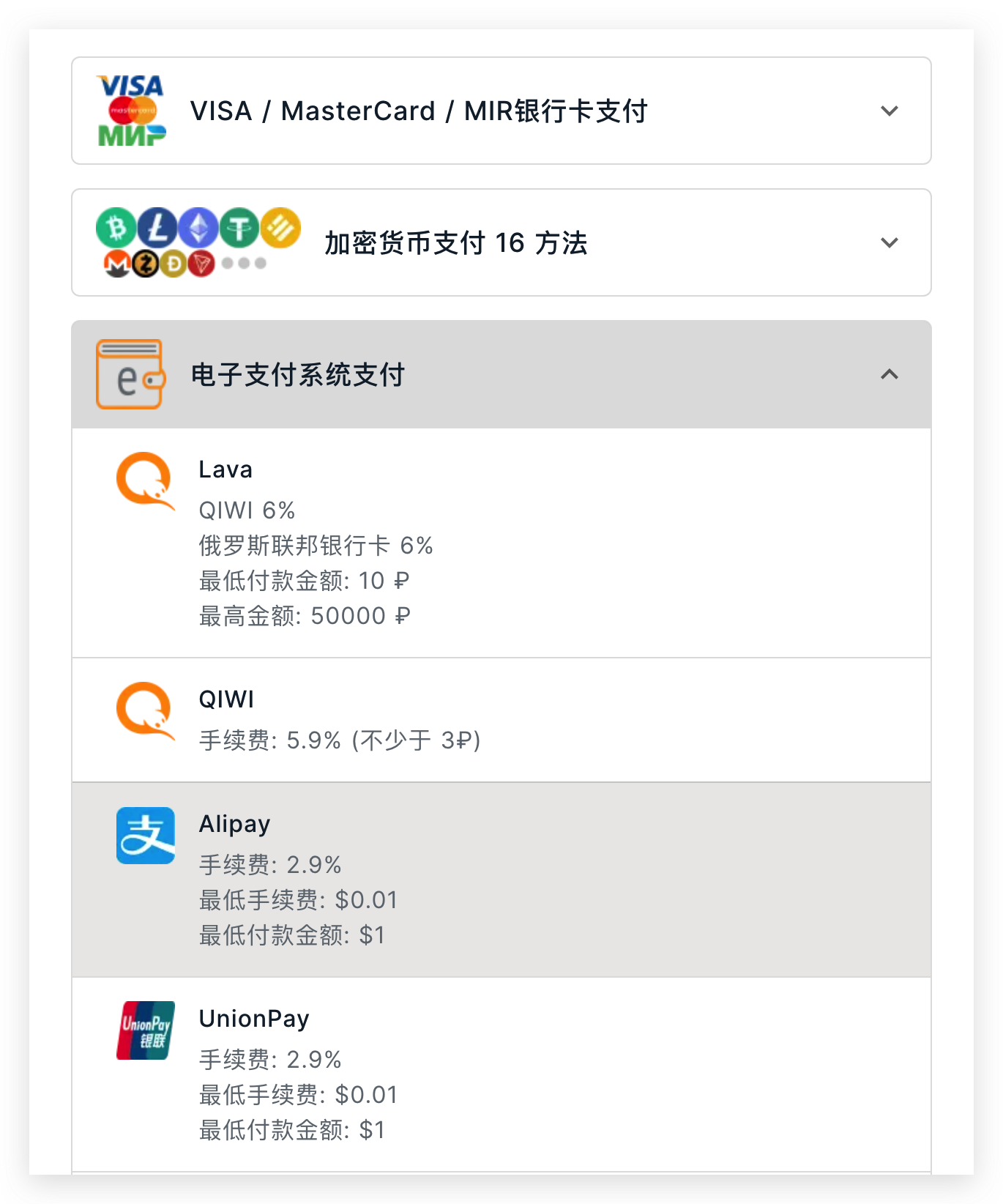
If you use this type of service regularly, it can be worth topping up roughly USD 5 to 10 in advance rather than reopening Alipay every time. The basic flow is straightforward: choose the service you want, then choose the country. If you are registering ChatGPT, select the OpenAI service first, then pick a number from a country on the list. Prices vary a lot by country; a U.S. number is usually much more expensive than an Indian one.
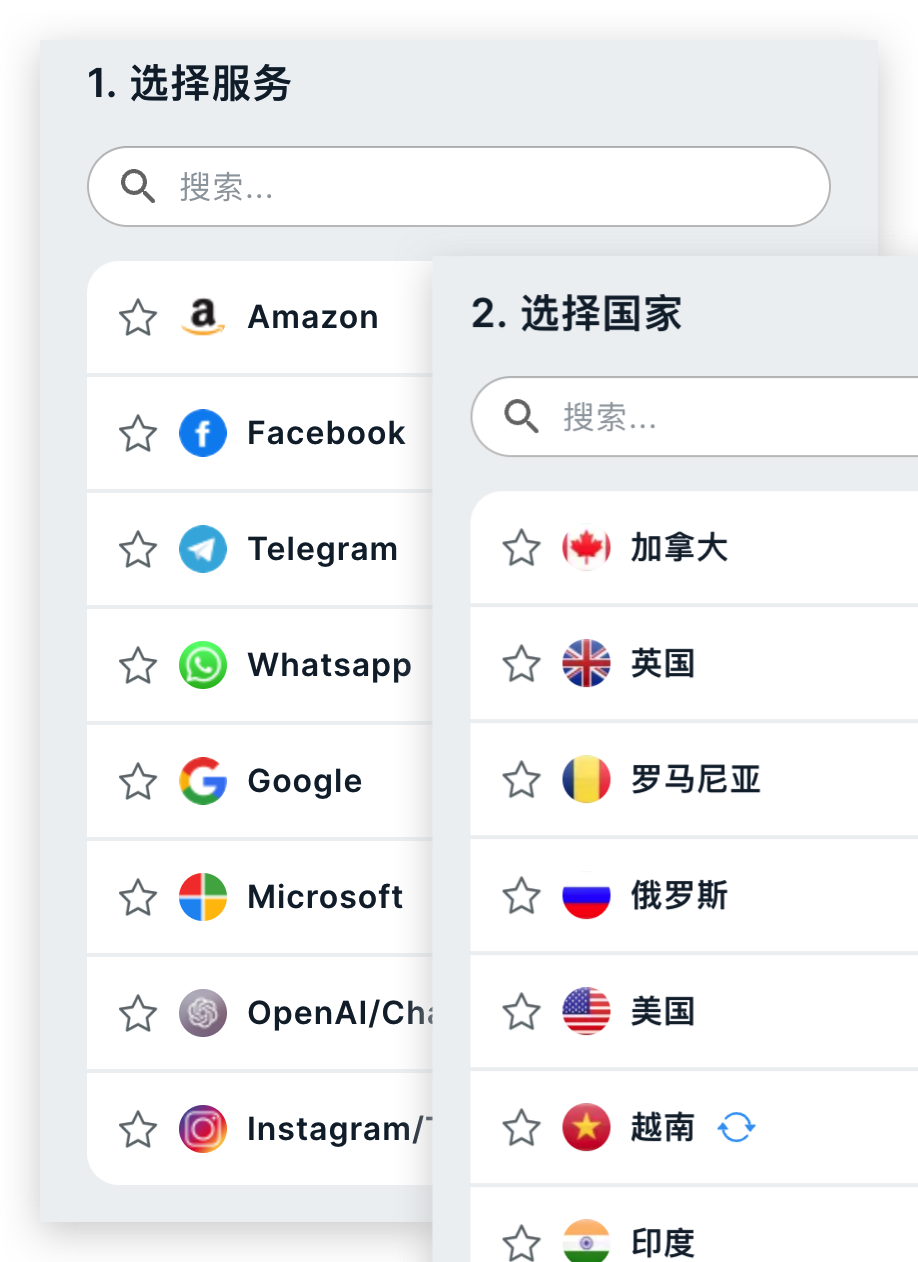
Once a number is selected, the platform will show a waiting screen for the incoming code. If you cancel before any code is received, you will not be charged. The interface is generally easy enough to figure out.
The important caveat is this: as soon as the platform receives the verification code, you are charged, whether or not your registration or login actually succeeds. And you cannot keep the same number long term. These numbers are for one-time use only.
That means SMS verification platforms are fine for quick signups, but they are a poor choice for accounts that are sensitive, valuable, or likely to require repeated verification over time. If an account depends on a stable phone number, do not rely on temporary numbers.
Foreign SIM cards
For accounts tied to money, credit, or any long-term identity, a stable number is the better option.
Some people look into Google Voice, but there are many reports of number retention failures. Combined with recent tightening by Google, the risk of losing a number seems higher than before. Because of that, a physical SIM card is usually the safer route.
The options people mention most often are U.S. Paygo cards, the U.K. giffgaff card, and New Zealand's Skinny.
U.S. SIM cards
There are several kinds of U.S. cards.
At the cheaper end, there are Paygo options with a basic monthly cost of about USD 3. There is also the so-called orange card, whose main selling point is unlimited calling, unlimited SMS, and mobile data. One thing to watch out for is that you need to enable WiFi Calling during calls, otherwise the cost can become relatively high. Another advantage is that its mobile data exits through a local U.S. IP, which can be useful in some situations.
The lowest monthly cost for the orange card is USD 10, usually requiring either USD 120 per year in top-ups or USD 15 per month. In practice, many people still seem to prefer Paygo because the overall cost is lower.
U.K. SIM cards
There are also many U.K. options besides giffgaff, including Three, EE, and O2, but giffgaff is probably the most popular of the bunch.
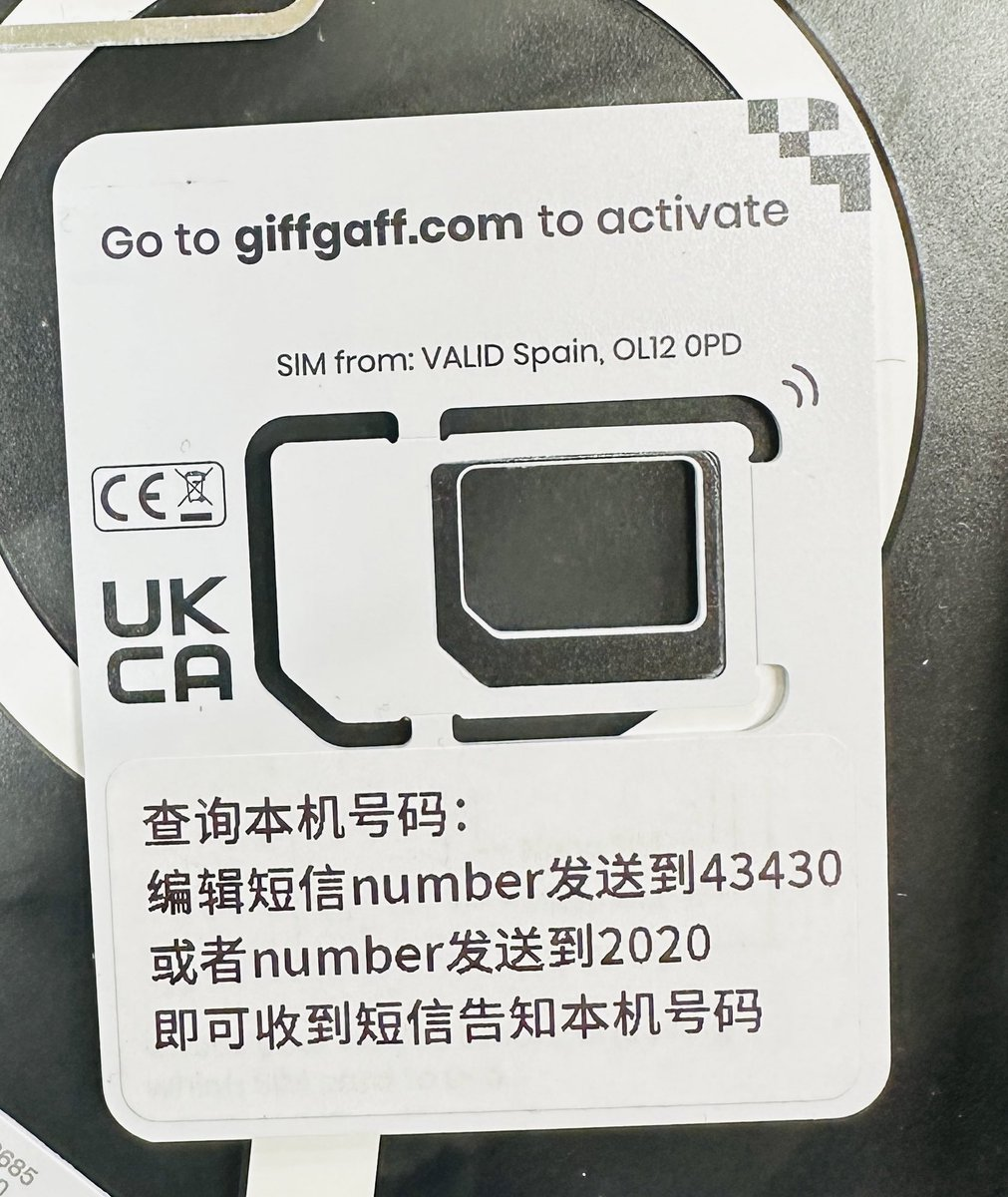
A few practical points about giffgaff:
- giffgaff offers different plans, and they come with different validity periods such as 30, 90, or 180 days. These are generally designed more for travel use, and once the period ends, the number may be reclaimed.
- When buying a card, you can choose a plan. Some plans are not immediately reclaimed, but they require periodic activity. If there is no usage for more than 180 days, the number can still be recycled. Any qualifying activity extends it for another 180 days. In practical terms, "activity" means:
send one text message or make one phone call - Some cards come with a few pounds of balance preloaded. Once that balance is used up, you need to top up through the official website at giffgaff.com. That usually requires an international credit card or international PayPal, which is not convenient for many people, although some users have reported that Chinese bank cards can work.
The biggest advantage of giffgaff is no monthly fee. The downside is that keeping the number active takes a bit of effort. One example purchase was a card bought from a marketplace for RMB 98, delivered the next day, with GBP 15 included. As long as there is one qualifying activity every six months—sending a text or making a call—the number stays active for another six months. In theory, that makes it usable for many years.
The official rule for keeping the number from being deactivated is:
To stop deactivation do any one of the following actions at least once every 6 months:
- Make at least one call, SMS or MMS to another number
- Make at least one connection to the internet using your mobile data
You do not have to buy it through a third-party seller. You can also request one from the official website and have it sent by standard mail, which typically takes one to two weeks to arrive.
New Zealand SIM cards
There is also Skinny from New Zealand. It was not examined in as much detail here, but user reports suggest it usually costs around RMB 200 through overseas purchasing channels, has no monthly fee, and can keep the number active with one top-up per year. Since giffgaff was easier to find and already being used by people nearby, there was less need to dig much deeper into other options.
Which route makes more sense?
If you only need to get past a one-time registration step, an SMS verification platform is the quickest option. It is easy, flexible, and supports many countries, but it is disposable by design. The moment a code arrives, the fee is charged, and the number is not yours to keep.
If the account matters in the long run—especially anything tied to payments, trust, or repeated verification—a foreign SIM card is much more appropriate.
A U.S. SIM usually costs more, but if you are a digital nomad, working on international products, or dealing mainly with a U.S. audience, it is often the most suitable choice. If you just want to buy and use overseas services online without paying too much, a U.K. card like giffgaff or a New Zealand option like Skinny is often enough.