On the way back to the hotel room, I saw a young couple standing under a plum tree, snapping off flowering branches. In the past, I probably would have looked down on them for breaking the branches. But this time the scene felt strangely cheerful, and a line came back to me: when the flowers are worth picking, pick them.
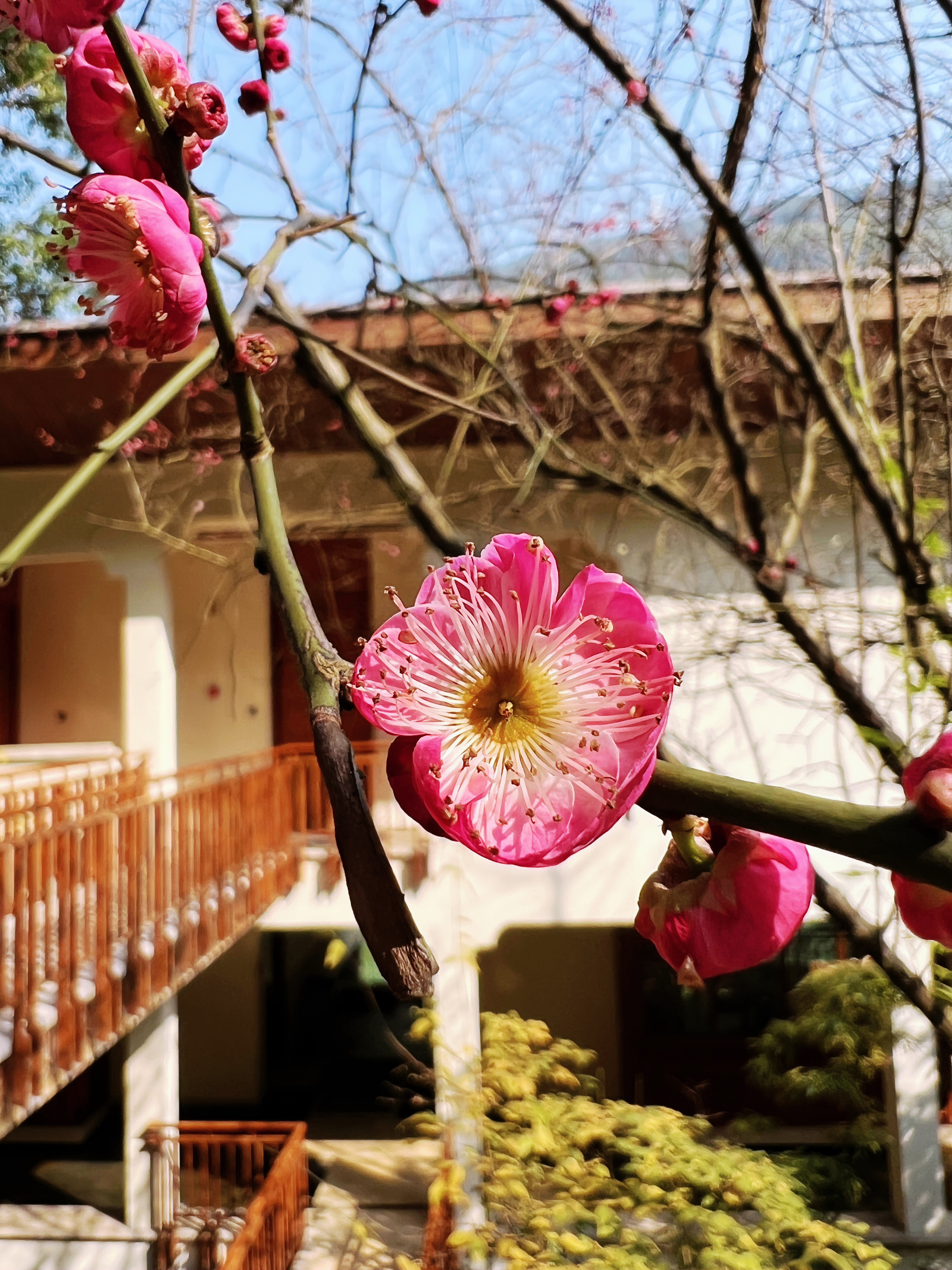
There is a small scene that, to me, captures this idea better than any abstract explanation.
Imagine a renowned Japanese flower artist being interviewed. She is known for cutting away branch after branch just to find the one shape that is exactly right for an arrangement. The host asks the obvious question: aren’t all those discarded branches simply being wasted so that one perfect piece can be completed?
She doesn’t answer directly.
Instead, the camera shows the finished arrangement. She asks, “Do you think it’s beautiful?”
The host says yes.
Then the camera cuts to another arrangement, completely different in form, with its own distinct charm. She asks again, “Do you think this one is beautiful?”
Yes.
Then another.
Yes again.
By that point, the intention seems clear enough. You assume the clipped branches were turned into other works. They may not have remained part of the main piece, but they became supporting elements elsewhere, fitting naturally into another composition.
So the host asks, “Were the branches in these arrangements the ones you cut off?”
“No,” she says. “These are different ones.”
“Then what happened to the original cut branches?”
“They were thrown away. They could no longer be shaped.”
“Oh.”
If I had to explain what that old line means, I would probably use a scene like this.
For a long time, I disliked a certain kind of argument: the insistence on forcing usefulness onto what is no longer useful. Take the waste branches in a flower arrangement. The work has already been completed beautifully, yet there are always people who step forward to condemn the discarded pieces as waste, as if the existence of refuse somehow invalidates the work itself. If the internet had been what it is now, a whole vocabulary for this kind of nitpicking would have appeared much earlier.
Why must the “waste branches” become the center of attention? Why should a finished work be required to drag along every unnecessary offshoot just to qualify as complete?
I used to be someone who cared intensely about process. Looking back, that was probably also the period when I was most skilled at finding excuses to avoid failure. I emphasized effort. I cherished the hardships inside the process. And by the time the ending arrived, I might already have slipped away, busy summarizing how bitter the journey had been.
Compared with the finished work itself, I cared more about proving that the discarded branches had value. They couldn’t have been sacrificed for nothing. They had to mean something too.
But honestly—forget that.
The work hasn’t even been seen yet, and people are already grieving the branches that were cut away for it.
Now I care more about results. Before a truly finished work is placed in front of you, there is no need to interrogate how many cuts were made or how much trimming it required. Only after something real and complete has been created do those discarded branches become worth picking up and talking about. Too many people reverse this order. Before they have produced anything at all, they are already anxious about how many branches they might have to lose.
And there is an even harsher truth beneath that.
Sometimes the branch that was meant to become art in the first place turns out to have been an empty branch all along—broken off with no blossom on it.