I first heard about this route on the deck of a ferry.
Two travelers were trading stories, photos, and itineraries in the sea wind. At the time, I was circling Bohai; he had just done a loop through Qinghai. After a brief conversation, that route lodged itself in my mind and quietly became a future plan.
This time, partly to make the journey easier on myself and partly to push back against loneliness, I chose not to travel alone. It was the first time I set out with a group.
The night before departure: Shenyang
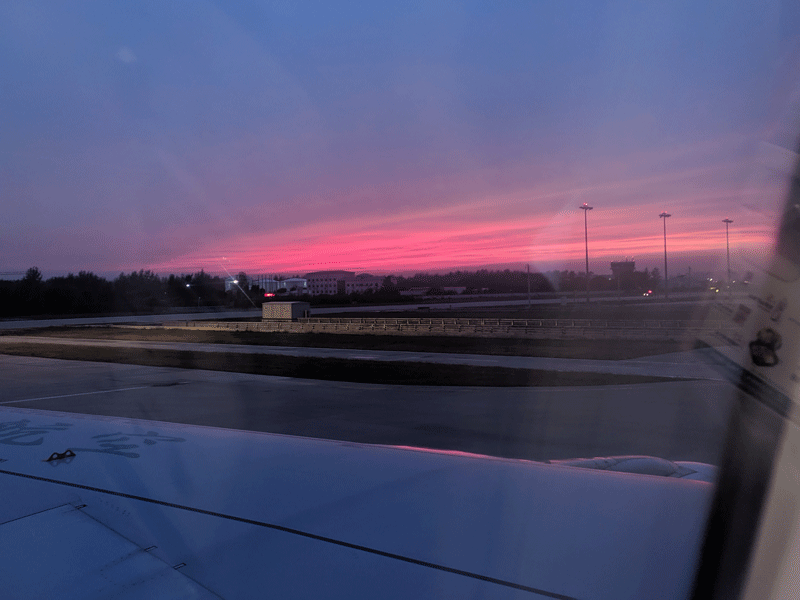
My flight was in the evening, which is how I ended up catching such a beautiful sunset at the airport.
My head was still a battlefield then. Doubt, fatigue, hesitation—everything was tangled together. But the moment the plane left the ground, I knew those thoughts were finally being left behind.
I flew from Shenyang to Lanzhou first, then planned to continue on to Xining to meet the others. Tickets from Shenyang to Lanzhou were cheap; flying directly to Xining would have cost several times more and still required a connection. By the time I landed in Lanzhou it was already very late, but somehow I still caught an airport bus straight to Xining.
The real headache came later: it was deep into the night when I arrived, and the driver simply dropped me in the outskirts of the city.
Day 1: Xining, then Qinghai Lake
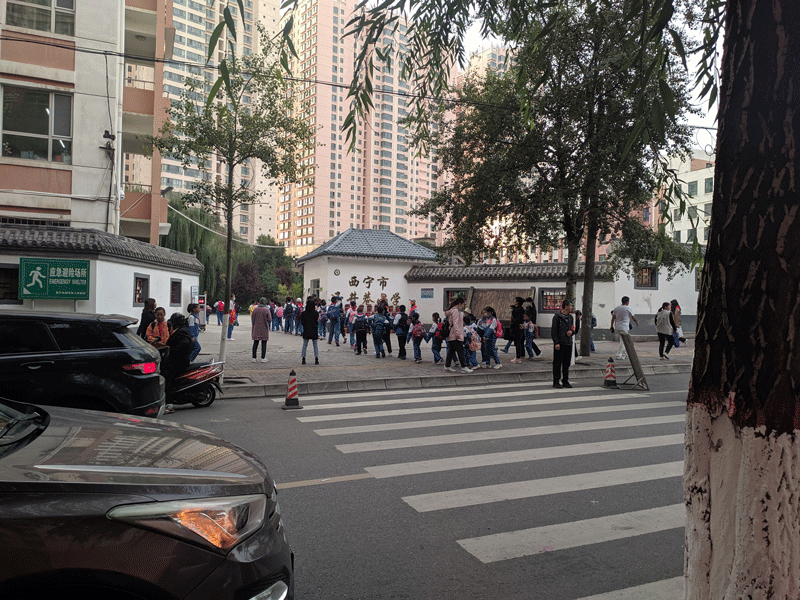
Insomnia had already done its work on me, so I woke early after only about five hours of sleep. The first thing I saw outside was school security escorting children across the street in full gear. The contrast was almost absurd; where I grew up, the area around a school gate had once been more likely to be occupied by local troublemakers.
Xining felt quiet in a way that was almost restorative. After spending too long in industrial cities, the place gave me the sensation of stepping back into nature after being shut in for years.
By noon, our driver picked us up and the group was finally complete. First came A-Ku, who gave me the immediate impression of a bespectacled lost lamb. Then A-Ling—cool, composed, and a little intimidating at first glance. Then A-Xing, who made me wonder if we had crossed paths before. Then A-Zhu, who somehow looked even tougher than I did.
We ate our first meal together in the northwest, and then headed for Qinghai Lake.
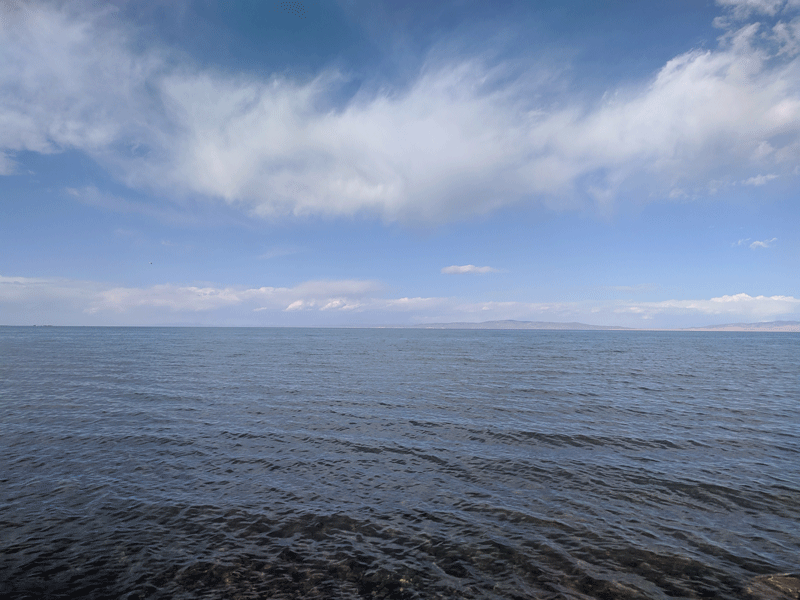
After clearing up a small misunderstanding, we reached the first major stop of the trip. The moment we entered the area around the lake, fields of rapeseed flowers began appearing one after another.
At one shoreline stop, there were locals offering yak photo sessions. What amused me was how random the prices were—15, 20, 30 yuan, called out almost at whim. It wasn’t that one yak was somehow superior to another; the numbers just seemed to materialize on the spot.
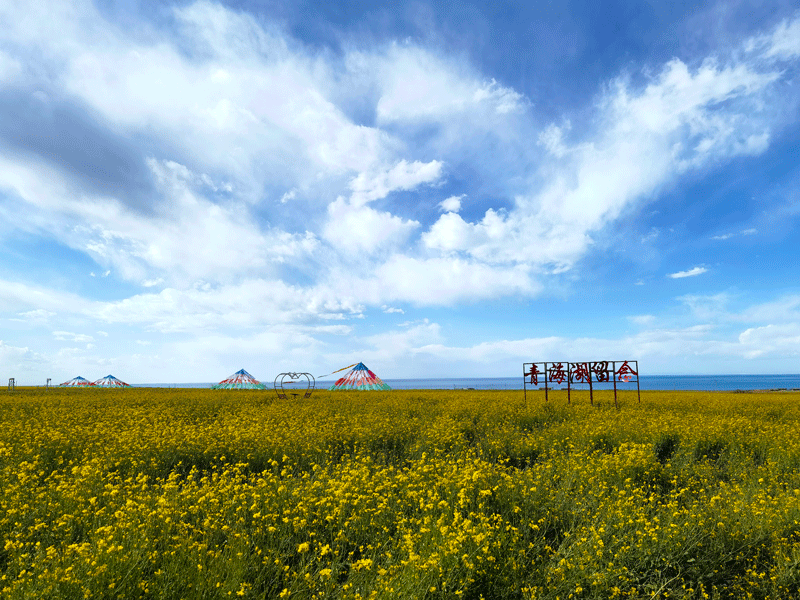
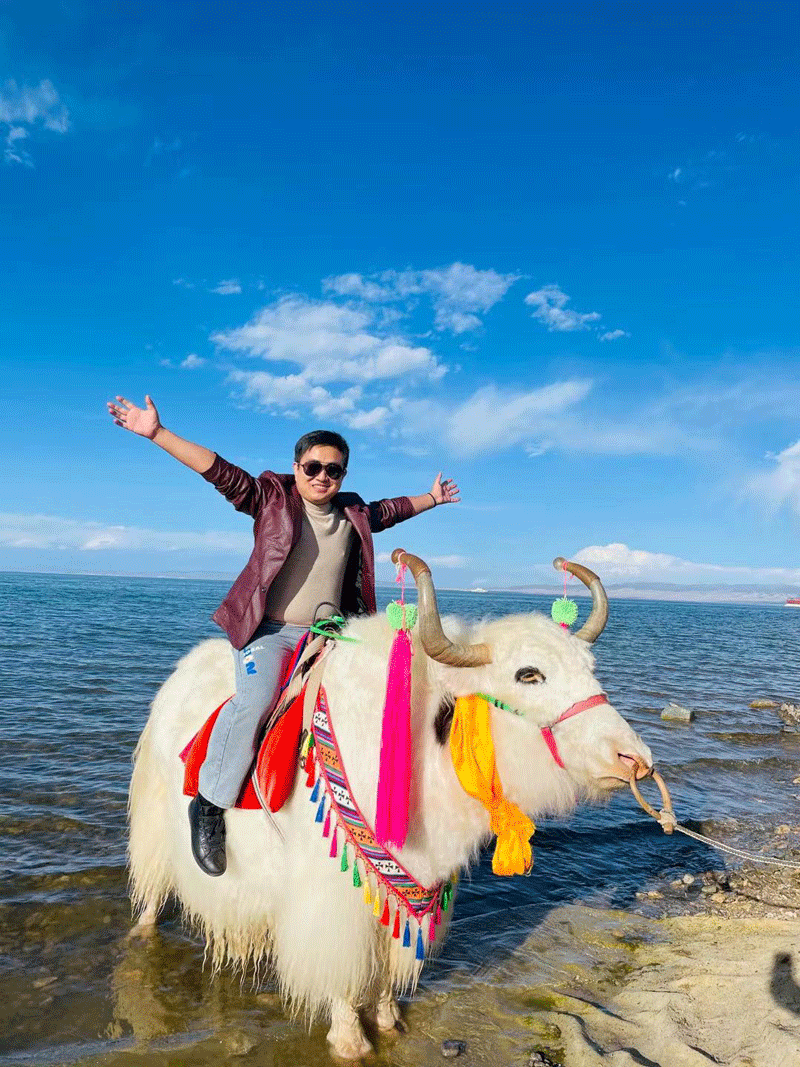
The openness of the place was overwhelming. It was a lake, yes, but it really did resemble the sea, with the same sense of tides and breadth. Mountains stood dimly on the far side, half-hidden in the distance.
I had left my city carrying confusion, almost as if I were running away. But faced with the vastness of Qinghai Lake, I found there was nowhere to hide at all.
Chaka Town: a sunset that refused to end
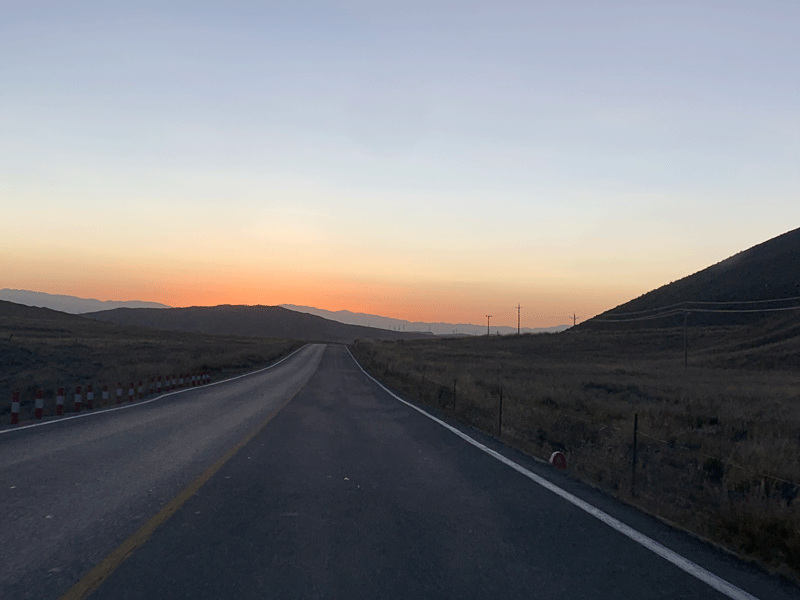
Because we were driving west, the sunset kept stretching itself out in front of us. It felt as though the sun had decided not to fall, stubbornly staying on duty a little longer.
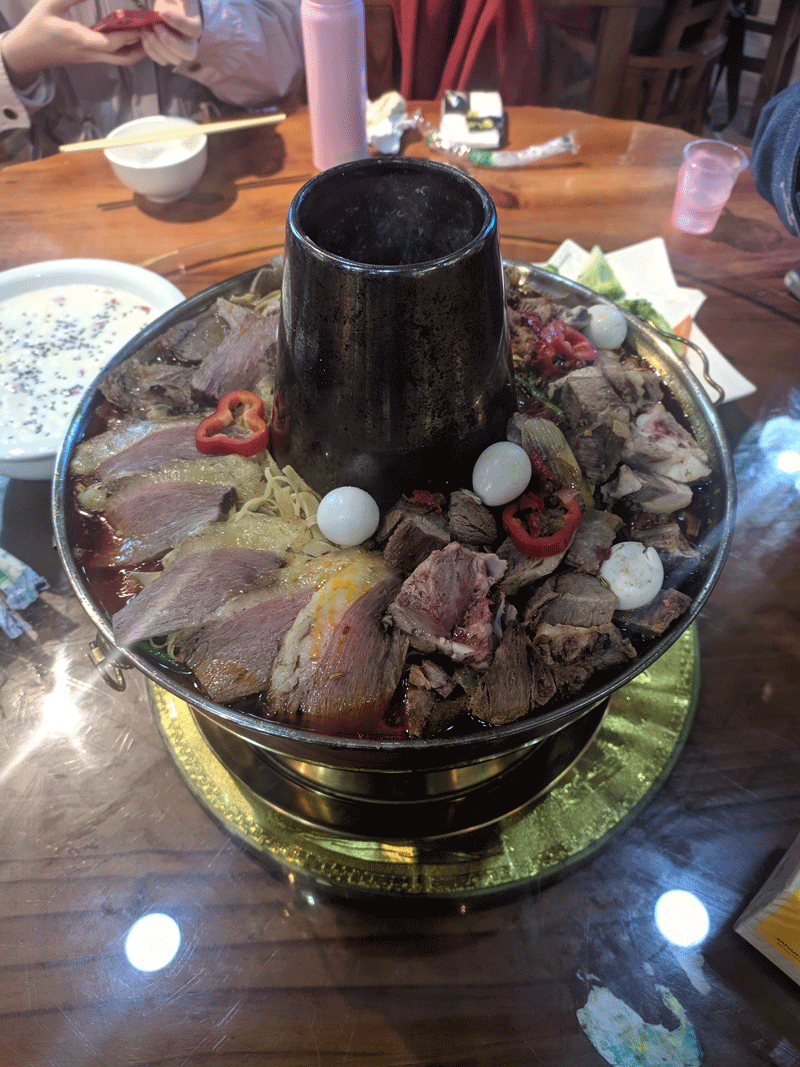
We reached Chaka Town around dusk and had yak meat hotpot, one of the local specialties. I’m from the northeast, so I’m used to stewed dishes, but this was a different kind of stew entirely—rougher, simpler, as if the ingredients had been thrown together with more confidence than ceremony.
What I struggled with most was the meat. In this part of the country, it often seemed almost impossible to chew properly, so most of it ended up swallowed before it was truly conquered.
I’m not socially anxious by nature, but I am guarded with people. On this trip, I wanted to see if I could loosen that instinct a little. So at dinner, I introduced myself to everyone more openly than I usually would.
It felt almost like student days again.
I even spent part of the day wondering which name to use. My real name? An online alias? A nickname? Nobody actually calls me by the grander names I use elsewhere. In the end I chose the one my friends use for me—Lao Bi. Maybe that was the first step toward trying to become friends with these people too.
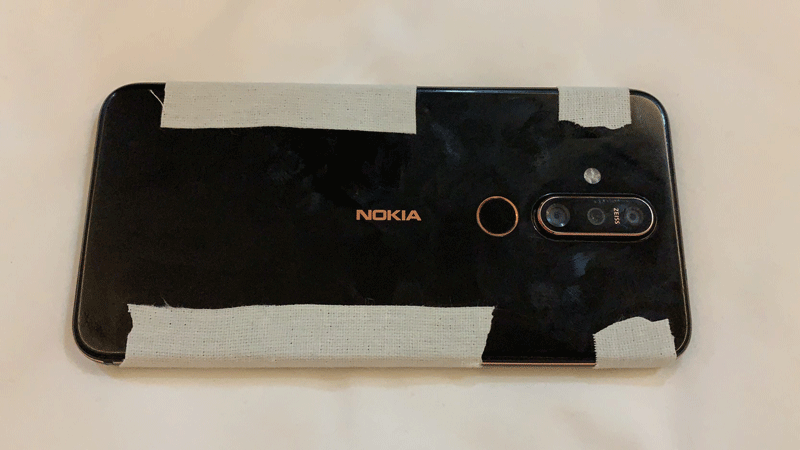
A practical note: high altitude can wreck the adhesive inside a phone screen, and your phone may literally crack open. There are barely any repair shops around in places like this, so bring a proper case—or, failing that, be ready to improvise with tape and bandages.
Day 2: sunrise over Chaka, then across the Qaidam Basin
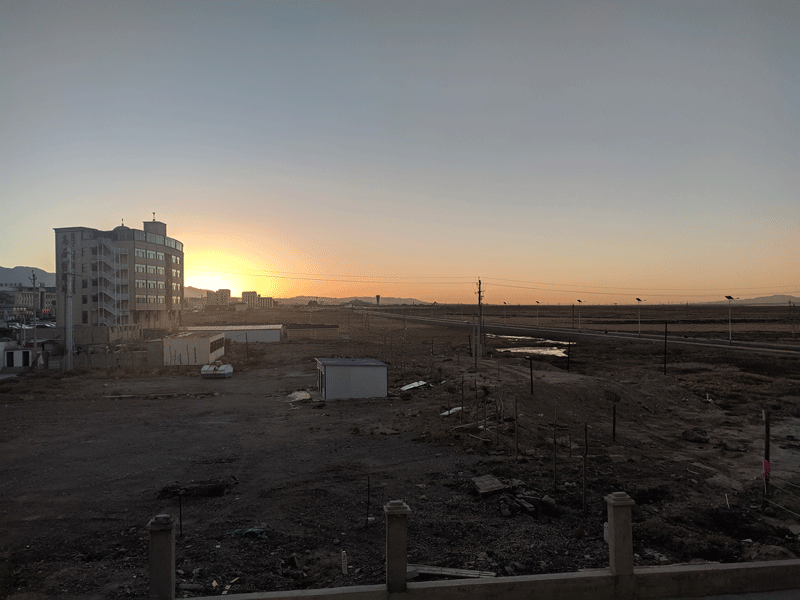
Again I woke too early to fall back asleep. I had had a nightmare.
A staircase beside the hotel led all the way to the rooftop, which let me catch sunrise over Chaka and also get a look at Chaka Salt Lake. It was much smaller than I had imagined—honestly, it even felt less impressive than the lake I used to run around back home. I had heard, though, that Qarhan Salt Lake later on would make up for that.
The first major drive of the day was across the Qaidam Basin, and our driver lived up to his reputation by driving fast. Somewhere along the road we started playing a drawing game in the car. I had heard of it before and never expected it to be that fun.
Then we stopped at an unexpectedly beautiful lake that hadn’t even been listed in the itinerary—known there as the Queen Mother of the West’s Jade Pool.
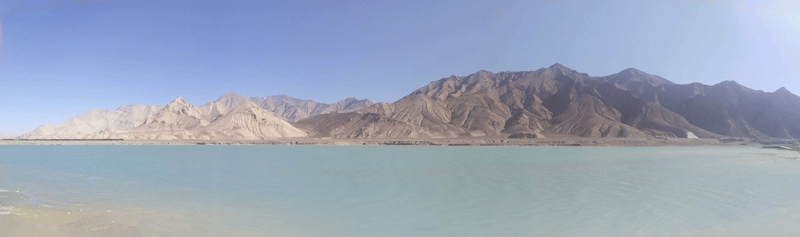
That kind of surprise may be one of the best things about road trips. Everyone got out. I still didn’t particularly enjoy being photographed, whether by myself or by others, but when they offered to take pictures for me, I felt something warm in it.
Kunlun and Kekexili
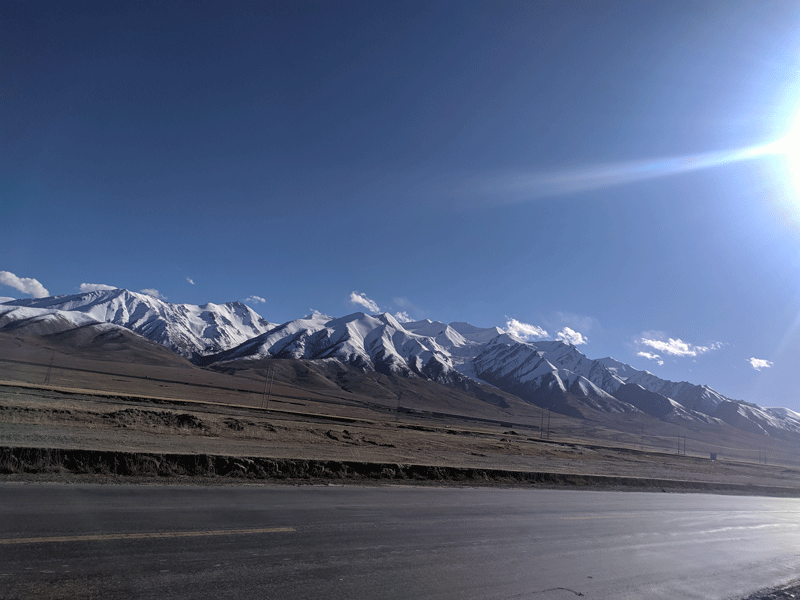
We had already seen endless rocky hills and Gobi landforms by then, enough to numb the eye, so when I suddenly spotted snow peaks and blurted out my amazement, I probably sounded embarrassingly inexperienced.
It was the first real snow mountain I had ever seen—not a scenic peak in a picture, but an actual high-altitude range where snow simply belonged. Checking the map, I realized we were looking at the Kunlun Mountains.
So that earlier “Jade Pool”...
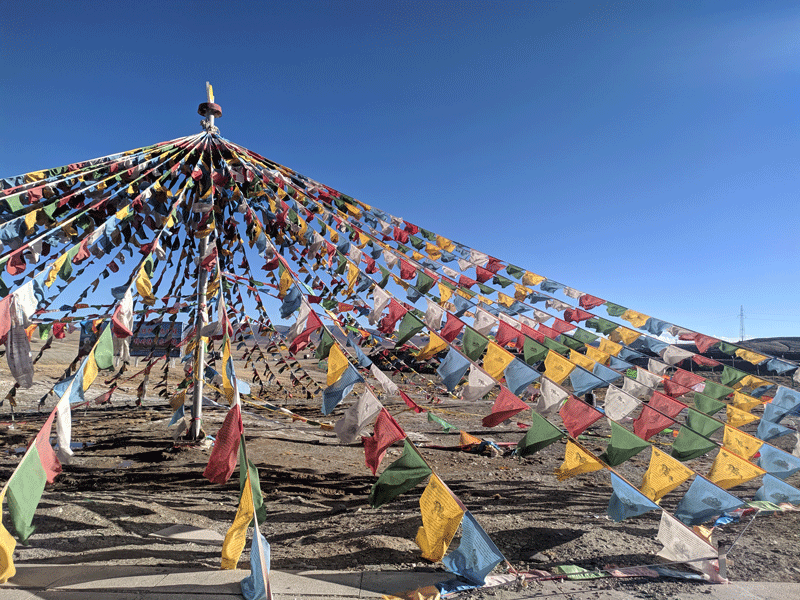
Following the Kunlun range, we arrived in Kekexili, a place A-Ku had strongly recommended.
Even before getting out of the car I could already feel my breathing becoming shallow. Once outside, the altitude sickness stacked itself on me at full force.
Every step became difficult. On average, I could move for about two minutes only after sitting down to rest for five. And yet, in one of those irrational travel moments, I still attempted a Cossack-style dance jump just to tempt fate.
I even found an abandoned empty oxygen canister on the ground. The air was thin, brutally so, but what little there was felt cleaner than anything I had ever breathed before.
For anyone going later: Rhodiola is no match for an actual oxygen canister.
Golmud at night
Kekexili was probably the highest point of the whole trip—if I remember correctly, somewhere around 4,678 meters. By the time we came back down, everyone in the car had fallen asleep. I dozed off briefly too, then woke and sat watching the others sleep.
It oddly reminded me of the feeling of first joining an online gaming guild years ago.
We didn’t reach Golmud until nearly ten at night. It was a small city, the kind with almost no nightlife, and finding somewhere to eat was already difficult. In the end we went to a dumpling place claiming to serve northeastern-style dumplings—at least, their version of it.
During the meal, someone got me started talking, and once I did, I slipped into full bard mode and began telling stories from my own life.
Day 3: stars over Golmud, then Qarhan Salt Lake
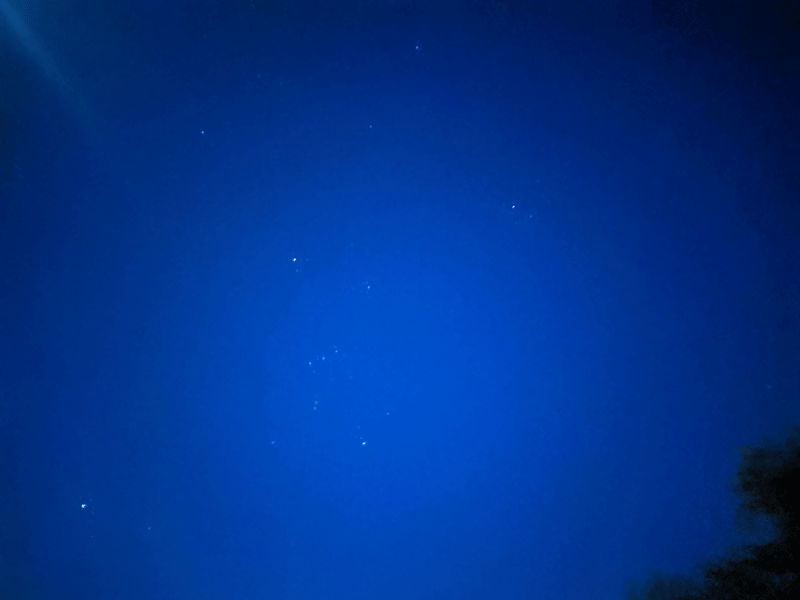
I woke early again and noticed that dawn came late here, usually after 7:30. Looking up, I could actually see a sky full of stars.
And then I did something unusual for me: I went looking for breakfast. I almost never eat breakfast, but people affect one another more than we admit. I had a feeling I might keep doing it for quite a while after this trip.
Our first destination that day was Qarhan Salt Lake.
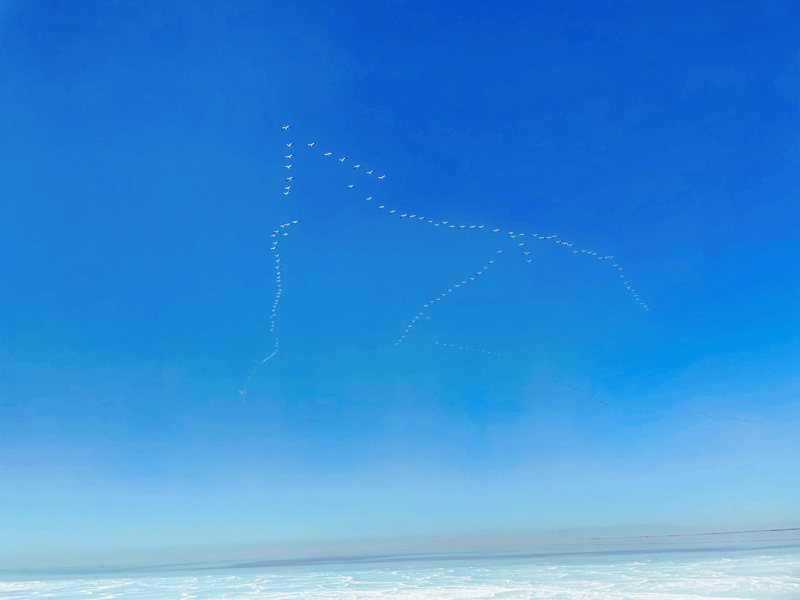
Having already seen Chaka, the comparison was brutal. Qarhan completely outclassed it. It may not have been as large as Qinghai Lake, but it still felt endless.
Because the salinity is so high, almost nothing lives in the water, which leaves it startlingly clear—clear enough to become a mirror.
At one point I had drifted into thinking about chemistry—salt, chlorine, water, equations—when the others called me over for pictures. And that was exactly the kind of photo session I had always wanted. My closest friends back home would have considered it too embarrassing, but here everyone just threw themselves into it. We spent nearly the entire morning taking photos until we were exhausted.
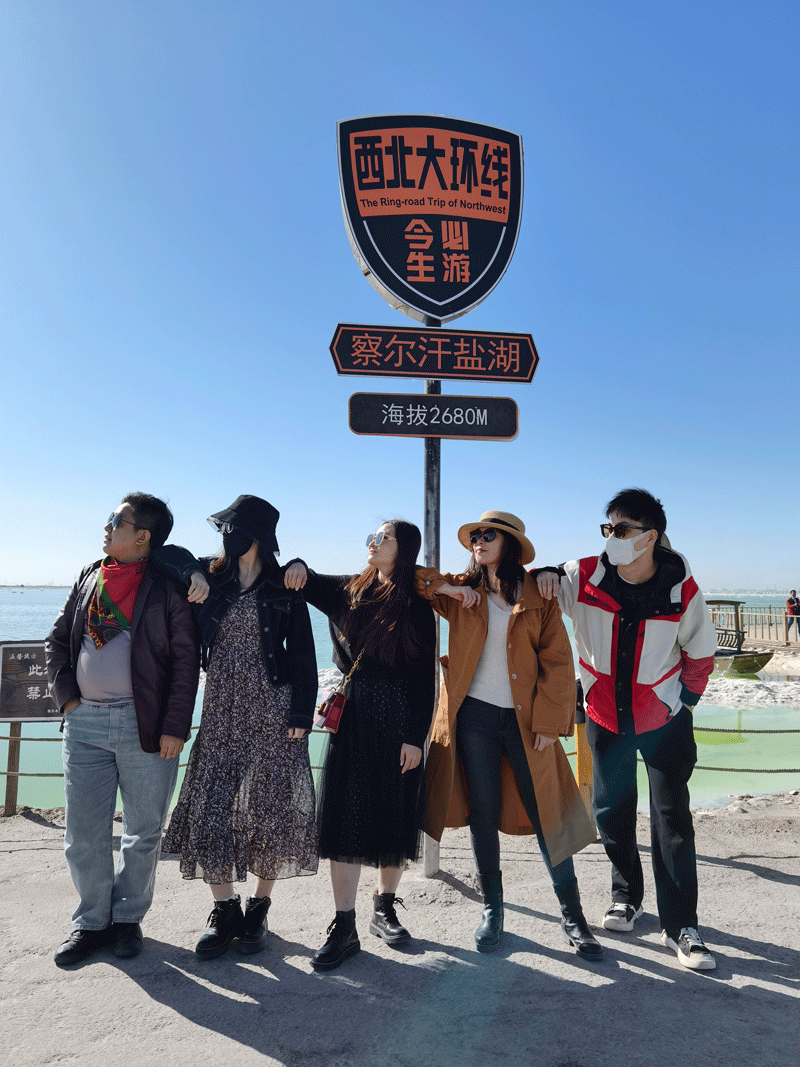
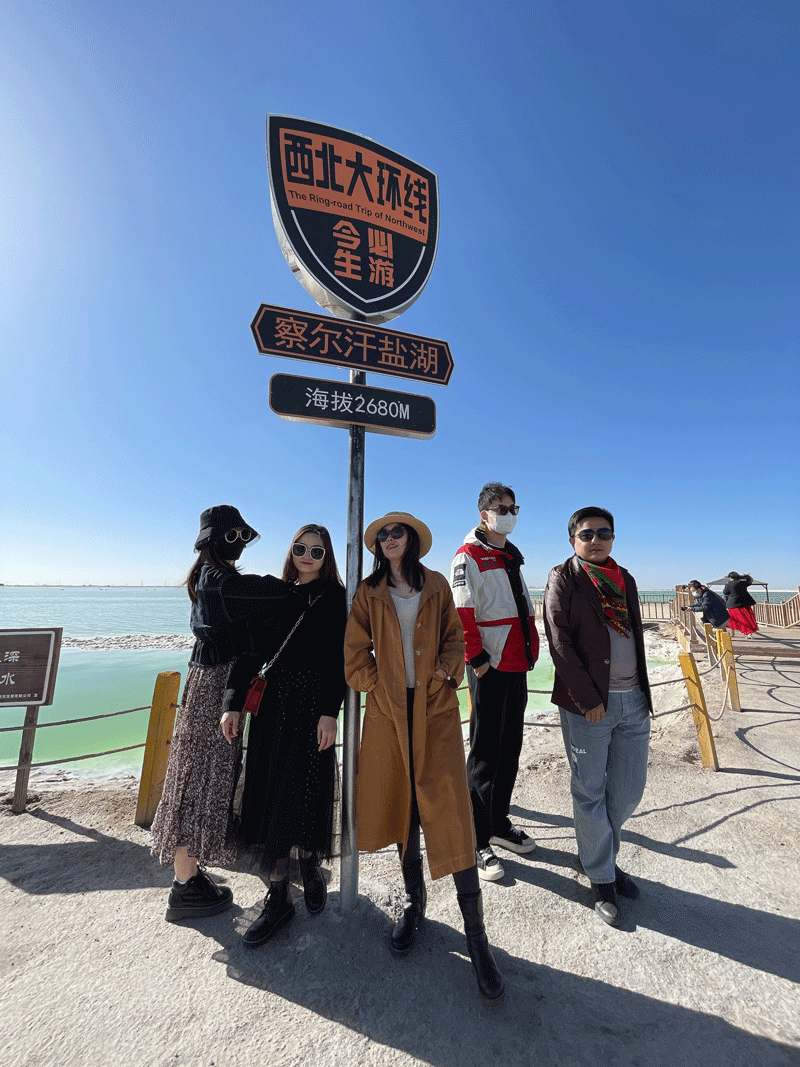
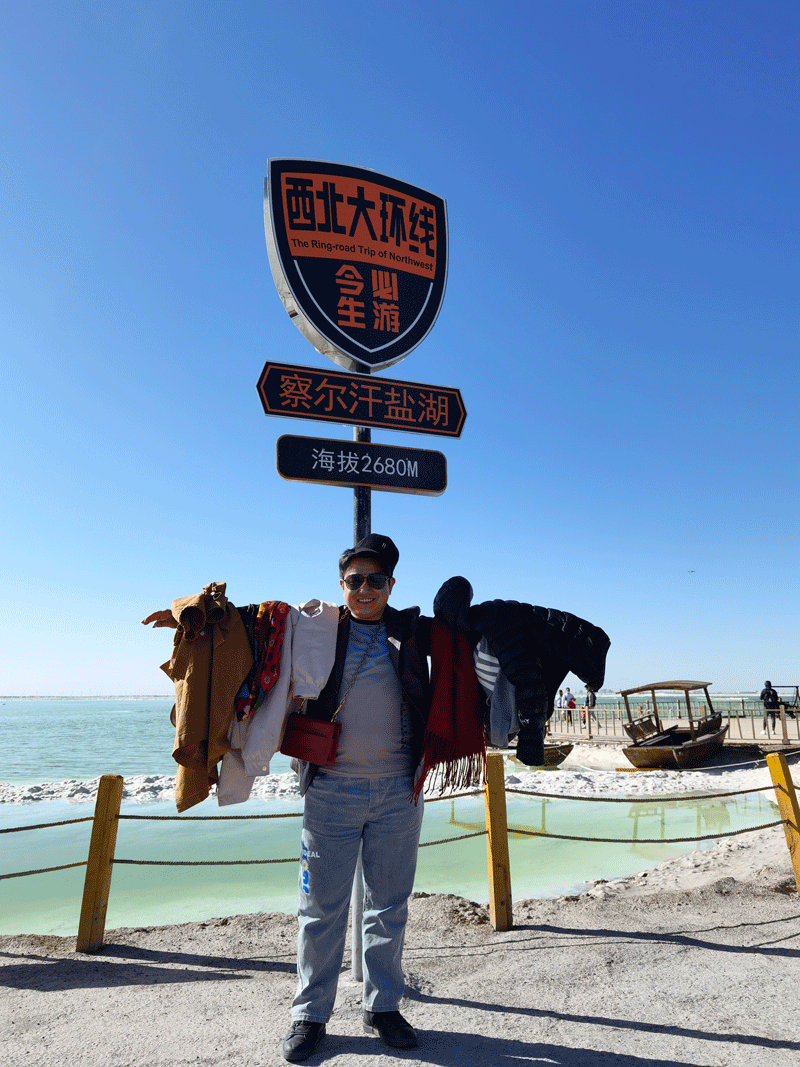
When we left, the dark beast in my head—the one I had been fighting for years—seemed to have fallen asleep again in the midst of all that laughter. For a while, the struggle inside me simply stopped.
A supply stop in the desert
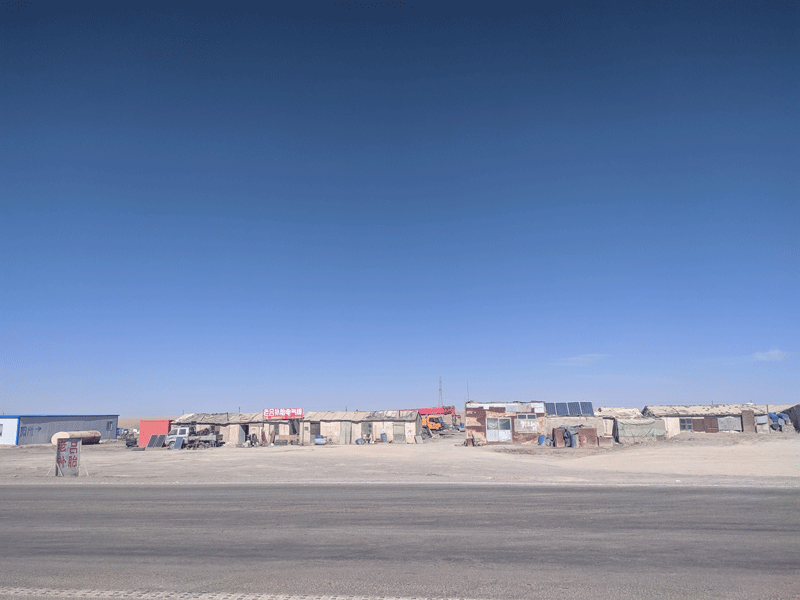
After leaving the salt lake, we pushed into the desert. In the middle of it was a tiny settlement—not quite an oasis, not really a village either—where travelers stopped for food and water.
The water had to be hauled in by tanker truck. Vegetables and meat had to be transported in as well. It was hard to imagine why anyone would choose to do business in a place like that, and yet there they were.
National Highway 315: trouble in the sand sea
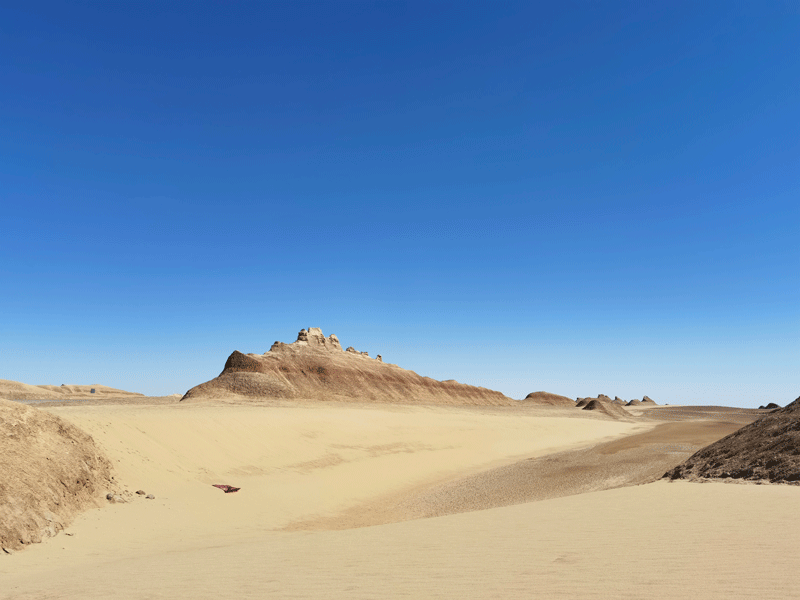
People compare the desert to the sea for good reason. It can be dangerous in much the same way.
We got a flat tire.
First came the heavy smell of burning, then the jolting, then the car stopped. To make it even more absurd, our driver applied so much force trying to fix it that he snapped the wrench. And of course this happened in the middle of nowhere, with no phone signal.
All we could do was ask passing cars for help. We didn’t need much—just a working wrench. Luckily, there were still kind people on the road, and after some trouble we managed to borrow one.
Later, on our way back, we came across another vehicle stuck in the sand. A woman was driving and had no idea what to do. Maybe because of what had happened to us earlier that day, we got out and helped her get free.
That was one of those moments when the road quietly reminds you that people survive difficult places by helping each other.
The U-shaped road, then stories over Sichuan food
Because of the tire problem, we lost the time we had planned to spend at Water Yadan. We only paused briefly at the entrance before moving on.
By sunset we reached the so-called U-shaped road. I still don’t know its actual name; “U-shaped” is simply what it looks like. Tall dunes rose on both sides, making it a good place to climb up and watch the light go down.
That evening in Dachaidan, A-Ling introduced a new game after two days of drawing contests: number bomb. I won’t explain the rules here, but I lost often enough that the penalty kept turning into truth-or-dare.
Whenever it was my turn to tell the truth, the whole thing became story time.
It struck me then that recently I had been telling people real things about myself, even people I had only just met.
Day 4: dry air, cracked lips, and the little train at Emerald Lake
In the morning I went out early to look for lip balm. My lips had split badly in the dry air and hurt constantly.
The hotel owner was already awake before me, cheerfully seeing off every departing guest and wishing them a safe journey. While I was waiting in the lobby, he started chatting with me.
He told me thirty was still a good age, still young by his measure, and talked about how different life had felt at that stage for his own generation. It was one of those brief roadside conversations that stay with you longer than expected.
If there’s one practical thing worth stressing: come prepared with lip balm, maybe even hydrating masks, no matter how tough you think you are.
Our first stop that day was Emerald Lake.
This isn’t a single lake but a cluster of lakes of different sizes. It had only recently started charging admission, and the whole place still felt half-developed. Facilities were incomplete, and compared with Qarhan Salt Lake the scenery itself felt less remarkable.
Still, it had one undeniable source of joy: the little train.
We rode it around the park just for the fun of it. As long as you didn’t get off at the exit, you could keep circling. At one point A-Ling got off early while her ticket was still with me, which meant we had to ride another full loop to pick her up again.
And somehow that made it even better.
As adults, we’re so used to planes, buses, and trains that transport has become purely functional. Sitting on that little tourist train, I suddenly remembered what it felt like as a child to be delighted by something so simple.
For a little while, that uncomplicated happiness was enough to bring me back to life.
The loneliest stretch of G315
While we were visiting Emerald Lake, our driver had gone to get the tire repaired properly. Once we were back in the car, A-Ku was itching to play cards, and almost before we noticed it we had arrived at the so-called most beautiful road.
Its formal name is part of G315, but “most beautiful” didn’t feel quite right to me. “Lonely road” fit better.
There was almost no wildlife, very little traffic, and an emptiness on both sides that seemed to absorb sound. It was also the perfect place for one reckless little fantasy: the feeling of tearing through a desert highway like in a film.
Black Dushan: desolation in layers
There was some disagreement about where to go next. A-Ku considered Black Dushan essential; the driver recommended Yangguan instead—the very Yangguan of classical poetry.
Maybe next time I’ll choose Yangguan.
This time, though, we went to Black Dushan.
My first and strongest impression was desolation. No people, no life, no softness anywhere. Distances there were deceptive too; what looked like a five- or ten-minute walk stretched into half an hour. From the outside it appeared to be one ridge after another, but crossing a rise revealed valleys hidden beneath.
The environment was extreme—fierce dryness, blowing sand, and a kind of inhospitable stillness. Only A-Ku and I got out to explore; the driver and the others stayed in the car.
If we’d had more time, A-Ku would probably have gone deeper in. I knew perfectly well that I couldn’t. The first thing I did when I got back to the vehicle was reach for water.
Dunhuang at night: food, games, and a rare kind of happiness
By nightfall we reached Dunhuang, by far the busiest and liveliest place we had seen since leaving Xining.
I had imagined something more like a market in an old desert city, but reality was more modern than that. It didn’t matter. We ate well anyway.
At the night market, A-Ku told me that the reason I had managed to forget the worries I brought from home was simple: here, I had company. Once I returned to my own city, he said, loneliness would probably come back.
I only really absorbed the first half of what he said.
So yes—company mattered. That much was undeniable.
That night I posted that I had made new friends. It felt almost unbelievable. I couldn’t remember the last time that had happened.
At the night market, the grilled fish and dried tangerine peel tea were especially worth remembering. After eating, we played games—ring toss, balloon shooting, bumper cars.
A-Ling turned out to be good at almost everything. A-Ku and A-Zhu were terrifyingly accurate with the air rifles, hitting with what looked like 70%+ accuracy. Then all of us piled into bumper cars together.
When was the last time I had played bumper cars? I don’t think I was even ten.
That night was probably the happiest I had felt in all my adult years.
Day 5: morning in Crescent Spring Village
Mogao Caves and the evening show both had fixed entry times, so the morning was left open. Everyone else slept in; I went wandering.
The village sits by Mingsha Mountain, and nearly every building seems to be a guesthouse, hotel, or restaurant. In the early morning you can see camel herders leading small groups of camels toward the scenic area. The herders ride electric scooters or motorcycles while the camels trot alongside, and the sight is strangely funny.
After circling near the entrance to Mingsha Mountain, I explored in the opposite direction and discovered jujube trees everywhere. Some of the fruit had ripened and fallen to the ground untouched.
Later, back at the hotel, I ended up chatting with the owner. She told me that apart from the camel herders, many people in the village weren’t locals at all. She herself was from Chongqing and only ran the business here during the tourist season; once the National Day rush ended, she would return to her other shop in Chongqing.
Mogao Caves: the heart of the trip
This was the main course of the entire journey.
We first visited a few replica caves, and even those were astonishing. Before arriving, my impression of Mogao had been vague and somewhat dismissive—just old religious murals, perhaps roughly painted and historically important more than artistically alive.
I was completely wrong.
The murals were exquisite, in a way that felt every bit as overwhelming as a cathedral ceiling in Europe. I could hardly imagine how people in earlier centuries had composed such visual storytelling on those walls. The arrangement, color, narrative structure—everything showed real sophistication.
Mogao also preserves the imprint of sixteen dynasties, from its beginnings in the Qin and Han periods onward. I had not expected an accidental trip to turn into something that felt close to a pilgrimage.
Because this stop had been added on short notice, I couldn’t get a standard ticket and had to buy a last-minute one, which allowed access to only four caves. That was still enough for me.
In a way, even visiting these caves causes damage, because the pigments are fragile. The place left me with the feeling that I should come back only after learning more about it properly.
It also set two story ideas running through my mind: one a Lovecraftian tale set in Dunhuang, the other something like Assassin’s Creed: Dunhuang.
Mingsha Mountain and Crescent Spring
是谁的心啊~~
孤单地留下~~
Ta还好吗?
我多想爱Ta~~~
     ——飞儿乐队《月牙湾》
I had a long-standing connection to Mingsha Mountain and Crescent Spring, oddly enough through a game I played around 2005. Since then, the place had remained lodged in my imagination for more than a decade. Coming here felt like fulfilling an old wish.
Inside the scenic area, the first thing you notice is the camels. Judging by the three-digit numbers marked on them, there must have been hundreds. For a moment, the Silk Road no longer felt abstract.
Following the built path leads you to Crescent Spring. It is already an artificial lake now, but it still matched the image I had carried for years.
With that old wish finally completed, I felt a surge of emotion that was hard to describe—something like a burden being set down at last. If no one had been around, I might have cried.
A practical tip: if you’re climbing Mingsha Mountain, bring water. It’s also better to buy shoe covers and a face covering at the bottom. Disposable shoe covers sold below were cheap; renting them inside the scenic area cost much more. You can also simply take off your shoes—the sand is so fine it won’t hurt your feet.
From the slope we looked down at Crescent Spring, and I remembered the little embroidered sachet I had bought at Mogao. Ordinarily something like that would never interest me, but this one had a phrase stitched on it that stayed with me: break the darkness, turn toward the light; follow where the heart points.
Standing there, I suddenly thought of something I needed to end. I took the hair tie off my wrist and asked A-Ling to film the moment. Then I buried it in the sands of Mingsha Mountain.
Some things were over. I wanted them over.
I have my freedom, and I don’t need to break my own wings for anyone or anything.
After that, the mood lifted again.
We ran down from the mountainside toward the sand-sliding slope, because on fine sand even falling doesn’t hurt much. I tried sprinting all the way down. Then we compared who would slide faster. I assumed I’d have an advantage because I was heavier. Instead I discovered the opposite: I was heavy enough to get stuck.
Later, on the actual sliding section, I expected to stop halfway. To my surprise, I went all the way down cleanly.
Before heading to the theater, we grabbed something to eat and bought Hami melon. The fruit in this region fully deserves its reputation: three boxes for ten yuan. Back in Shenyang, the same thing would have cost far more.
An evening performance in Dunhuang
There are three major shows in Dunhuang, and our group had different preferences. I didn’t mind which one we chose, so I left it to chance and ended up going to See Dunhuang Again.
The format was immersive theater, which I know well, though the stage technology here was far beyond anything I had worked with before.
The show unfolded in roughly three and a half acts. The opening served as an introduction to the cast, and the figure of Emperor Xuanzong stood out strongly. The first full act centered on the Taoist Wang Yuanlu and the Library Cave. The second focused on the present condition of Dunhuang’s cultural relics and the difficulty of preserving them in their original state. The third told the story of military defenders of Dunhuang from the Jin through Tang periods.
What moved me most was still the story of Wang Yuanlu.
In a chaotic era, he was just a small man in a great historical current. He sold many precious relics, yes, but his intention was also to protect the temple structures of Dunhuang. He remains a controversial figure for that reason: he did something wrong, but not out of greed or malice.
And for ordinary people like us, living inside our own turbulent times, who can honestly say we’ve never done something we regret?
I couldn’t hate him. If anything, I pitied him. Given another hundred years, perhaps he would have spent the rest of his life trying to bring those artifacts home.
Day 6: Guazhou, Jiayuguan, and the first look at Danxia
By this point, the trip was already more than half over, and that brought a faint sadness with it. There was a brief bit of friction in the morning, but it passed quickly and we set off again.
Guazhou is only a county-level place, but it’s said to be an important transit point in the Hexi Corridor. The part we stopped at was just a long strip of shops. According to what we were told, the county seat lay across from them, while melon fields stretched behind.
I had read in advance that this was the sort of place where Hami melon was practically offered to visitors to taste freely, and that did seem to be true—though eating without buying anything would have felt shameless.
Originally I had planned to buy gifts later in Xining, but the local shopkeeper was too enthusiastic to refuse, so I picked up some yak jerky, camel milk tablets, and similar things to bring home.
Jiayuguan that day was mostly a drive-by stop. We didn’t have enough time to go inside, so we only wandered around the entrance area. Someone bought drinks, someone bought yogurt, and I bought a hunting knife simply because it felt like the sort of thing one ought to buy at Jiayuguan.
The joke, of course, was that it later turned out to be manufactured in Guangzhou.
By sunset we reached Zhangye Danxia.
The ticket allowed two visits, though the second required paying again for the shuttle bus. Everyone was running a bit low on energy by then, especially after the previous day in Dunhuang. We had intended to see more that evening, but in practice we spent much of the time just getting around.
That night, A-Zhu left the group to continue on a different route.
Day 7: Danxia in daylight, then onward to the Shandan Military Horse Farm
The previous evening, one of us had gone to see A-Zhu off, so dinner ended up being quieter. At the restaurant we heard from the owner that one of the viewing platforms was particularly good for sunrise, though I’ve since forgotten which number it was.
So that morning I got up earlier than ever—5:30. Unfortunately, the sky was packed with dark clouds.
Even without the sunrise, Zhangye Danxia felt like one of nature’s more extravagant experiments. Maybe nature is a chemist after all, scattering different elements across the earth and ending up with valleys striped like a rainbow.
Since the weather wasn’t cooperating, there was no reason to linger too long. Around midday we headed toward the Shandan Military Horse Farm and came across a roadside melon seller with a wonderfully ridiculous slogan: riper than your wife, sweeter than your lover, more flavorful than your mistress.
The price was just as startling—an entire sackful for about 25 yuan, no weighing needed. It was cheap enough to make anyone ask the obvious question: are you sure this melon is really ripe?
The horse farm: food, snow, and a sunrise at last
Somewhere on the road there, I realized something about the trip’s design. I had expected the route to go counterclockwise, but it ran clockwise instead, and that choice mattered: the more intense and entertaining half clearly came first.
The Shandan Military Horse Farm is said to date back to the time of Huo Qubing. I immediately regretted not bringing a proper suitcase—and with it my best coat. Riding a military horse in the right coat might at least have lent me a little borrowed general’s dignity.
That night some of the others chose instant noodles. I have a complicated relationship with instant noodles, so I went out to find a proper restaurant with A-Ling. Unexpectedly, the food was excellent. It was nothing fancy, just cumin lamb and stir-fried mushrooms, dishes ordinary enough in the northeast, but somehow they tasted much fresher here.
Then, during the night, it snowed.
I had not expected the first snow of the season to find me in the northwest.
Morning at the horse farm was brutally cold. I tried going out for a walk as usual and was driven back by the cold three separate times. But just as everyone was finally gathering to leave, sunrise appeared.
After a week of waiting for one, I got my sunrise on the very last day.
The evening before, some of the others had already gone to test the horses and choose mounts for us. A-Ling’s horse was called Candied Hawthorn; mine was originally supposed to be Lightning, but was switched to one called Tutu. Another was called Nameless, another Marshmallow.
The owner later explained the pairings: Candied Hawthorn liked to run and therefore suited A-Ling’s lively, cool personality. Marshmallow was the oldest and steadiest horse, suitable for children, older riders, or anyone who preferred calm. My horse, Tutu, was apparently adaptable—capable of being fast or slow, spirited or steady, depending on the rider.
I didn’t care much for the name Tutu, so I asked jokingly whether he had an English name. He didn’t, so I gave him one myself: Old Blanche.
In my imagination he became a hardworking old horse of the western frontier, content with a sack of oats and a quiet life. Then he started galloping, and I immediately lost my romantic composure and begged him to slow down.
I’ve always believed I can sense something of animals’ emotions. These riding horses didn’t seem especially happy to me. I had the distinct feeling they were often beaten. I found myself hoping that one day they might be running free among a real herd instead.
Once the horses were assigned, we rode deeper into the horse farm toward Luanbird Lake, where the famous galloping herd could be seen. Because it was almost the off-season, there were only around a hundred horses rather than vast numbers, but the sight was still magnificent.
The original plan had been to circle the entire lake on horseback. Since most of us had little or no riding experience, we only managed about half before turning back. Even that was enough to leave everyone thoroughly shaken and sore.
Day 8: through the Qilian Mountains, back to Xining
In fact we had already passed through the Qilian range on the way to the horse farm, even skirting Qilian Heavenly Lake. If the holiday had been a little longer, that would have been worth stopping for too.
But now we were on the return road to Xining, and the car had grown much quieter.
Partly from exhaustion, partly because the end was close.
Back in Xining, one person left first to make an early flight from Lanzhou, another got off to meet an old college roommate, and by the end only A-Ling and I were left for one last meal.
I hadn’t eaten animal offal in years. At her strong recommendation I tried some. It turned out not to be as strange as I had feared—just rich and greasy.
After that, we said goodbye too.
The old phrase fit the moment perfectly: as long as the green hills remain and the rivers keep flowing, we’ll meet again somewhere down the line.
Day 9: two hours in Lanzhou, then home
The final stretch belonged to me alone. I had left myself about two hours in Lanzhou—not enough to go into the city properly, but enough for one last surprise.
Outside Zhongchuan Airport was an enormous field of flowers, improbably beautiful. I could almost hear a song playing in my head.
I couldn’t make time stop there, and I couldn’t carry that beauty home with me. But I could seal it away as memory.
The trip had been worth it.
When I finally returned to Shenyang, I dragged myself through the door exhausted. My cat launched himself at my legs as if I had been gone for years, and the apartment smelled unmistakably of overused litter.
Home, in other words.
Afterword
This journey began almost by accident. For a long time before it started, I kept wondering whether I would really go that far.
Somewhere in the sands of Mingsha Mountain, after burying that hair tie, I felt my inner world settle a little too.
It was also my first time traveling as part of a group, and I was happier about that than I expected. I’m used to moving alone, but companionship filled me with a kind of warmth and satisfaction I hadn’t realized I was missing.
I was grateful for everyone’s company on the road.
And I came away with one simple wish: that when we meet again, it will feel like returning to an old journey rather than losing one.