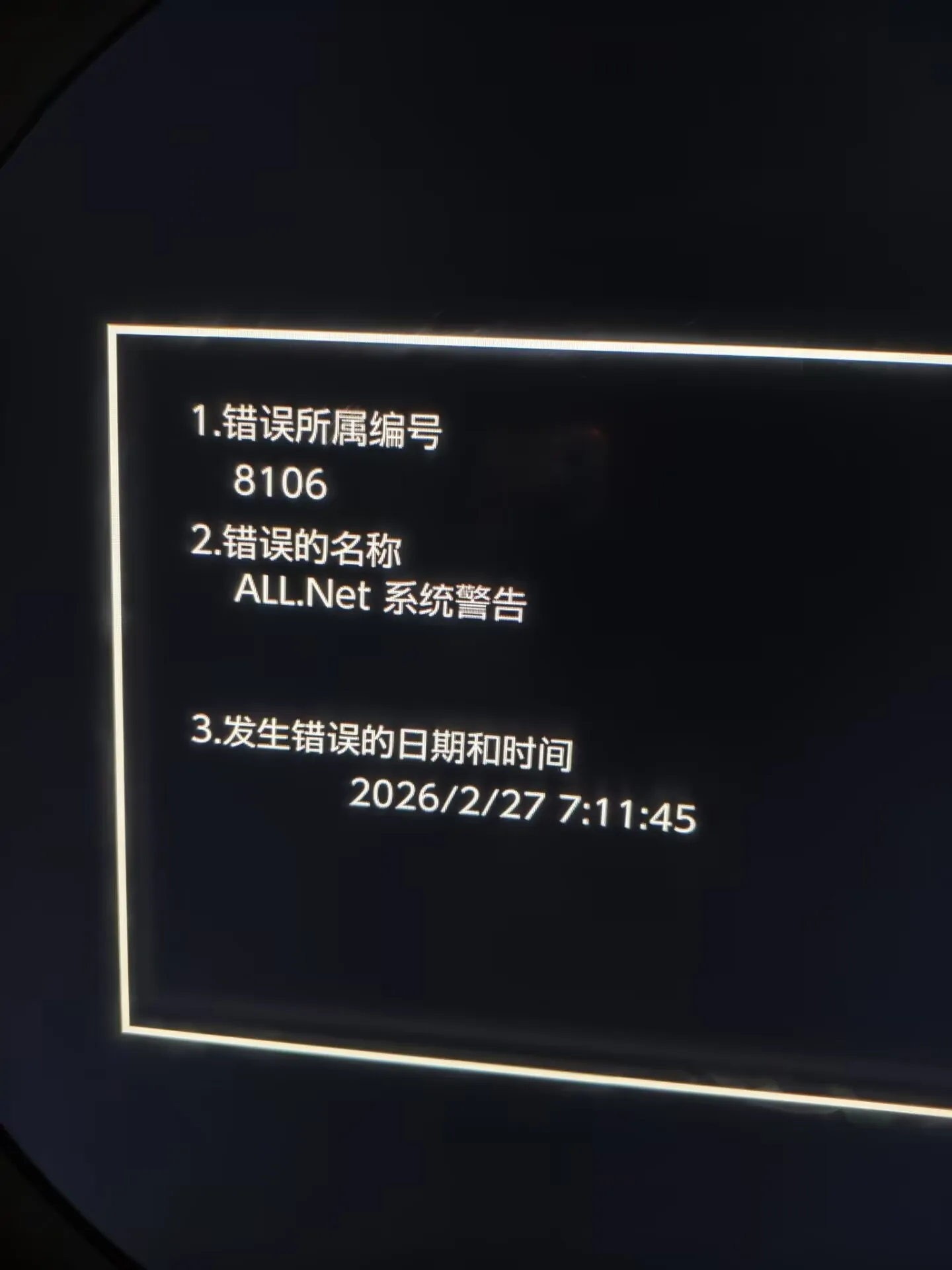
Arcades running maimai DX have been hitting a wall of error codes lately — 8106 on startup, 8103 mid-session, and a sudden nationwide wave of 0949. The codes look arbitrary, but they trace back to a billing mechanism most players never think about.
The accounting layer under the game
SEGA keeps a revenue accounting system running behind its titles. Every coin inserted and every credit consumed generates a billing log entry on the cabinet.
So that arcade owners can't quietly pocket the takings, those records aren't written to ordinary disk storage — they're written into an encrypted region on the machine itself.
That region is deliberately small. Which means the cabinet has to flush it regularly: while online, or during scheduled maintenance, it reports the accumulated bill to ALL.Net. Only after the server confirms receipt does the machine wipe the records inside the dongle and free up space for the next stretch of operation.
The whole scheme depends on that handshake completing. When it doesn't, the records just pile up.
8106 is a warning, 8103 is the wall
8106 — ALL.Net system warning. Once storage crosses a configured threshold, and the ALL.Net warning option is switched on, the cabinet raises 8106. The key detail is that this alert can be turned off from the operator menu. That does nothing to the underlying problem — it's the equivalent of pulling the bulb out of a low-fuel light while the tank keeps draining.
8103 — ALL.Net system error. When storage is completely full or hits the hard limit, the machine throws 8103. The logic behind it seems to be: if a transaction can't be recorded, the sale must be refused, or revenue disappears. So the cabinet locks itself — no coin insertion, no play.
Why this is surfacing now
The Chinese release of maimai DX runs on something closer to a semi-buyout model and doesn't need the same per-play accounting as the Japanese version. But the low-level code still contains the logging logic, and it's still quietly keeping books in the background.
Recent server-side work — patching on top of patches — is the likely trigger. If the upload, acknowledgement, or clear-the-records step got broken along the way, machines keep generating bills that never get accepted or cleared, and the encrypted storage fills up with no way to drain it.
0949 is a separate and more urgent matter: SEGA changed the bl server, and machines that rely on bl went down across the board — nationwide, affecting everything in the SEGA lineup that uses it. That one is not a local fault.
Why free-play venues broke first
A typical commercial arcade might take a few hundred coins in a day. Even with uploads failing for several days, it can absorb the backlog for a while.
Player venues are a different story. With multi-credit tickets, players aren't paying per credit and happily run triple-rate ALL day, and many of these locations operate around the clock. Throughput per cabinet is far higher than at an ordinary arcade, so they hit the physical ceiling first. The first reported case came from exactly this kind of venue — a machine powered off at maintenance time, then throwing 8106 on boot the next morning, with 8103 appearing right after a single play on another cabinet.
What can be done
For 8106, the ALL.Net warning can be disabled in the NET charge records menu. It buys quiet, not space.
For 8103, there is no on-site fix. The practical move is to cut power to the cabinet and restart it; after that, check the NET charge records for refund entries. If refunds show up, the machine is talking to the server again and the backlog has cleared.
If a cabinet at your local arcade throws either code, get the staff to photograph the error screen and the machine's details and pass them to their after-sales contact. That documentation matters more than anything a player can do at the cabinet.
The part that hasn't been solved
Disabling a warning and rebooting a cabinet doesn't touch the root cause. Until the server-side receive-and-clear mechanism is fixed, or a patch strips the vestigial accounting code out of the cabinet software, the storage keeps filling. Given enough time, even low-traffic arcades will reach the limit and go down the same way.