
Free CDN offers are appearing faster than most developers can keep up with. Alongside smaller providers and blended CDN setups, major cloud vendors are now pushing free tiers that make it much easier to test a production-grade CDN without committing to a bill. Tencent Cloud EdgeOne is one of the latest examples: its international site has been running a free CDN campaign, and the mainland console has also added related campaign details at https://console.cloud.tencent.com/edgeone/package.
What makes the offer worth a closer look is not just the price. The free package includes security acceleration traffic and requests without a hard volume cap, which is unusual at this level. The catch is that the free plan does not come with an SLA, though the service still runs on Tencent Cloud's infrastructure and, in practice, has shown solid stability and fast access.
Getting a redemption code
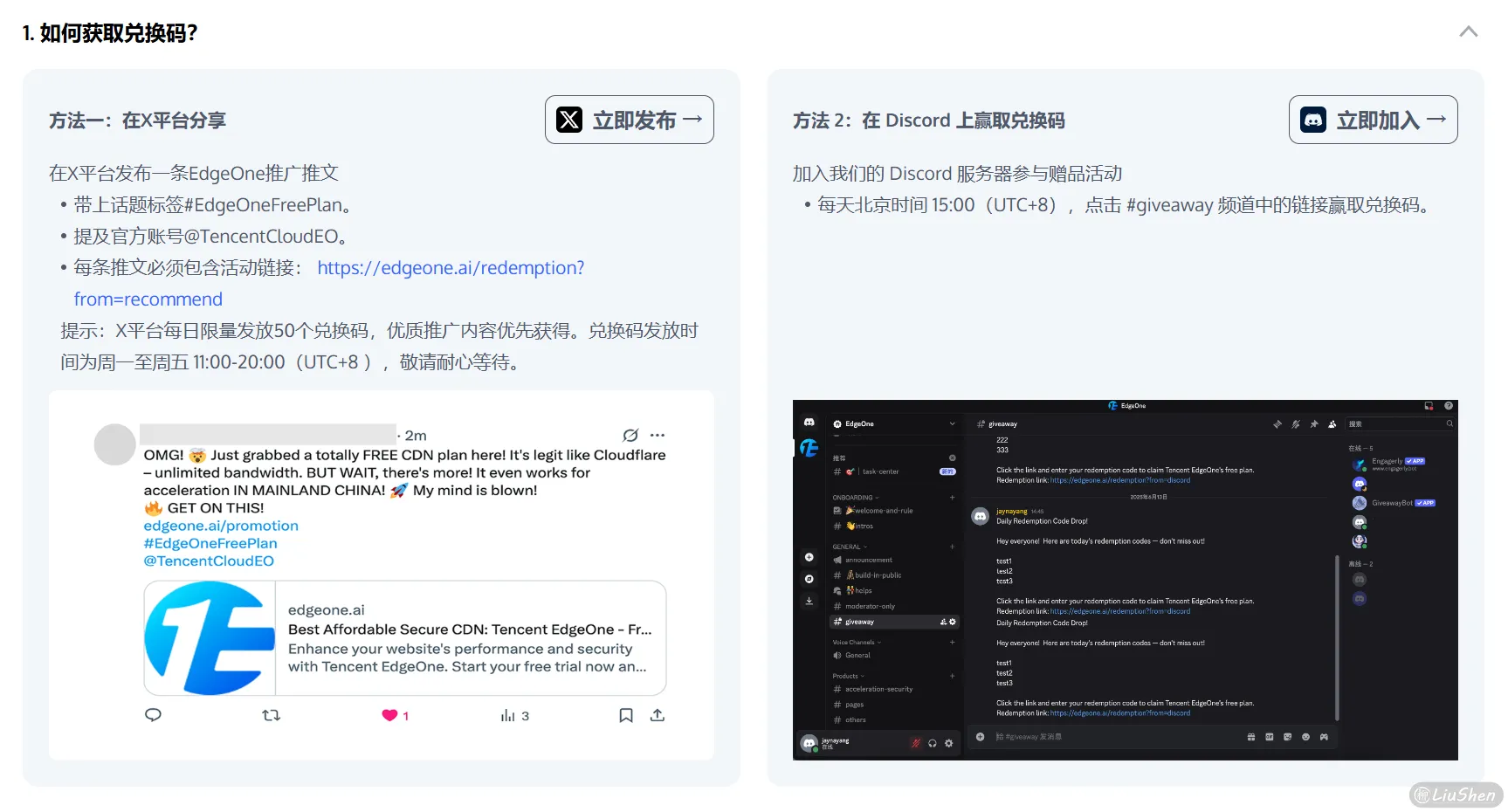
The campaign is run through EdgeOne's international site. There are two main ways to get a code: sharing a post on X or joining the Discord community for the daily giveaway.
For the X method, publish a promotional post that includes the hashtag #EdgeOneFreePlan, mentions @TencentCloudEO, and links to https://edgeone.ai/redemption?from=recommend. For the Discord method, join the official Tencent EdgeOne server and go to the #giveaway channel at 15:00 Beijing time each day. Click the daily draw link to enter; if selected, the redemption eligibility is granted automatically.
A few practical notes: only 50 codes are released per day, so supply is limited. Quality original content is prioritized. Codes are distributed Monday through Friday, 11:00 to 20:00 UTC+8. After posting or entering the draw, wait for a system message. Codes also have an expiry date, so redeem them promptly.
What the free plan includes
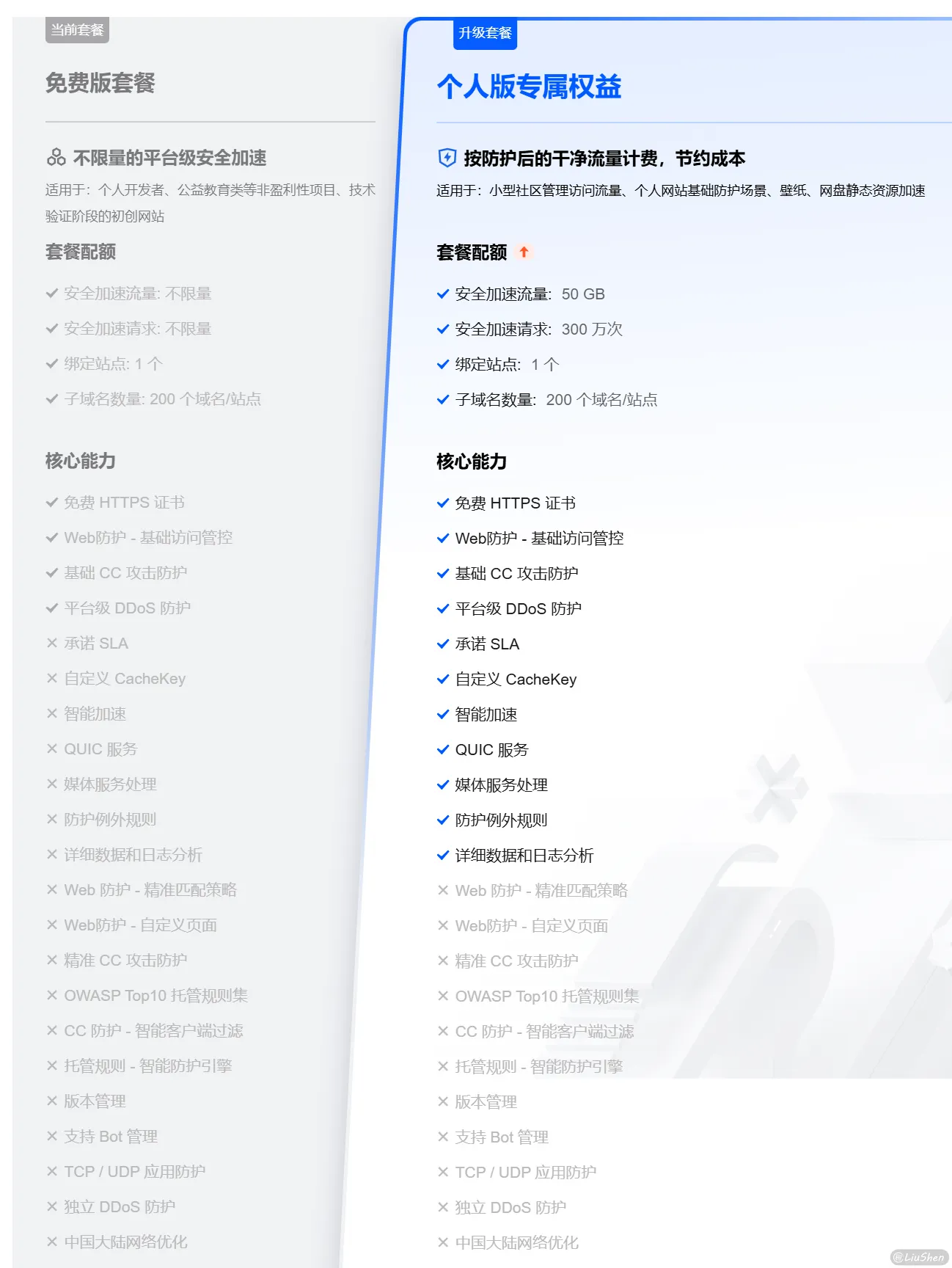
The free plan allows one primary domain and up to 200 subdomains, which is enough for small and mid-sized sites or personal projects. It supports unlimited security acceleration traffic and requests. Individual acceleration nodes may apply some rate limiting, but in normal use it is rarely noticeable, especially for static content or sites built around small files.
There are limits on advanced features. Custom WAF rules, full-site acceleration, and some other higher-end capabilities are restricted or unavailable on the free tier, as the official documentation states. For basic acceleration and security protection, however, the package covers the essentials and is worth testing.
Performance and network reach
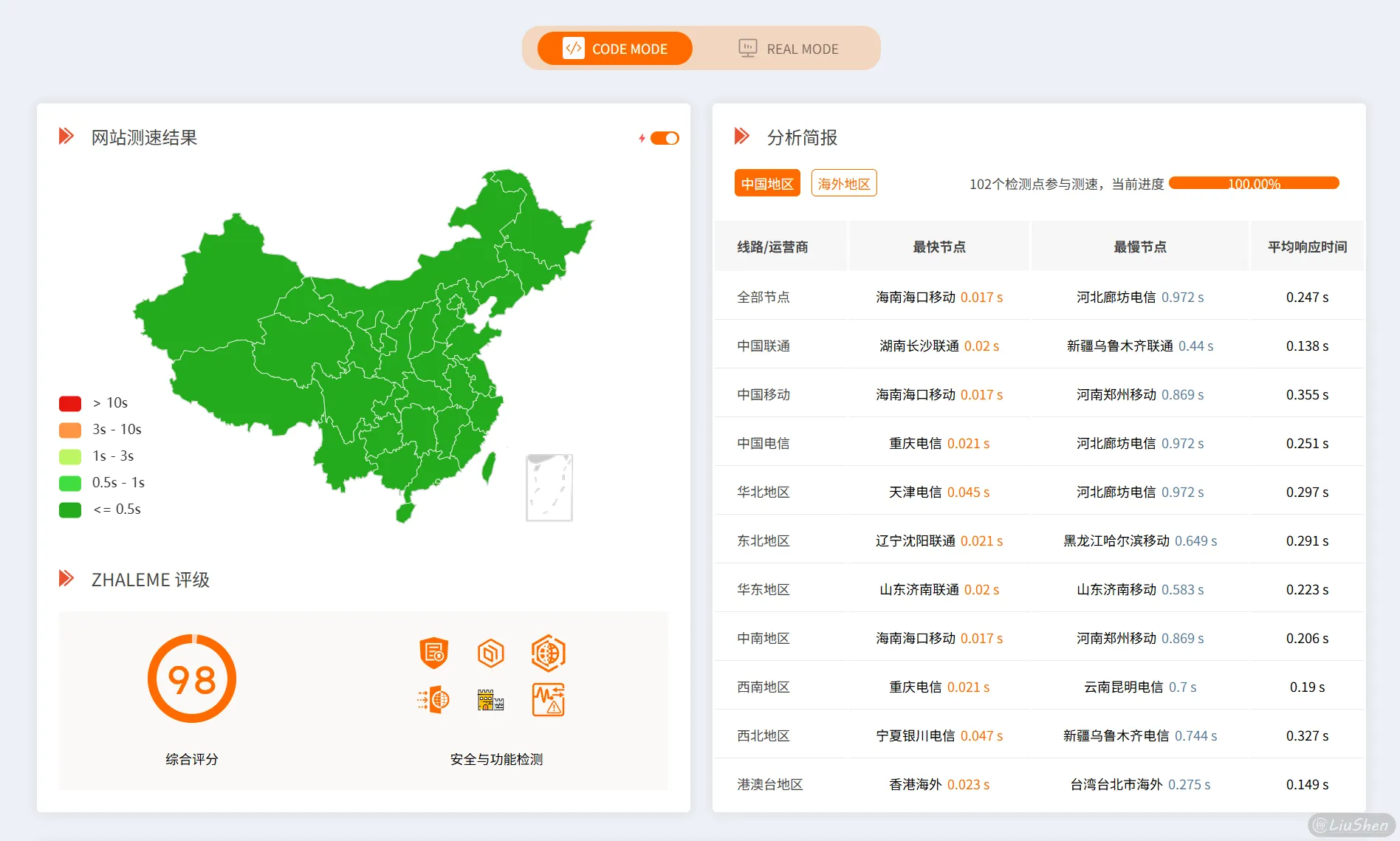
On a site with ICP filing, EdgeOne's global acceleration can include the mainland China availability zone. In a speed test, the results were strong: domestic nodes were distributed across multiple regions, so site speed was not a concern. Overseas coverage was thinner—only one overseas node appeared in that test—but it was still sufficient for the case at hand. Sites that need better overseas performance can use traffic splitting to accelerate that region separately.
Site acceleration and configuration
EdgeOne's console brings the common acceleration controls into one place. Cache control, file compression, media processing, and HTTPS automation are all available, and the interface is clear enough to use without a lot of trial and error.
Caching supports browser cache TTL, node cache TTL, custom query string policies such as case sensitivity, cache pre-refresh, and offline cache. By default, it follows the origin's Cache-Control header, but custom TTL rules can be added when needed. That flexibility is useful for sites that mix static assets with content that changes on different schedules.
File optimization includes both Gzip and Brotli compression. Gzip is the older, broadly compatible option; Brotli is Google's newer algorithm, which usually produces smaller files and faster transfers but has less universal support. In practice, both can be enabled at the same time, and modern browsers will choose the best format they support—usually Brotli.
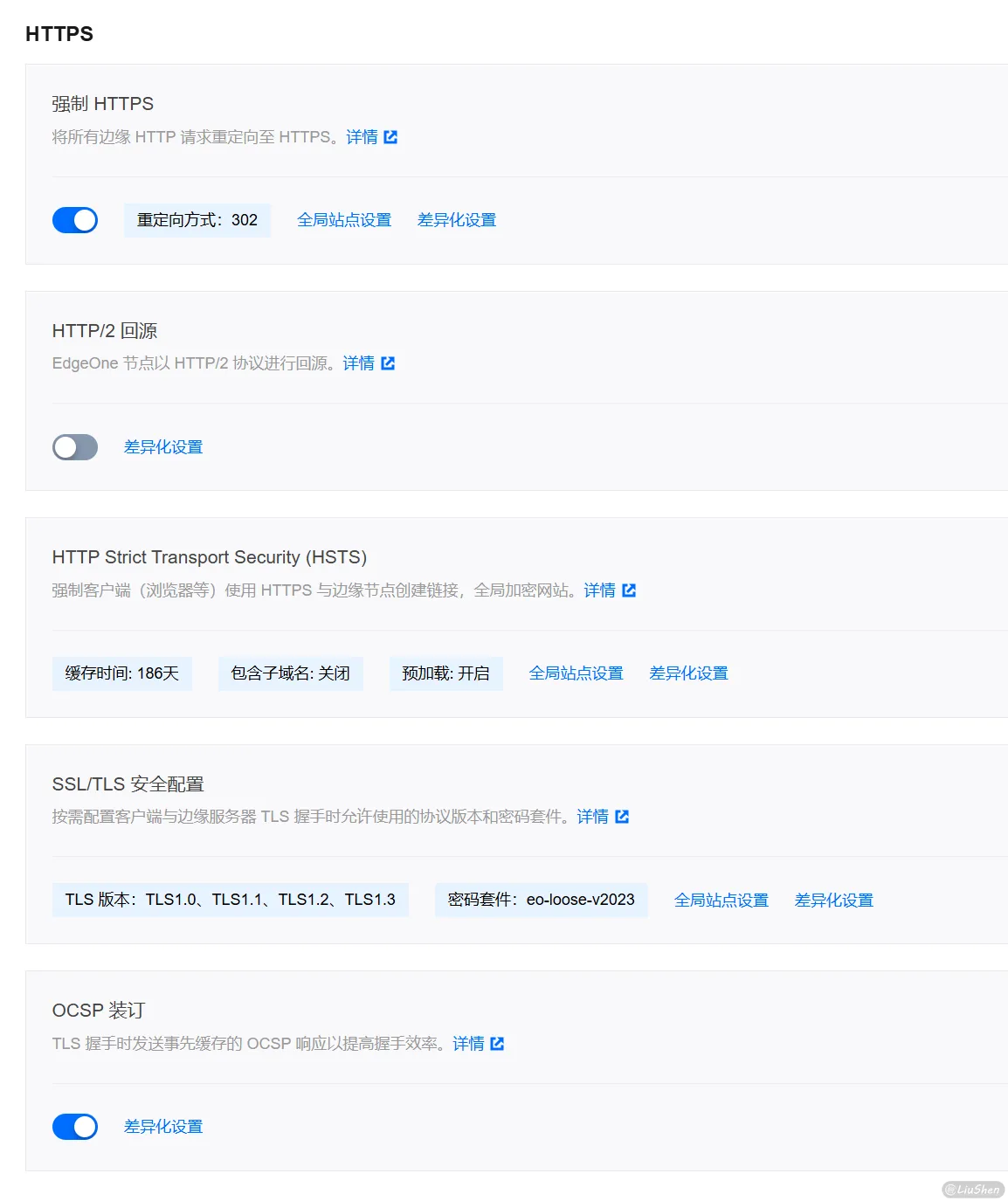
HTTPS setup is similarly straightforward. Certificates can be requested from the dashboard and renewed automatically. HSTS, HTTP/2 origin connections, and TLS version management are also available.
One gap worth noting: the free plan does not appear to expose custom redirect rules in the console. A rule that sends a.com/abc to b.com/abc, for example, has no obvious configuration entry, so it may need to be handled at the origin.
For network protocols, the base plan supports HTTP/2, IPv6, WebSocket, and gRPC, and it allows custom client IP and geographic headers to be passed through. HTTP/3 over QUIC and smart dynamic acceleration are reserved for the personal plan and above. That is not a major loss for many sites; some paid CDNs charge for HTTP/3 as a separate add-on anyway.

Security and traffic protection
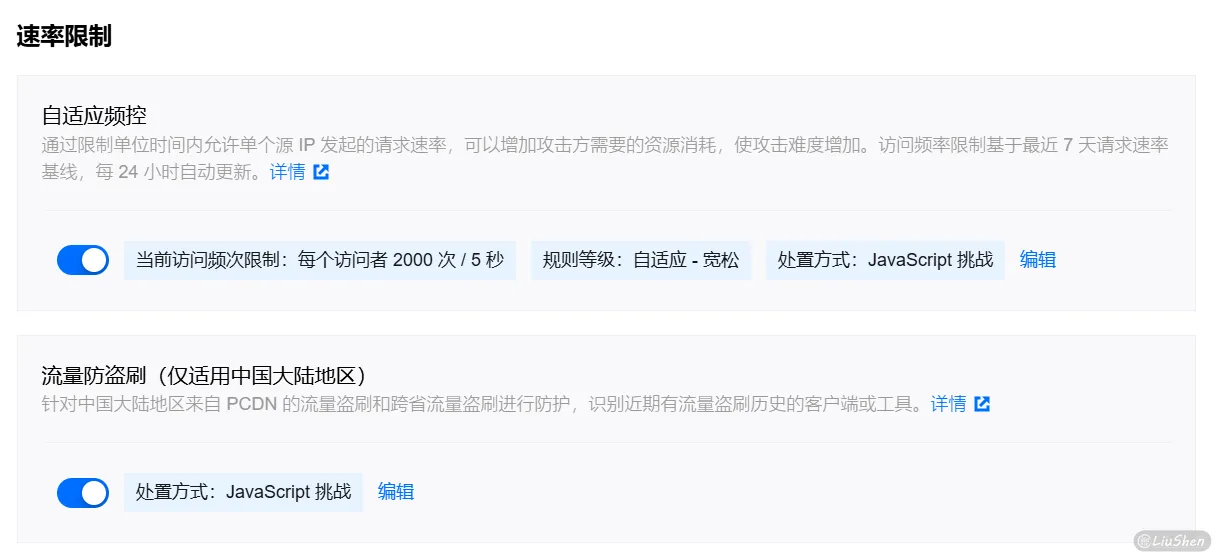
Security is one of the areas where the free plan stands out. Instead of relying only on manual IP blacklists, EdgeOne can identify abnormal traffic and use JavaScript challenges to intercept and block suspicious sources. That is much more convenient than sorting through logs and maintaining block lists by hand.
PCDN protection is particularly relevant. PCDN traffic can be low in volume but persistent, and manually filtering IPs to stop it is tedious. EdgeOne's built-in detection helps with that pattern. For DDoS, the unlimited CDN traffic allowance plus automatic traffic scrubbing addresses the basic problem. There is no guaranteed minimum scrubbing bandwidth on the free plan, but given the price, the protection is still substantial.
Usage caps
The personal plan adds a configurable usage cap, but the cap is not instant. It can take around 10 minutes to take effect, which means traffic during that window may still be counted. This is a common limitation across CDNs. EdgeOne does scrub traffic first, so billing is based on clean traffic rather than the full attack volume, which avoids the worst-case bill shock.

Edge functions
One of the more surprising inclusions is edge functions. The free plan supports JavaScript-based edge functions similar to Cloudflare Workers, allowing a site to handle requests, generate responses, and even build custom API endpoints without running a separate server.
The documentation mentions a limit of 3 million invocations, though it is not immediately clear whether that is a monthly limit or a total allowance. For small and mid-sized projects, that volume is more than enough for lightweight logic or an API gateway. It adds a level of extensibility that is uncommon in a free CDN package.

Taken together, EdgeOne's free plan covers the core needs of a modern small site: acceleration, basic security, cache control, HTTPS automation, and a useful edge compute layer. The advanced features are deliberately limited, but the everyday essentials are present. For individual developers and small projects, it is a practical option to test. More importantly, major vendors entering this space is pushing the cost and complexity of CDN services down for everyone.