Some people are not afraid of intimacy at the start. They are afraid of what comes after the start. They can be warm, attentive, even intensely romantic—until the relationship stops climbing and begins to settle. At that point, something in them closes. They may not become cruel or vanish without explanation. Often they leave with a calm, almost rational account of why ending things now is the best choice. The account may even be true. The timing is what gives it away.
This is not the same as being unable to receive love. It is closer to being unable to keep loving once love stops feeling like a peak. The difference matters. One person believes they are unworthy of love. The other believes they do not know how to love, or that love will inevitably turn into something they cannot bear.
Avoidant personality, and the fear that hides inside desire
Avoidant personality disorder, or AvPD, is characterized by excessive social anxiety and inhibition, a desire for closeness combined with fear of forming intimate relationships, deep feelings of inadequacy and inferiority, and a reliance on avoidance—sometimes social isolation—as a maladaptive way of coping. Not every case of love avoidance reaches that level. AvPD is better understood as an extreme version. Even before unpacking the term, its core is already visible: the person wants closeness and fears it at the same time. The intimacy in question is not only romantic. Friendships, family ties, even working partnerships can all become intimate relationships.
Two examples make the distinction between the inability to be loved and the inability to love easier to see.
One college-era case involved a man who pursued a woman relentlessly. The difference between him and the usual image of the devoted pursuer was what happened when she finally accepted him and wanted to be together: he ran. When he came to his senses, he blamed himself for not being brave enough and for ruining everything. Asked why he fled, he said that while he was checking in on her every day, he knew he could not have her. That gave him a reasonable excuse to withdraw at any time and avoid responsibility. Once they actually decided to be together, he felt she should find someone better. He could only handle emotional relationships that kept a certain distance. The pattern was less love than an addiction to being moved by his own devotion.
A couple had a mutual friend who changed boyfriends repeatedly, always withdrawing at what she described as a low point. She would say there was no point in dragging things out. When the sequence was traced backward, however, each exit began at the climax. At the height of the relationship, she started to sense that things would soon go downhill and that more problems would appear. She was not decisive enough to leave immediately, so from that high point she had already prepared her escape. Sometimes she was even looking for the next person while softly ending the previous relationship, all while telling herself she had given the other person enough chances. She remembered every romance as beautiful and did not consciously predict its ending. Yet she could flee with remarkable precision at the peak.
The first case is the inability to be loved. The second is the inability to love. Once either becomes a fixed pattern, it can move toward the extreme of avoidant personality. When the pursuit of relationships becomes more tangled and is combined with strong aggression—sexual desire, the urge to express, the urge to create—it can slide further, toward a narcissistic avoidant pattern.
The inability to be loved and the inability to love
The defining feature of the inability to be loved is the belief that 'I am not worthy of love.' Because subjectivity has been lost, the person cannot start from the self and ask what they actually want. They must attach to another subjectivity in order to feel that they exist. The more needs that other subjectivity can satisfy, the more existence it can confer. A mother who has lost her own subjectivity in her child is one example. If that other subjectivity is itself unstable, the person attached to it is dragged through turbulence and pain. When passive pain-and-pleasure is completed—when, for instance, the nucleus accumbens mistakenly treats pain as part of the reward system—an abusive relationship can take shape. That is a later subject.
The defining feature of the inability to love is the belief that 'I do not know how to love.' If the subjectivity of someone with this pattern is unstable, they may sink into confusion: 'I do not understand why I am always like this.' But if their subjectivity is relatively intact, they may know very clearly what kind of relationship they want, and at a certain moment letting go feels like the most beautiful choice available.
This is not the same as being a player. It is not that such people use a relationship and throw it away. They are terrified of what an intimate relationship looks like when it enters its downward phase. No relationship can stay in the honeymoon stage forever. When the honeymoon ends and the couple must enter stability, they find the change hard to accept. At that moment, they want to give up.
The two patterns resemble each other and can turn into each other.
In motivation, the inability to be loved comes from lost subjectivity: the person feels unworthy of love and does not trust others' motives. The inability to love comes from disbelief in love: the person fears the hurt brought by emotional change and enters a cold protective mode in advance.
In expression, the inability to be loved shows up as rejecting others' kindness, self-doubt, and persecutory anxiety. The inability to love shows up as distance, coldness, and excessive rationality in certain areas, such as conflict within a relationship.
At the underlying level, the inability to be loved says: I need to attach to another subjectivity in order to have existence. The inability to love says: I need to end the relationship at its most perfect moment in order to preserve my subjectivity.
Turning love into amber
Many people who cannot love share a particular kind of memory: scenes that feel beautiful and preserved, like amber. The first gift. The first time the other person said they wanted to marry them. The first time the other person knelt and promised never to cheat again. These moments are like insects sealed in resin, available to be admired and turned over at any time.
The person who cannot love cannot accept the process of a relationship slowly descending from its high point. They anticipate the worst endings in advance, and at that moment they activate the cold protective mechanism. In effect, they have already turned the relationship into amber, preserving the best instant forever.
This amber-making is not limited to relationships. It can attach to decisions, ideas, and actions. In one case, a person completed a major project at work and suddenly decided to resign. He had analyzed the situation calmly: the project was the largest he could manage, and luck had played a large part. If he stayed at the company, the trend would begin to go downward.
A stronger version of the same move appears when a writer finishes a famous work and realizes they can never produce anything more perfect. They choose to die at that moment so that the peak remains fixed forever. Not everyone can complete such a high-level act of amber-making, so people begin to produce smaller ambers throughout their lives. Amber means they no longer have to be responsible for the outcome, because they have already obtained the part they most wanted. This is why habitual avoidance is the most visible behavior of the inability to love.
Because the habit is habitual, it always contains a strong sense of reasonableness. To face oneself honestly and dismantle these habits is cruel, especially when there is no reference point. The dismantling brings intense confusion.
The climax before dawn
Not everyone should try to be the so-called good person or normal person. If everyone were forced into that uniformity, the human attribute itself would be lost. Each person is an independent individual. The question is whether you recognize your own particularity, not whether you doubt why you are different from others.
People who cannot love often grew up in neglect. They did not think of attracting attention by making mistakes, and that is precisely what produced an internal lack of security. During growth, whenever they feel they are about to be hurt—for example, when a relationship is about to go downhill—they reproduce the coldness they learned from being neglected in childhood. They rationally analyze whether to turn the relationship into amber at that very moment.
The first step is not to avoid the inability to love but to avoid internal friction. If you recognize this pattern in yourself, you need to see the underlying reason you habitually escape into amber-making.
The second step is to correct avoidant behavior consciously. This requires changing behavior by completing subjectivity.
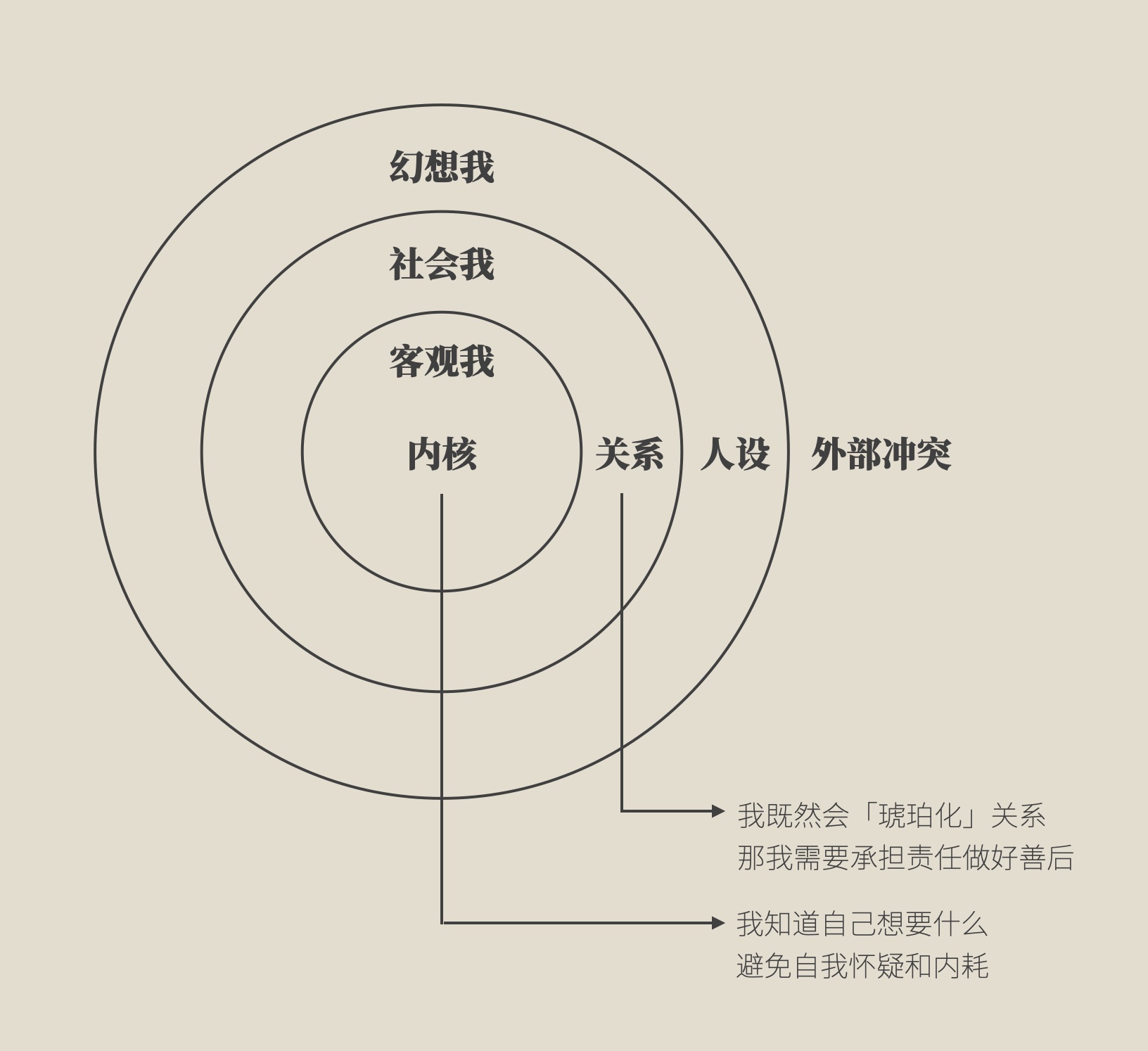
Only after that comes the question of how to avoid the pattern. This is why methods are the least useful part. Methods usually mean meeting more people, dating more, even if every relationship is turned into amber at its peak. At least you will gradually understand that the kind of feeling you want may not be something a long-term relationship can provide. If you can accept polyamory or friends-with-benefits arrangements, those can also give you a sense of existence. There is no need to follow so-called correct values and build relationships in a way that goes against human nature.
If you enjoy it, know clearly why you enjoy it, and then enjoy it boldly.