Not long ago, I heard that an acquaintance had been hospitalized with a serious illness. Only yesterday did I learn it was already late-stage cancer.
A lot of people still think of themselves as young, so illness and death feel distant. But after turning 30, it becomes harder to keep that illusion. Familiar celebrities keep falling ill or passing away. Older relatives and family friends do too. Eventually, even people our own age begin to show up in bad news. Medical care keeps improving, yet that uneasy feeling does not really go away.
Stories about severe disease appearing earlier in life are everywhere now. For older single adults, the question is not only how to pay more attention to personal health, but also how to create some protection for both ourselves and our families. In practical terms, it comes down to three things: get regular checkups, buy the right insurance, and take everyday habits seriously.
1. Keep up with regular health screenings
Cancer is commonly described in four stages. Stages I and II are considered early; stages III and IV are advanced. In many cases, cancer behaves like a chronic disease in the sense that it can develop quietly for a long time. Early on, there may be almost no symptoms at all. Once obvious symptoms appear, the disease is often already in a dangerous late stage.
That is exactly why screenings matter. Early-stage cancers tend to have much better cure rates and much better five-year survival outcomes. The point of a checkup is not just to collect numbers on a report, but to catch problems while there is still time to deal with them.
How to choose a screening package
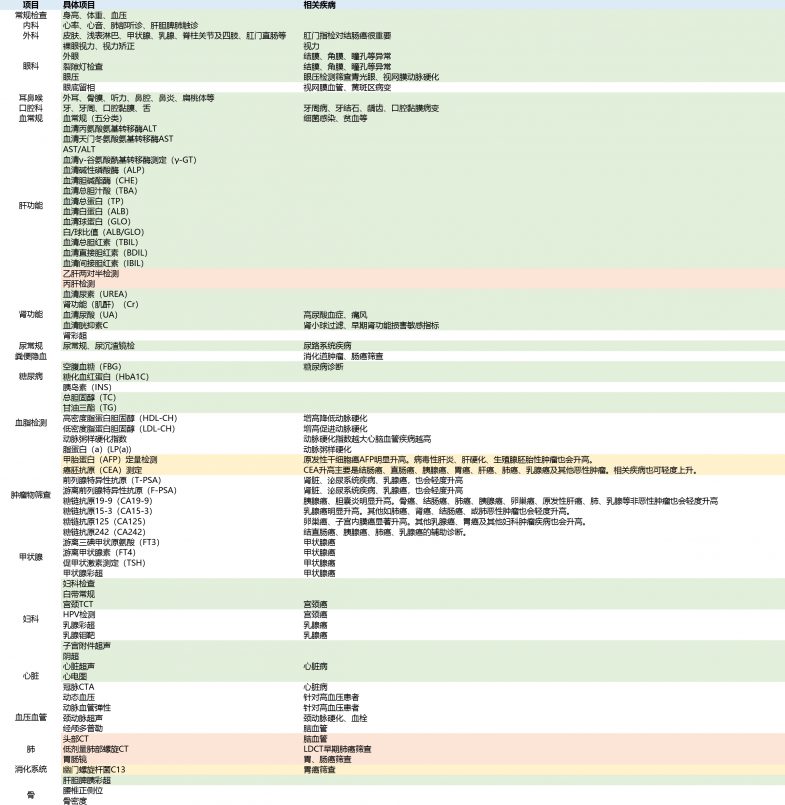
The biggest problem with many health check packages is simple: they often miss things that actually matter, while adding a long list of items that are expensive, impressive-looking, and not especially useful. There are countless packages on the market, so it helps to understand what each test is for and what each indicator is actually measuring.
As a basic framework, these are the areas worth paying attention to:
- Core items for most people: blood pressure, blood sugar, heart, lungs, liver, gallbladder, stomach, kidney function, and cancer screening
- Additional checks for women: breast, uterus, and ovary-related examinations
- Additional checks for parents and older family members: cancer screening, low-dose spiral CT, hypertension, cardiovascular and cerebrovascular screening, blood sugar, and blood lipids
- If there is a family history of cancer or hereditary disease: targeted screening for the relevant conditions
One thing should be clear from the start: there is usually no such thing as a perfect all-in-one package. If you want broad and useful coverage, you often need a combination of a standard commercial checkup package and separate hospital appointments.
A package can save time by grouping routine items together and reducing the hassle of repeated booking and registration. But for certain examinations, such as gastroscopy or colonoscopy, routine checkup packages generally will not cover what you really need.
The practical approach is to pick and combine items based on your own age, sex, family history, and existing health concerns, then make that your annual screening plan.
Top-tier hospitals or private screening centers?
If you look through reviews and forum discussions, complaints about checkup experiences are everywhere. One of the biggest debates is whether to go to a major public hospital or a specialized screening center. Trust in private screening institutions took an even bigger hit after past scandals involving falsified reports.
In general, top-tier hospitals have several clear advantages:
- The examinations are usually performed by medical professionals, so reliability tends to be better
- If a problem turns up, you can move directly to follow-up testing in the same hospital, which saves time and effort
The downsides are just as obvious: long waits, crowded processes, and poor service compared with dedicated screening providers. In terms of comfort and overall experience, hospitals rarely win.
If you are paying entirely out of pocket, it is usually safer to prioritize a reputable top-tier hospital. That said, it is still worth confirming that the screening service has not simply been outsourced. If your employer already provides a standard annual package, you can use that as a baseline and then add hospital-based tests where needed.
Most importantly, if anything abnormal shows up on a screening report, do not stop there. Go to a reliable hospital for a proper re-examination.
Keep a personal health record
Any issue found during a screening—or during routine doctor visits—should be tracked over time if possible. Record when a problem was first discovered, how it has changed, and what later follow-up exams showed.
That kind of personal health record makes it much easier to understand long-term changes in your body and respond before a small issue becomes a serious one.
2. Buy insurance that actually protects you
Insurance serves a different purpose from screening, but the logic is similar: both are forms of preparation.
Screenings help you discover illness early. Insurance helps when a major illness actually happens and the financial burden becomes real.
A common protection setup looks like this:
- basic public medical insurance
- supplemental public insurance plans
- critical illness insurance
- high-limit medical insurance as an extra layer
Public medical insurance is the foundation and barely needs explanation. Even for freelancers, it is generally worth arranging social insurance contributions so that this baseline coverage is in place.
Supplemental public plans and high-limit medical insurance are more suitable for people who have the room in their budget for additional protection. Commercial insurance works the same way as health checkups in one respect: there is no perfect package that covers everything flawlessly. You need to understand the basics, compare products, and build a combination that fits your own financial situation.
The point is not to buy the most complicated plan available. It is to make sure that if a serious diagnosis arrives, treatment decisions are not dictated entirely by money.
3. Treat daily habits as part of your protection
Checkups and insurance only do so much. Daily routine still matters.
A few basics are easy to say and hard to maintain, but they make a difference:
- Go to bed early if you can; if not, at least keep your sleep schedule regular
- Eat breakfast within a couple of hours after getting up, and do not skip it
- Keep your nutrition balanced, cut back on sugar, and be moderate with oil and salt
- Exercise regularly; there is no need to chase an overly thin body, but avoiding obesity and supporting healthy metabolism matters
For single adults getting older, self-protection is not dramatic or complicated. It is mostly built through these unremarkable choices: catching disease early, preparing for the financial shock of serious illness, and not treating your body as if it will always recover on its own.