Panama City had been on my radar for a while when I was comparing places to spend the winter in Central America. Climatically, it is actually quite similar to San José, Costa Rica: rainfall patterns, UV levels, and daylight hours are all in the same general range. The main differences are temperature and humidity. Panama City sits only slightly above sea level, so temperatures stay about 5°C warmer and much more stable than in San José, and the muggy factor is on an entirely different level.
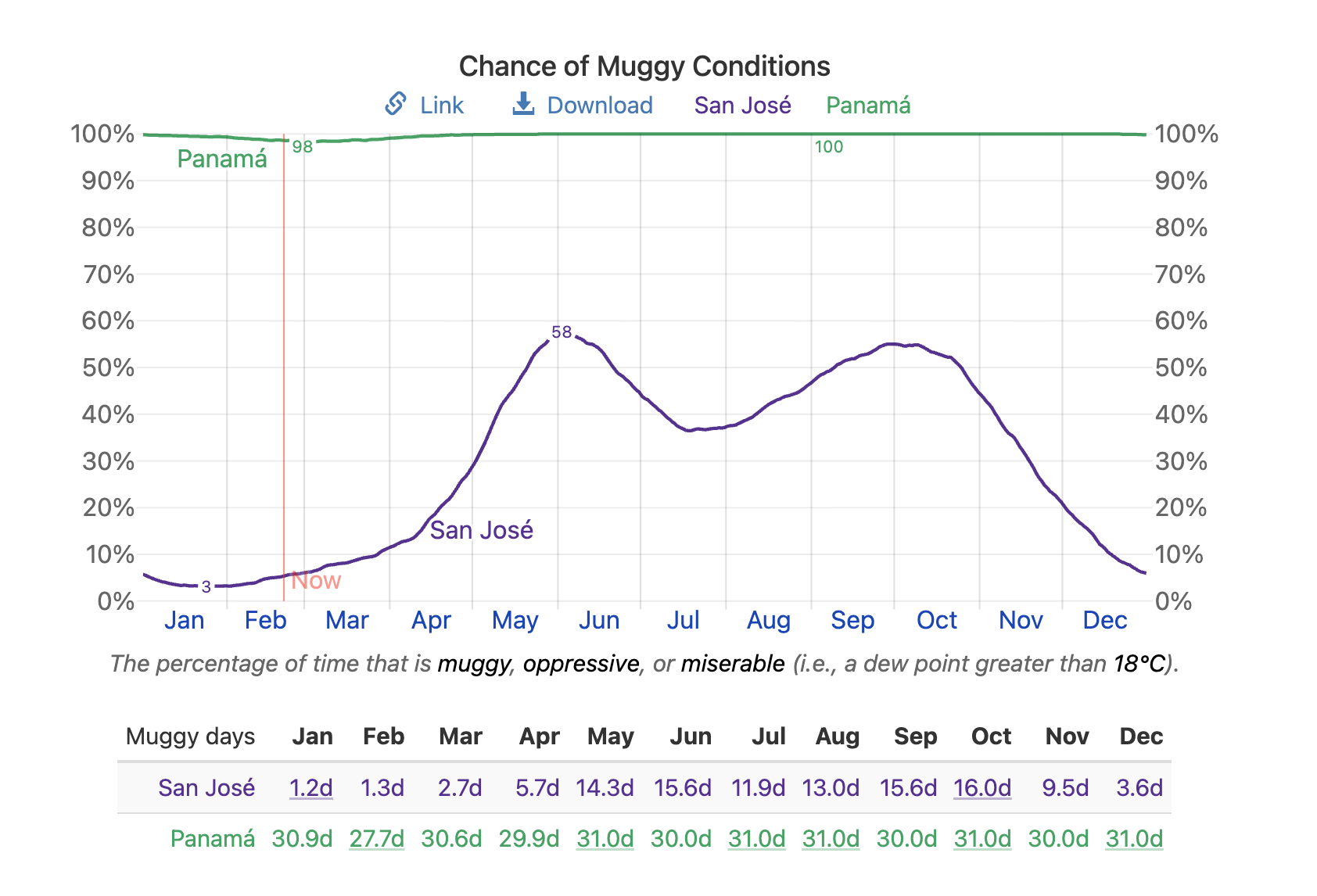
Both Panama and Costa Rica offer retirement visas. In each case, the basic requirement is proof of a stable monthly pension of USD 1,000. Costa Rica allows conversion to permanent residency after three years; Panama offers a path to citizenship after five. Both are popular retirement destinations for Americans and Canadians. In the end, the main reason I chose Costa Rica over Panama was simple: Panama City sounded far too oppressively humid.
A trip I barely had to plan
I had long been curious about the Panama Canal, but not curious enough to organize a trip on my own. Then in early January, a friend mentioned that she wanted to see the canal and asked whether I wanted to come along, since I was already nearby. She and her husband had already arranged their Panama itinerary, including the canal, a rainforest visit, and a coffee plantation, so all I had to do was match my flights to the days they would be in the city and book the hotel she had already picked out. Ideal.
The flight from San José to Panama City is scheduled for 1 hour and 20 minutes, though both the outbound and return flights took almost exactly an hour. Latin American pilots do not mess around. My place was close to the airport, San José airport is small, and even for international flights an hour of buffer is considered enough. For a three-day trip I barely needed to pack anything. I finished a team transition meeting on Tuesday, took a cab to the airport, and everything went smoothly.
There was one small issue. When I booked the hotel, I had not yet gone through the earthquake in San José that made my fear of heights significantly worse. Right before departure, it suddenly occurred to me that Panama City is full of high-rises, and that city hotels would probably put me in one too. Luckily, in a place like that most travelers want the upper-floor view, so the hotel was perfectly happy to give me a room on the first floor.
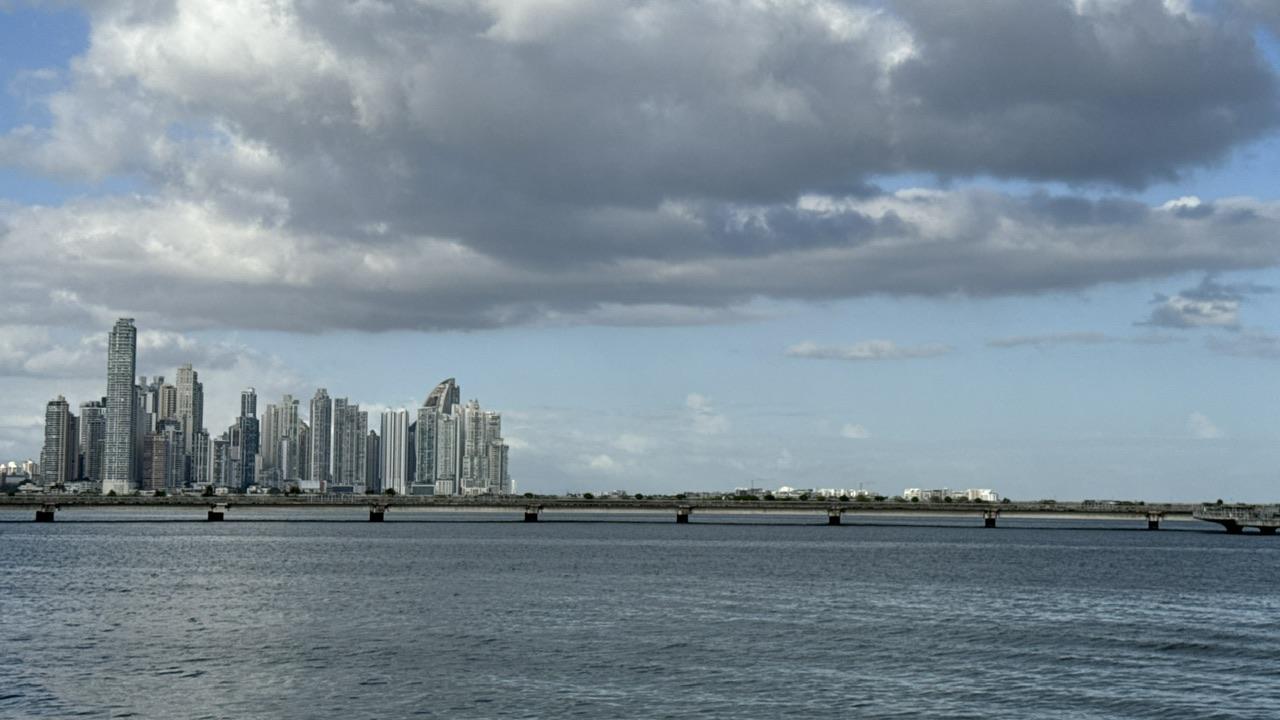
On the drive from the airport, I could already see the clusters of skyscrapers in the distance. I really dislike them, especially when they are packed this tightly along the coast. It gives me the feeling of humanity being incapable of resisting the urge to impose itself everywhere, regardless of setting. Later, when I walked along the waterfront in the old quarter, there was no escaping that giant mass of towers in the background. Apparently, something like half of Latin America's skyscrapers are in Panama City.
Walking the old quarter
The old quarter sits closer to the water. Many of its older buildings have been bought and renovated by investors and turned into Airbnbs, while museums and old churches are scattered through the neighborhood. On Wednesday, I wandered around there with my friend.
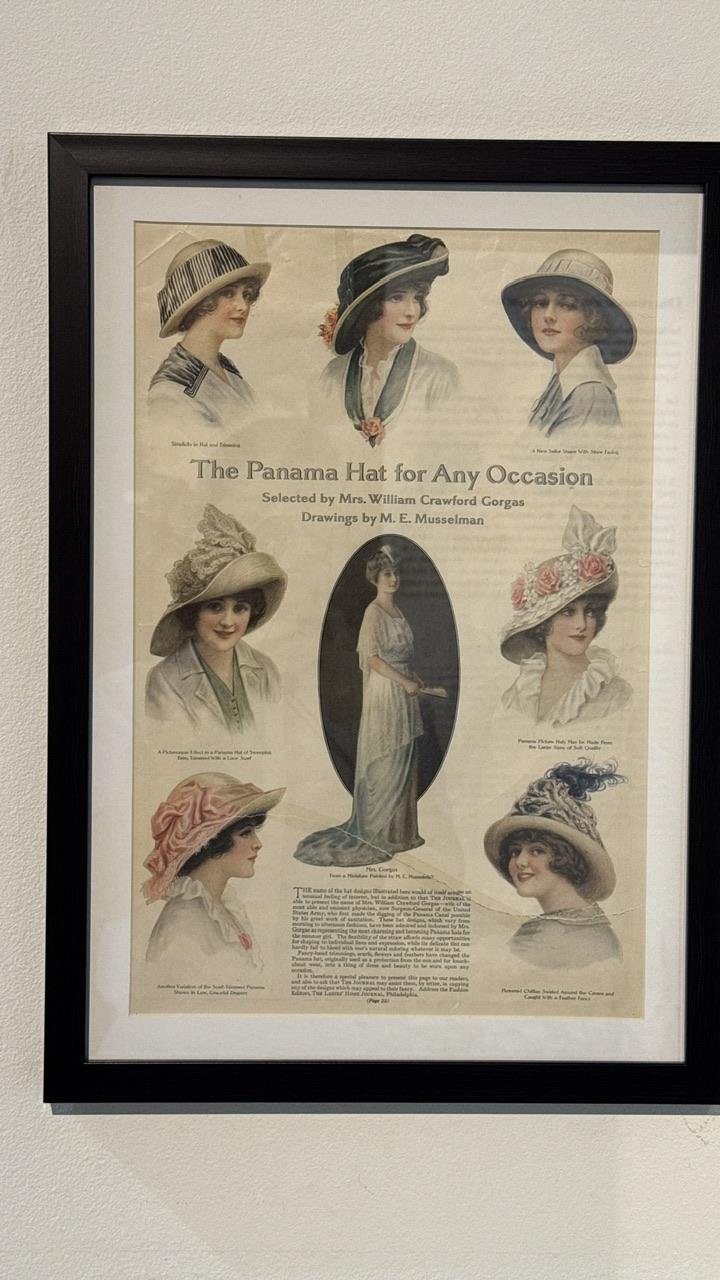
One mildly amusing detail: the so-called Panama hat is actually from Ecuador. It only became a “Panama hat” after merchants successfully marketed it that way.
We visited the Panama Canal Museum, which turned out to be an efficient crash course in canal history. I had not fully appreciated how closely the canal is tied to Panama's formation as a state. Panama was once part of Colombia. The United States, wanting control of a canal route, supported and encouraged separatist efforts in the region and ultimately helped secure Panama's independence through military intervention. The U.S. then took over canal construction the following year.
Reading that history, I could not help thinking about how consistently American foreign policy seems to return to the same formula: stir up division, create instability, and benefit from the result. It is a pattern that feels familiar even now. At the same time, opposition groups living under authoritarian governments still often place their hopes in American intervention, which is bleak in its own way.
There was also a painting in the museum that I liked enough to look up a better image of afterward:
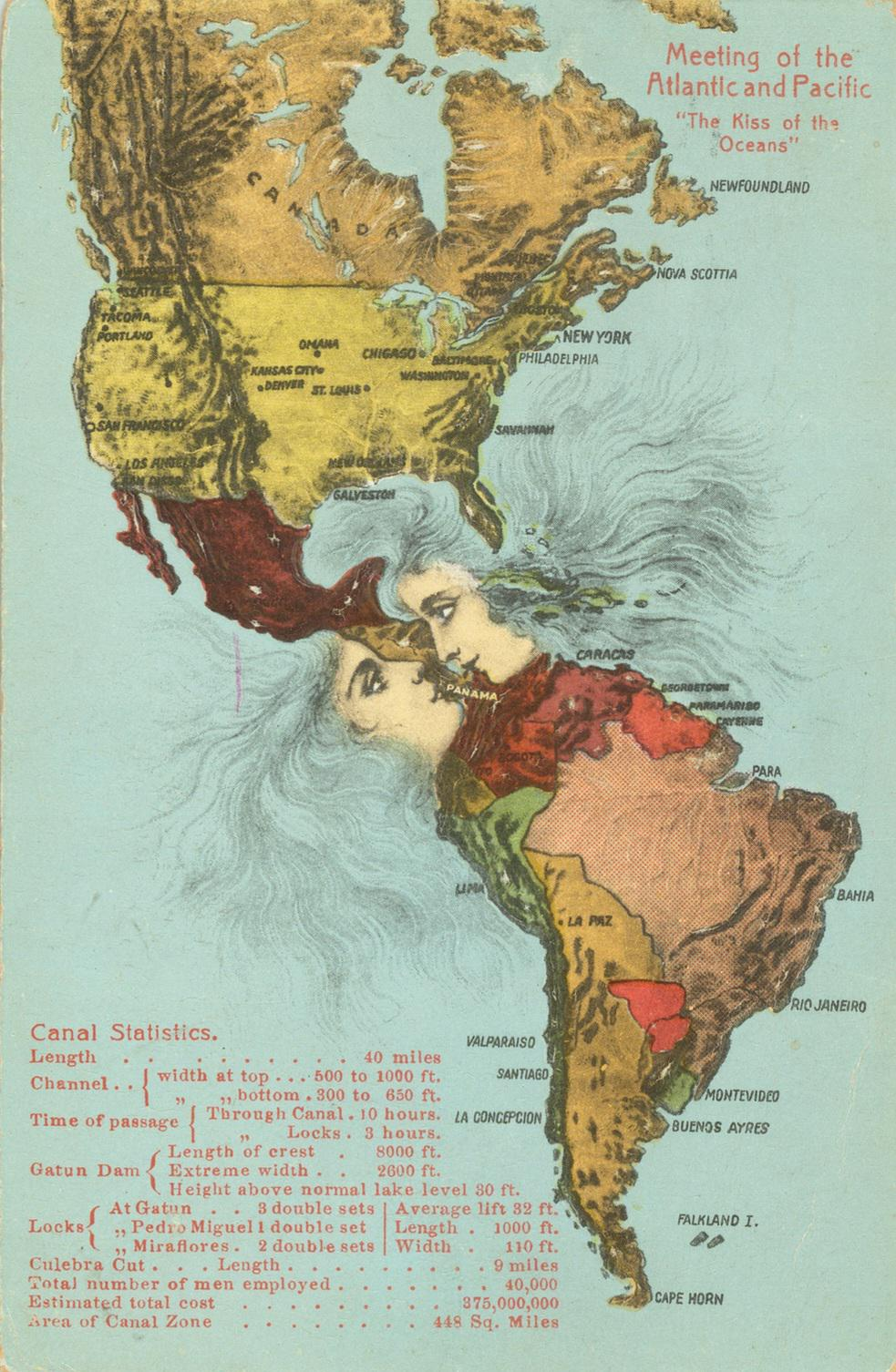
The idea of building a canal to shorten the route between the Atlantic and Pacific dates back to the early 16th century, but construction did not officially begin until 1881. The French started the project, but a combination of financial problems and catastrophic worker mortality forced them to stop in 1889. More than 20,000 workers died over that decade. The United States took over in 1904, and the canal finally opened in 1914. Panama did not regain full sovereignty over it until 1999.
The canal tour: very early, very slow, very worth it
Our tour on Thursday started painfully early. The agency pickup time was 5:20 a.m., one of the rare situations in which I actually needed to set an alarm.
To make the route easier to explain, here is the map we were looking at. We booked the partial transit, because the full one takes around 11 to 12 hours, which sounded deeply unnecessary. The half tour leaves from Panama City and ends at Gamboa, so it does not go all the way from the Pacific to the Atlantic, but it does pass through the Miraflores Locks, which is the part I most wanted to see.
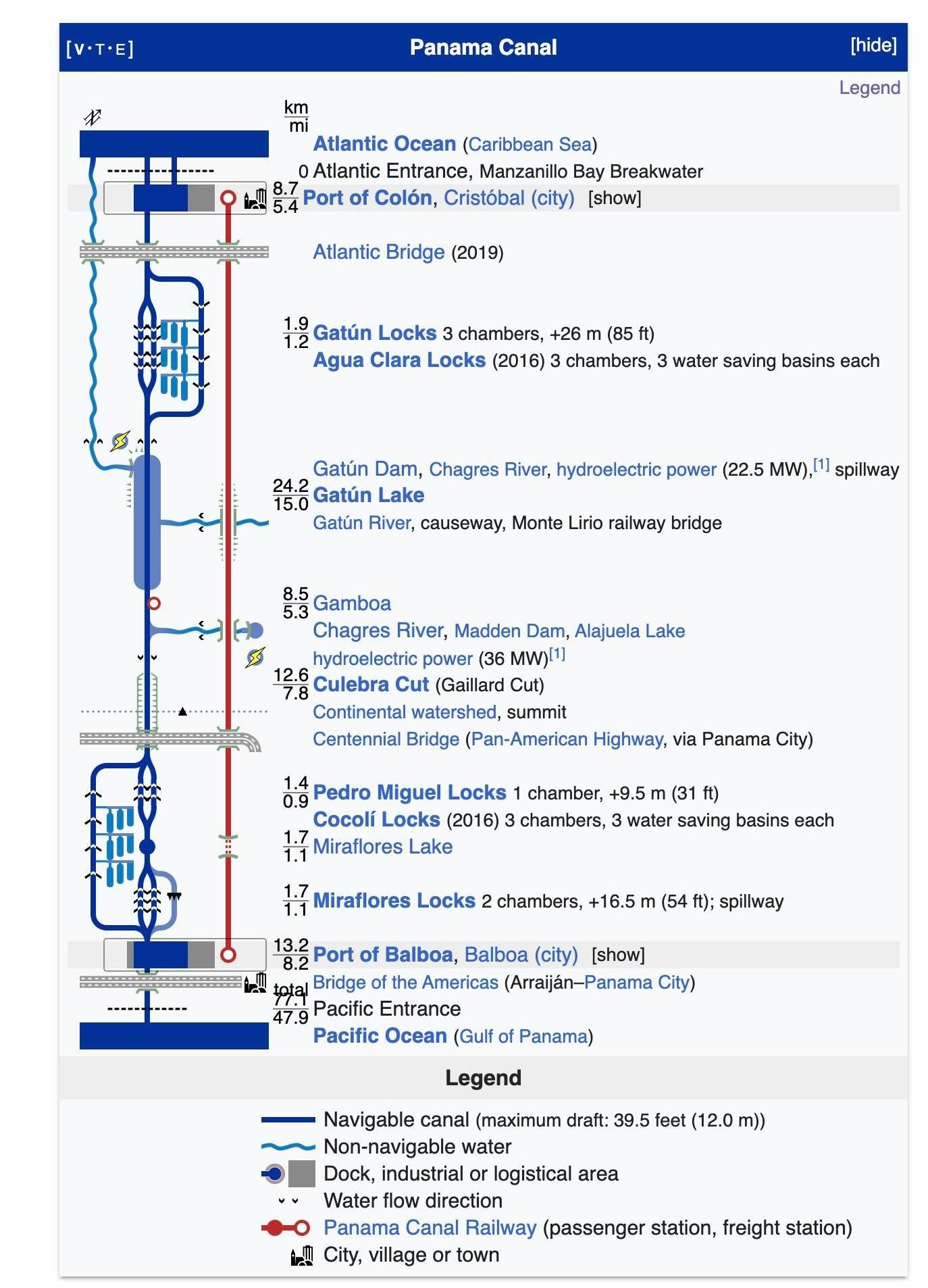
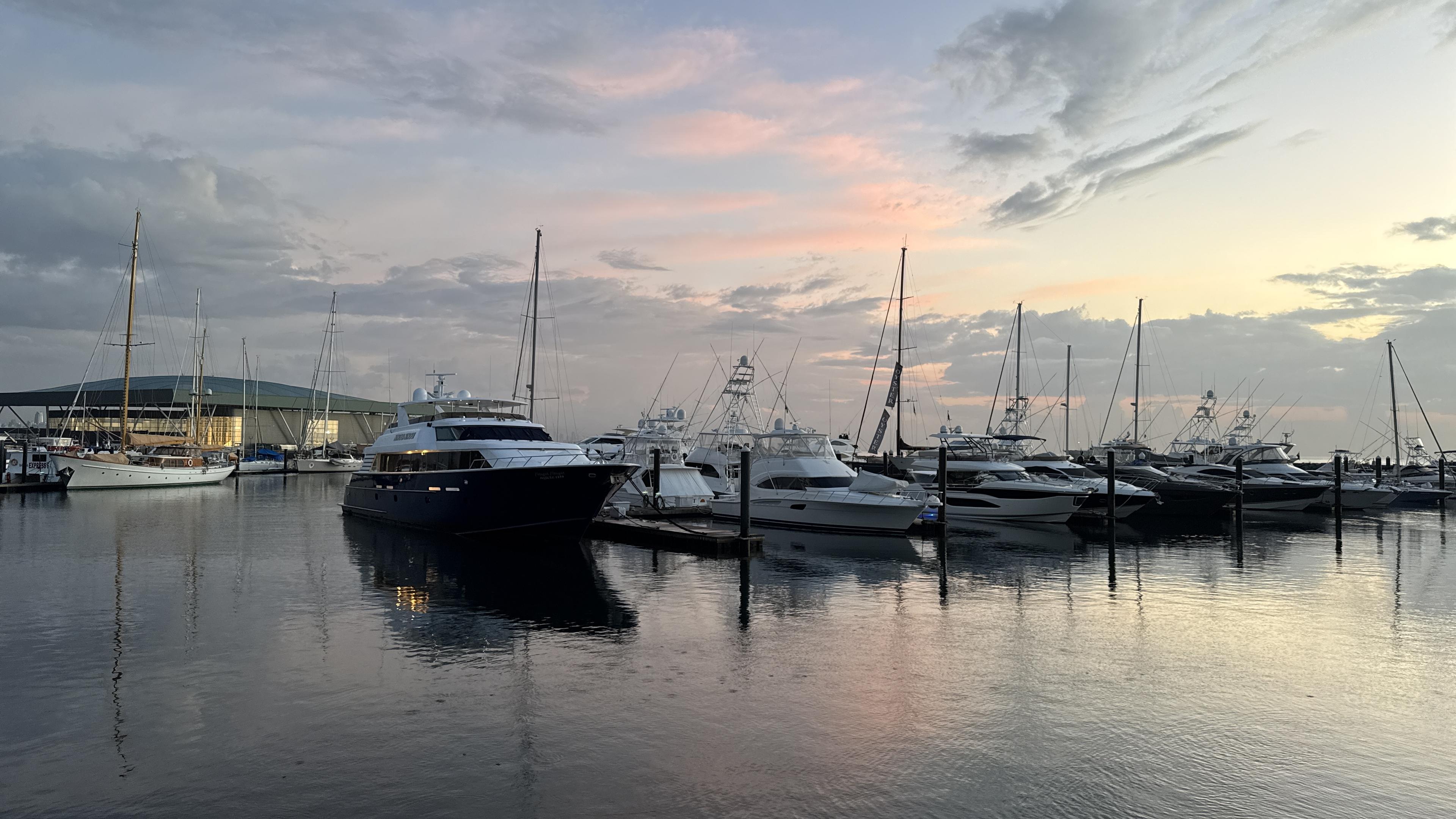
Since Panama City is on the Pacific side, our route began at the bottom of the map. When the boat left, the sun was not fully up yet, though the photos came out surprisingly bright.
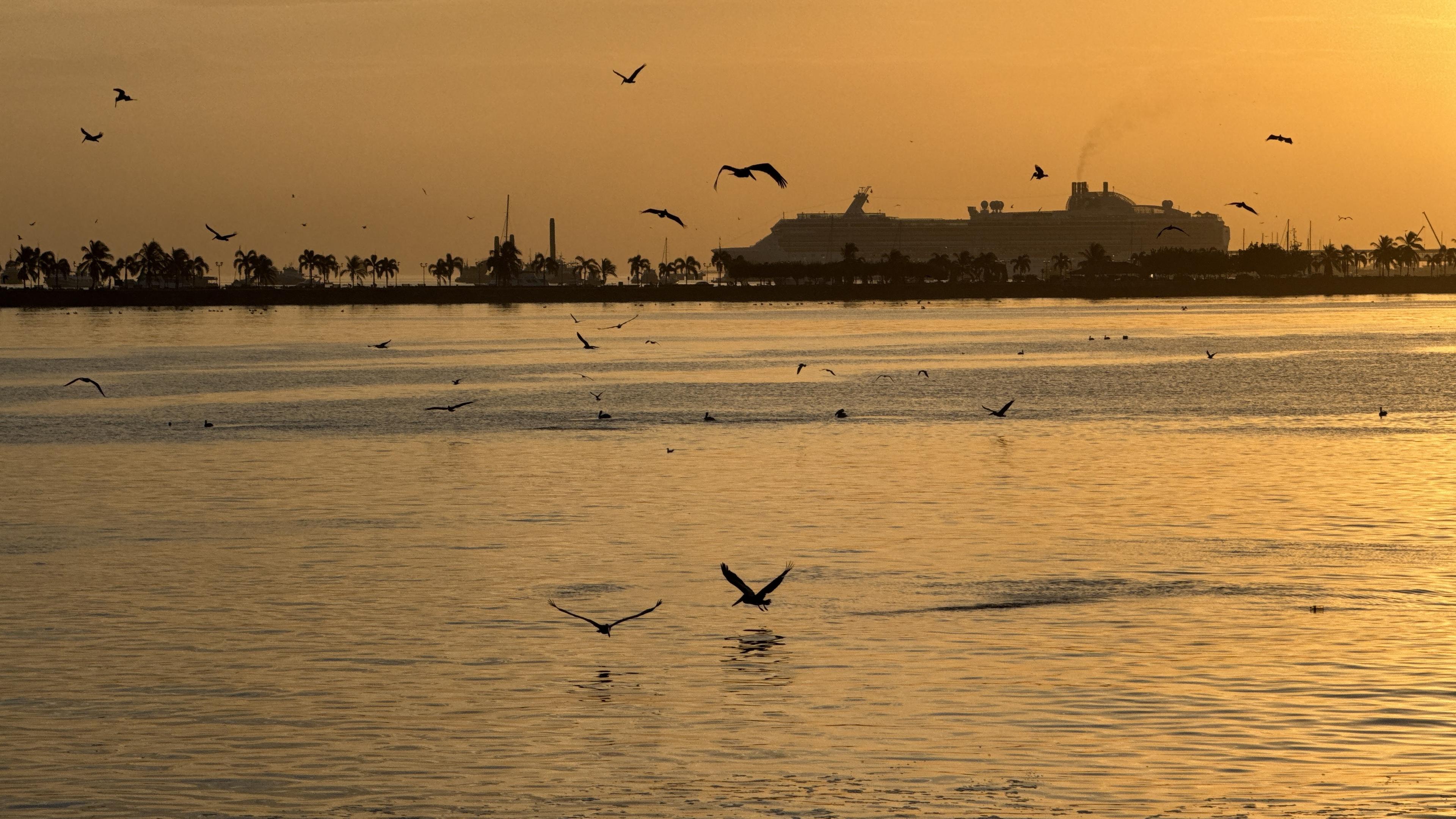
Soon after departure we caught the sunrise over the water. The light looked more like sunset than sunrise, and all along the way seabirds were diving nearby to feed.
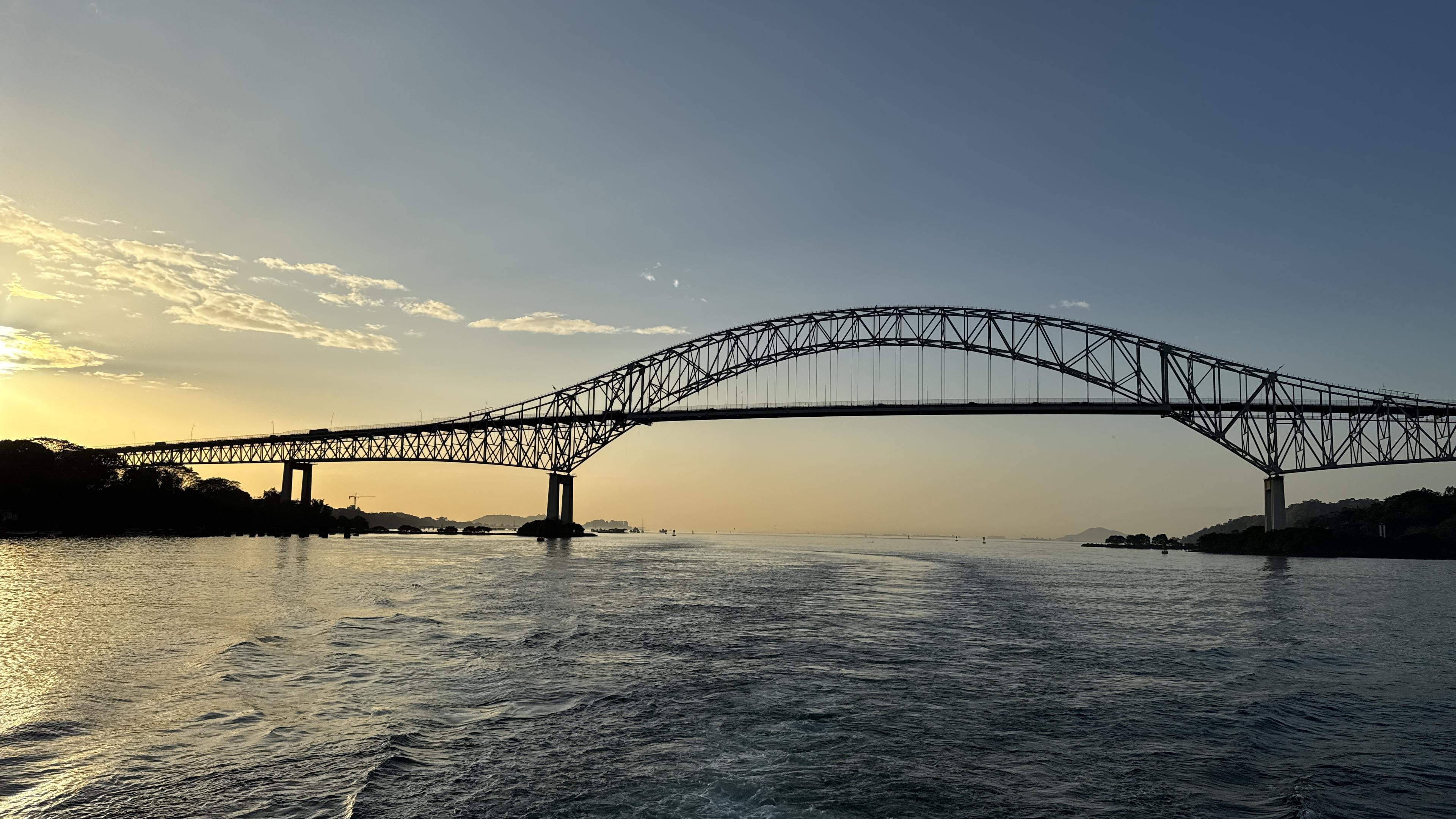
People crowded the deck when we approached the Bridge of the Americas. At one point, an older white man with absolutely no manners climbed onto a chair to get his shot and blocked everyone behind him. I waited until we were past the bridge and had a clear view with nobody in the way.
Then came the long wait. I had somehow imagined the Panama Canal as a nonstop conveyor belt of ships, moving around the clock with machine-like efficiency. It does operate 24 hours a day, but ship transit is still slow. When the canal first opened more than a century ago, only a few thousand ships passed through each year. Now the number is above ten thousand annually, but a single cargo vessel still takes hours to get through.
The canal is 81 km long. Our route used the old locks, and while we were waiting, we could see huge container ships ahead of us taking the newer locks completed in 2016.
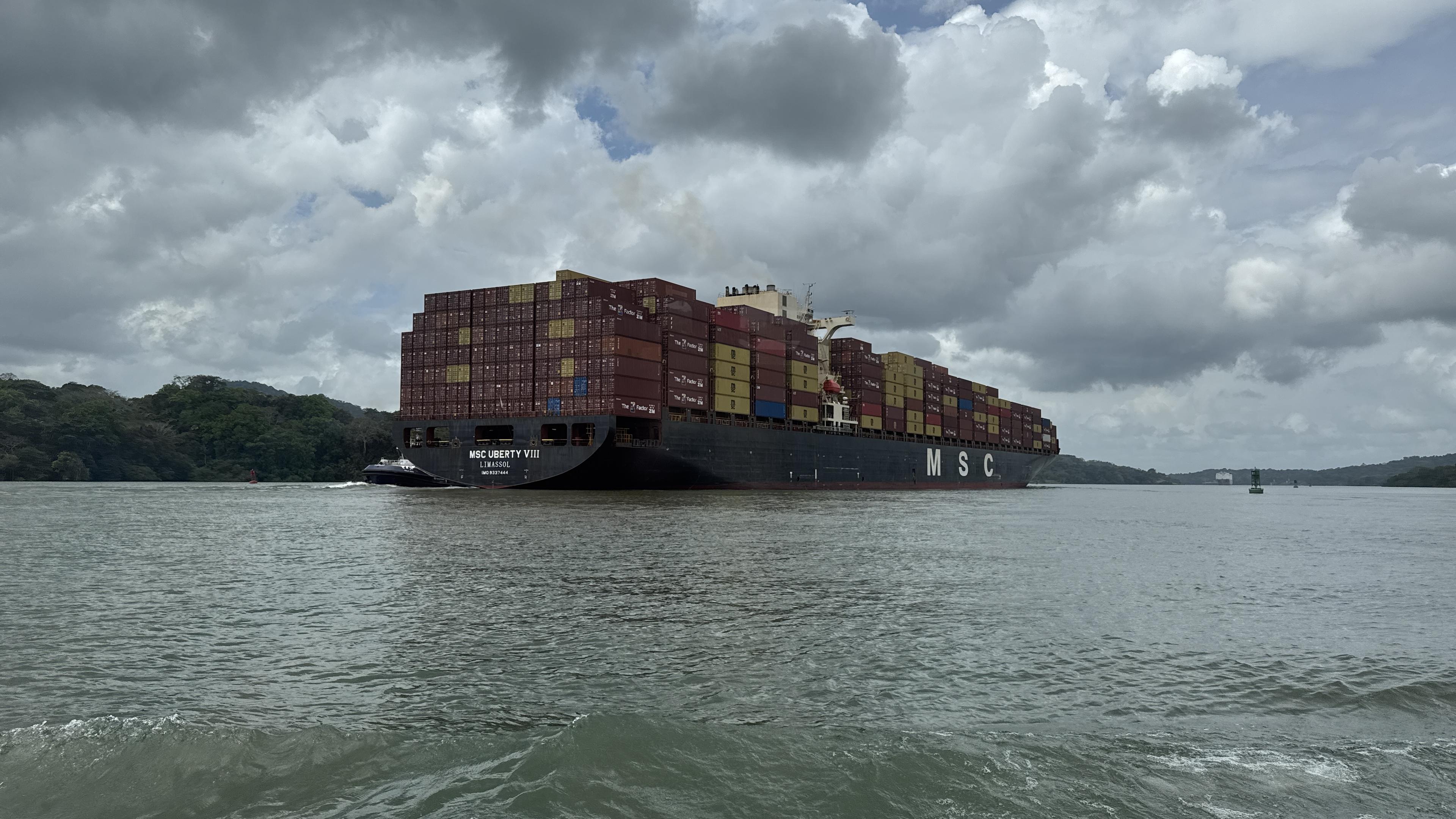
I also managed, almost by accident, to find a good spot for filming the gates closing after a ship passed through the Miraflores Locks. Watching the lock chamber raise the vessel is exactly the kind of mechanical spectacle that remains satisfying no matter how many times you have seen diagrams of it.
Cantonese food in Panama City
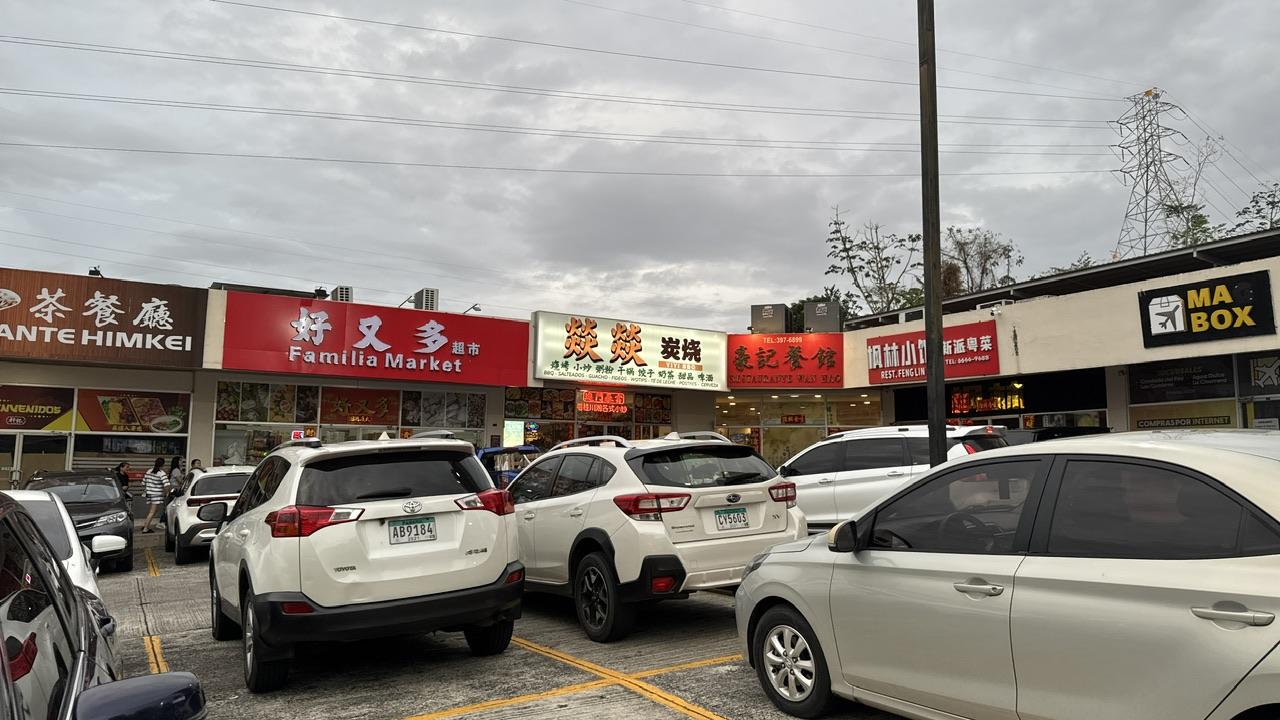
My friend is serious about food and had spent time researching where we should eat. The best meal of the trip was at a Cantonese restaurant called Hao Ji. The plaza around it instantly made me feel like I had been dropped into Markham.
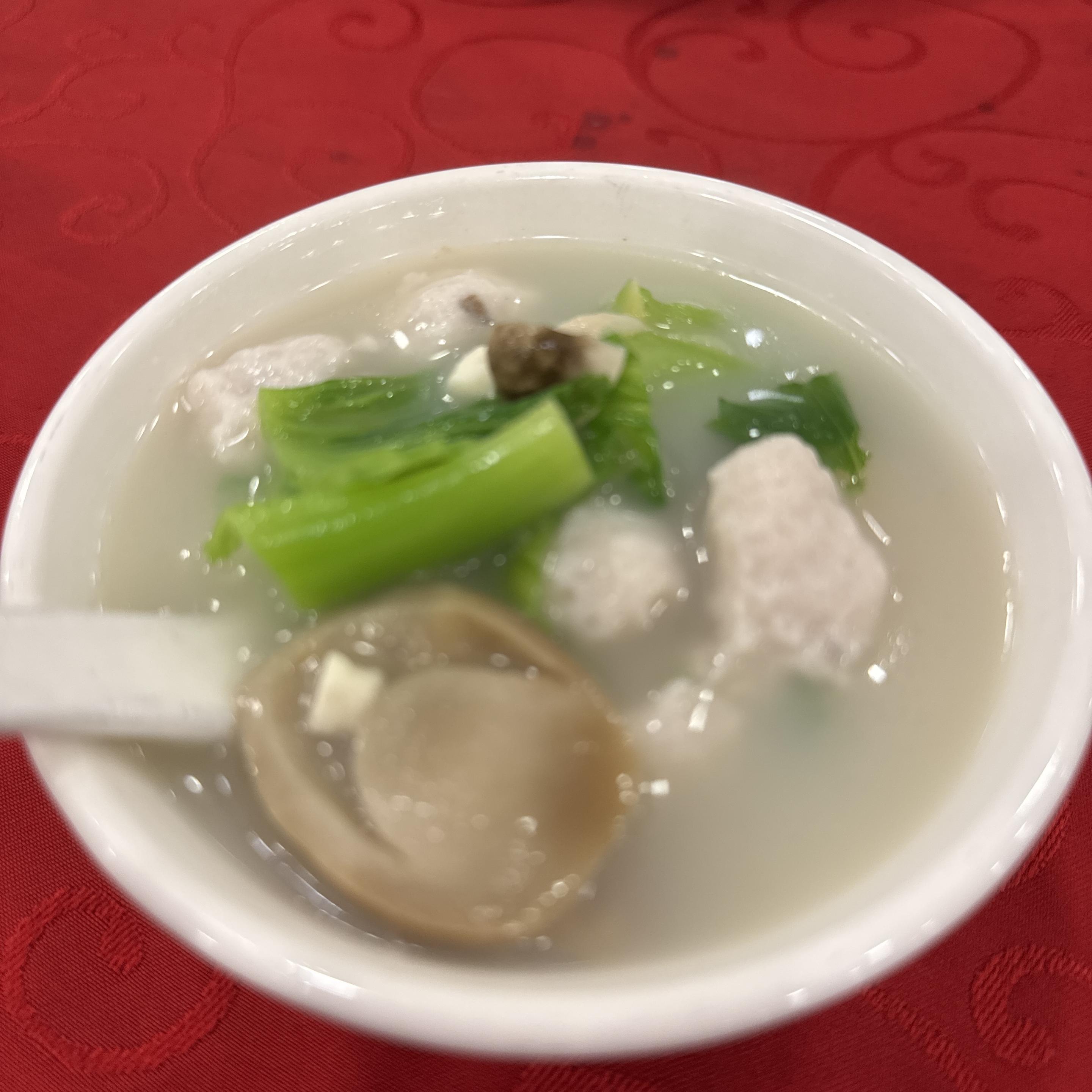
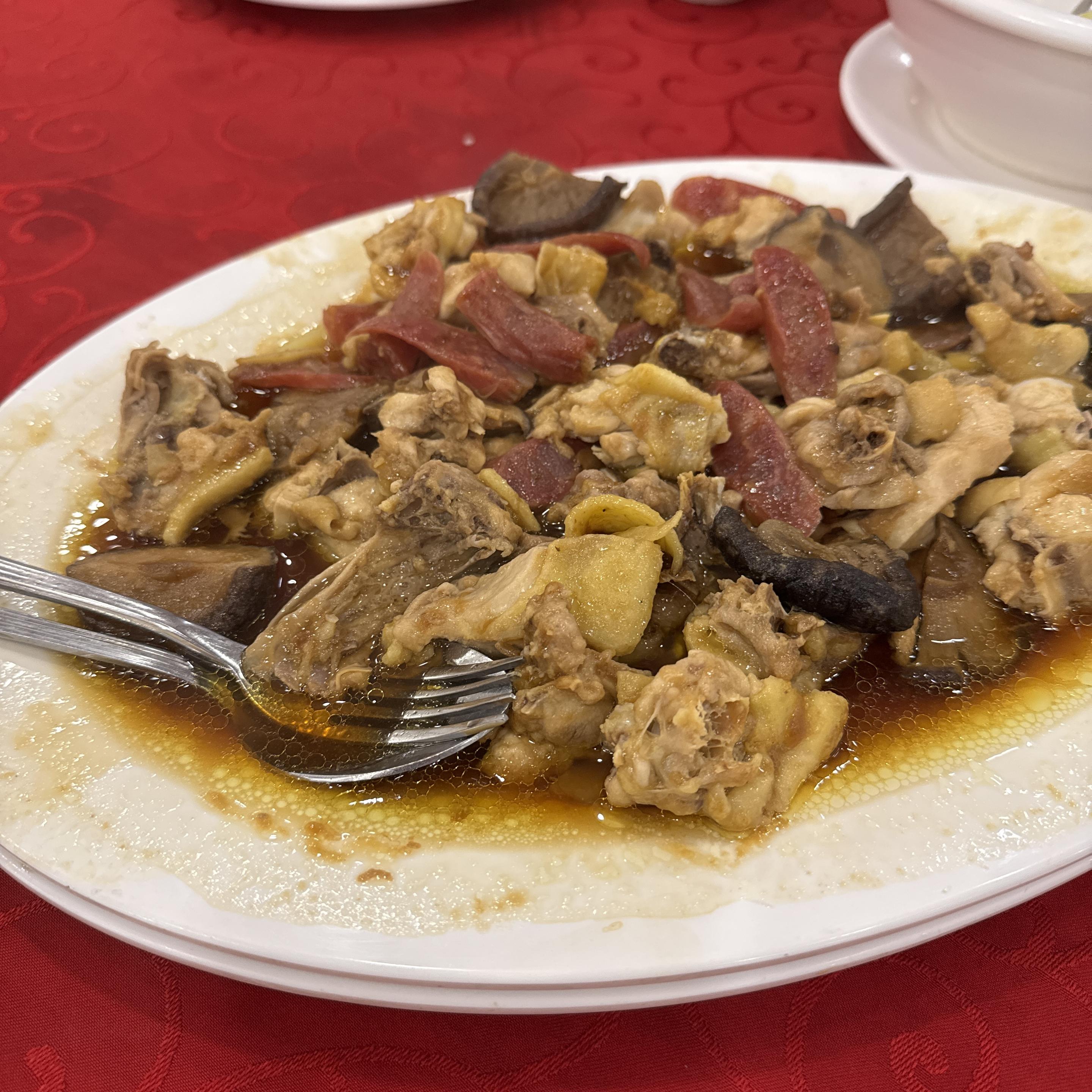
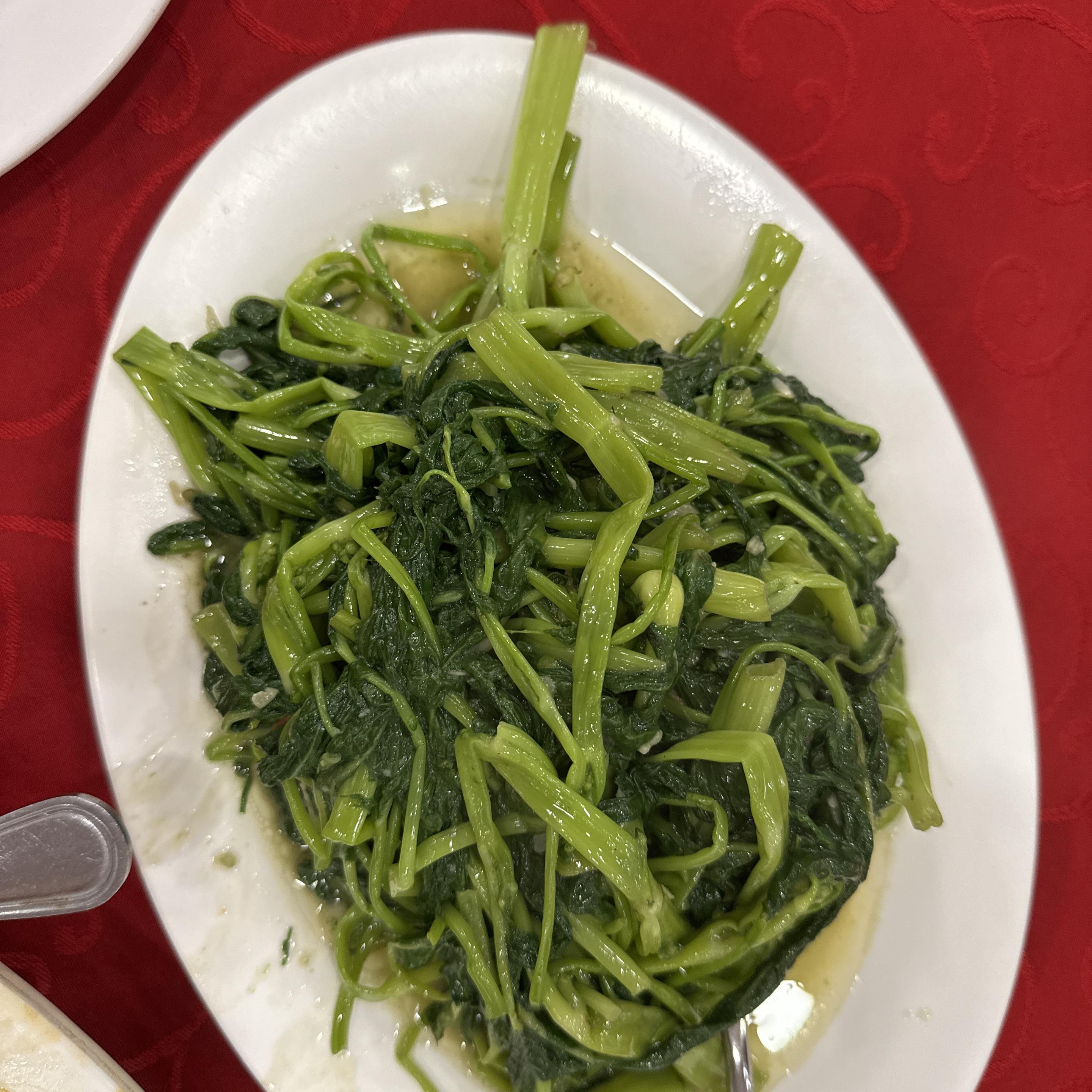
We ordered fish ball tofu soup, steamed local chicken with mushrooms and Chinese sausage, and water spinach with fermented bean curd and shredded peppers. Everything was excellent, and we all ate far too much.
On the first day we also had dim sum at a place called Double Happiness. The congee and dim sum were both very good, and my favorite item was a savory fried dough called xian bo cheng. Now that I am back in Toronto, I kind of want to see whether anyone makes it there.
More wandering, more humidity
At one point, after weaving through downtown towers and getting thoroughly defeated by the heat and humidity, we ducked into a SOHO building for air conditioning. I am not even sure the building was fully open yet. Looking at the directory in the lobby, we were startled to find Tim Hortons listed among various luxury brands and immediately decided we had to track it down.
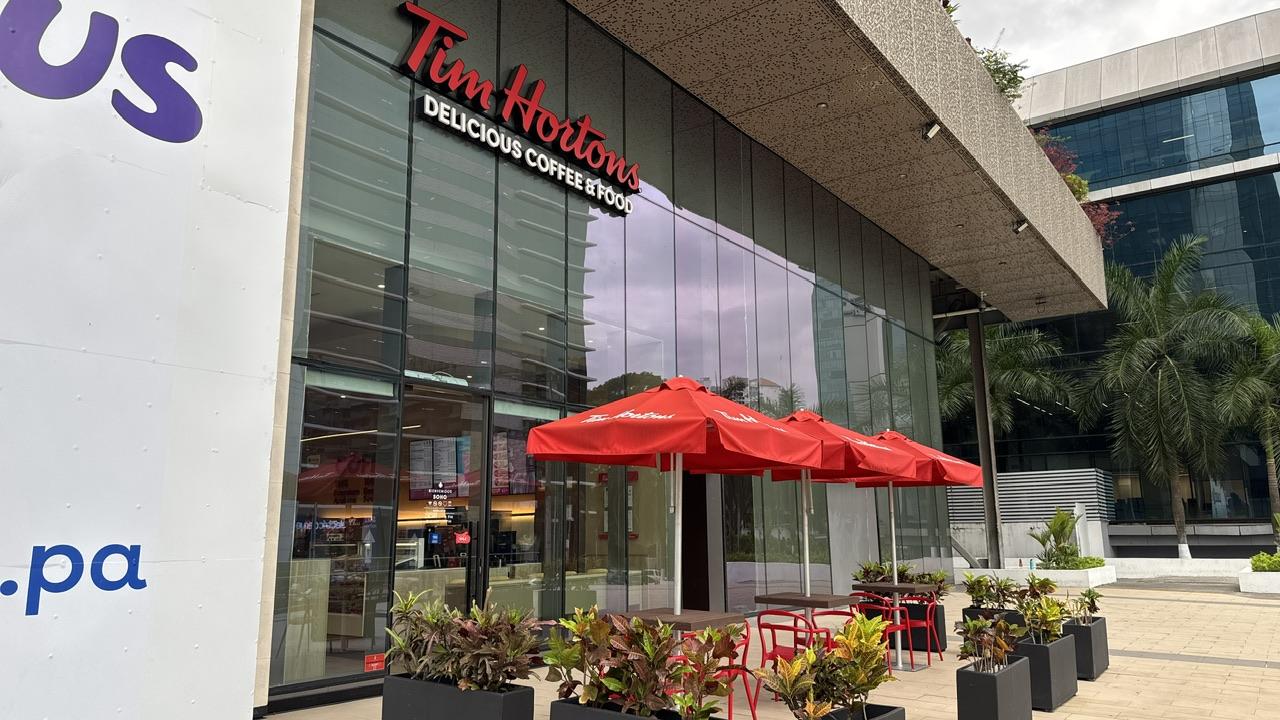
We searched around and could not find it, so my friend asked the front desk. Her husband then said, “The way we’re hunting for Tim Hortons must be making them think it’s some kind of elite luxury brand.”
We dutifully took photos, but none of us was brave enough to actually drink Tim Hortons' dishwater coffee.
My friend said Panama City's humidity reminded her of Guangzhou. I have not been to Guangzhou in many years, so my memory is hazy, but when I got back I looked it up. Compared with Panama City, even Guangzhou comes off easy: Guangzhou's mugginess is concentrated in summer, while Panama City keeps that same swampy intensity all year.
After visiting, I felt even more convinced that choosing Costa Rica for winter was an excellent decision.