My mother and Li Sao next door have made peace. When word reached me I could hardly take it in. In my mind those two had spent decades stacking up grievances against each other, and that kind of debt doesn't get settled inside one lifetime.
For years, though, it had been otherwise. When I was four or five, Li Sao was forever carrying things across to our house — vegetables in season, fried dough sticks still hot from the oil, offcuts of cotton cloth left over from her sewing. My mother kept a mental account of it and sent back whatever she had that was worth sending. The two of them were as close as one person.
What broke it was almost nothing.
During the busy weeks of harvest, when every adult was out in the fields, I played outside the gate with Huawei, Li Sao's son, a year older than me. We got carried away, and one of us — I still don't know which — proposed setting light to the pile of firewood behind our house. It caught and climbed and only then did we understand what we had done, and stood there howling. My father happened to be coming back from the fields. He saw the fire, decided the older boy must be behind it, picked Huawei up and swung him once towards the flames to frighten him.
A woman who was friendly with Li Sao saw this and carried the story back to her, and improved it on the way. Li Sao came home in a fury and went straight at my parents. In the middle of it everything ugly and wounding came pouring out at once.
After that the two households dropped to freezing point. Once people have quarrelled, somebody always wants to even the score.
Another time, Li Sao's old hen got into our yard to steal feed. My mother was angry enough to wring its neck and stew it. I stopped her: we are neighbours; if we really eat her chicken she will stand at her gate cursing us every day and we will get no peace either. She saw the sense in it and let the bird go.
Then Li Sao's family built a new house, and to spite us she aimed the drainpipe squarely at our kitchen. In heavy rain the water came down the pipe and into the room, and we carried it out basin by basin.
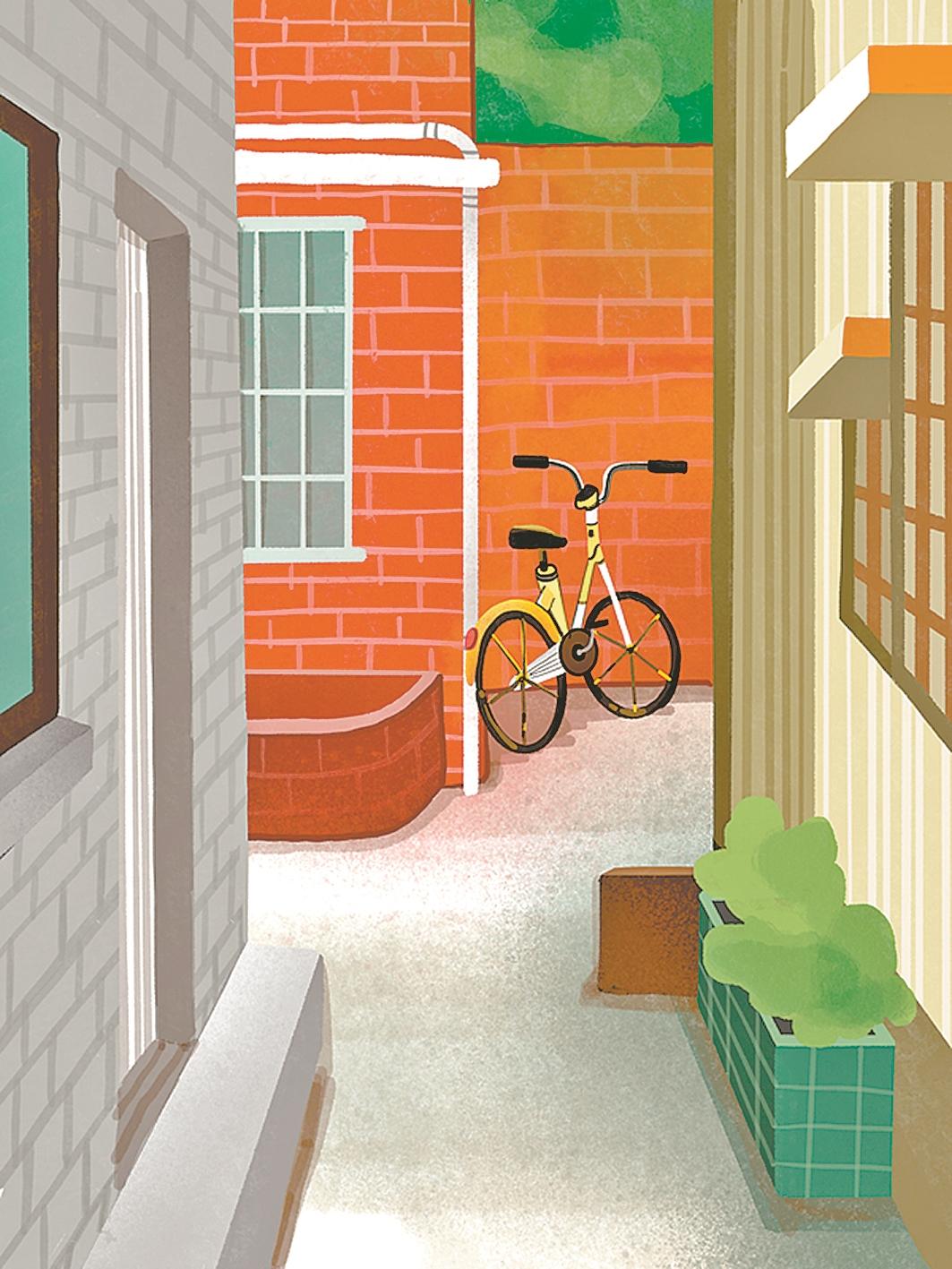
More than ten years passed. I married and put up a building taller than hers. My mother told me to point our drainpipe at her house as well. I didn't. So my mother bricked up a wall, a metre and more high, on the kitchen wall facing Li Sao's kitchen. Why, I asked her. "This wall is against thieves," she said. "With this here, she can't get across to steal from us."
Just after our house was finished, Li Sao let it be known around the village that she was going to pull her building down and start again. My mother gave as good as she got: if she knocks hers down, we'll add another storey. In the end Li Sao knocked nothing down and we built nothing higher. Life went on, awkwardly, and I assumed the grudge would be carried into the ground.
Then, at some point I never noticed, they quietly made it up.
I asked my mother how. She said that in the year my eldest brother fell from the roof, Li Sao came over every day to ask after him — my brother, gone now, had always got on well with her. At first my mother wouldn't speak to her. But the visits kept coming, and eventually she felt too uncomfortable about it to stay silent, and greeted her first. Li Sao answered her with "Aunt" — and with that one word the whole decades-long freeze was over.
"Since you could make it up in the end," I said, teasing her, "why quarrel so viciously at the time? You acted as though you never wanted to set eyes on each other again."
My mother looked a little embarrassed. "We were both in a temper, that's all."
"Well, you'd already done the temper. You might as well have stayed enemies for life."
Once the two of them were speaking again, my mother knocked the wall down.