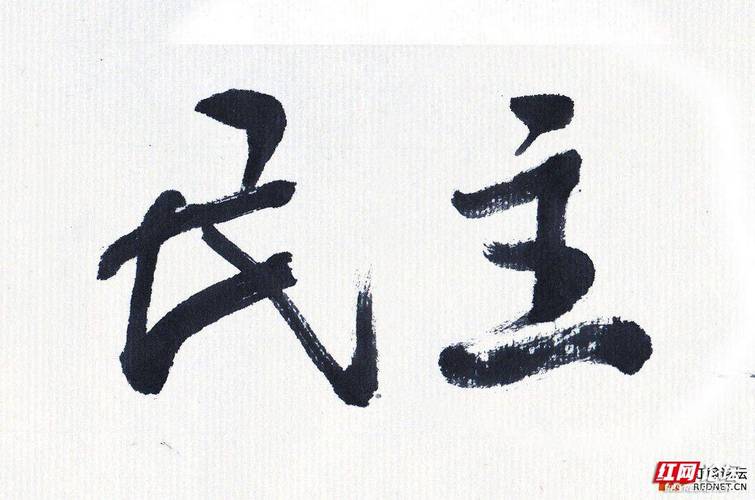
The road to democracy has never been smooth. It is a thorny path, marked by setbacks, distortions, and unfinished struggles. Even now, after so much historical change, humanity is still far from reaching the ideal often associated with democratic life.
The word itself carries a long history. In modern English it appears as democracy, a term inherited from the political vocabulary of ancient Greece and Rome. It is commonly traced to the Greek roots demos—the people—and kratos—rule or power. In the Mediterranean world, the Athenians gave early shape to the idea, and their form of participatory democracy is often treated as one of the earliest examples of citizens taking part in public affairs. At its center stood the citizens' assembly, where citizens could participate directly, though slaves and women were excluded. Important officials such as generals were elected, while many other public offices were filled by lot. This was democracy in one of its earliest and most limited forms.
Over time, the meaning of democracy expanded and became more systematized. In modern political thought, it is generally understood as a system in which public affairs are managed according to equality and the principle that the minority yields to the majority, within a defined social and political framework. Under such a system, ultimate sovereignty belongs to the people rather than to lawmakers or governments.
Different democratic states may operate differently, but some basic principles remain constant. Democracy is a form of government in which power and civic responsibility are exercised either directly by all citizens or indirectly through representatives freely chosen by them. It is not merely a political label; it is a way of institutionalizing liberty. It rests on majority rule, but at the same time it must protect the rights of individuals and minorities. A democratic state cannot simply submit everything to the will of the majority. It must also guard against the concentration of supreme power in a central authority, distribute authority across regional and local levels, and make government as open and responsive to the people as possible.
Reflecting on these definitions forces a more serious question: if democracy sounds so reasonable in principle, why is it so difficult to realize in practice? What, exactly, obstructs it? What restrains human action when societies claim to be moving toward democratic life?
One answer becomes unavoidable after even modest reading on the subject: democracy cannot flourish where the legal system is weak, incomplete, or merely decorative. Modern political practice and scholarly discussion have repeatedly pointed toward the same conclusion. A sound legal order is not an accessory to democracy; it is one of its basic conditions.
This point has been stated with particular clarity in an essay titled How Far Are We from Democracy?, which argues that the visible form of democracy is a body of effective laws and workable institutions. That observation cuts deeper than the common habit of blaming social corruption solely on immoral officials or on the failures of a ruling party. Public anger often stops at condemning greed, dishonesty, or abuse of power, yet rarely asks whether the surrounding legal and institutional environment made those abuses easier, safer, and more likely.
That is the more unsettling thought: corruption is not explained by private morality alone. If procedures are hollow, if laws exist only on paper, if discipline is theatrical rather than binding, then personal vice is no longer the whole story. In such conditions, officials may indeed be guilty, but they are also products of a system that lacks meaningful restraint and supervision. Without strong checks, without enforceable rules, and without a democratic environment capable of public oversight, power slides easily into abuse. By the time punishment arrives, the deeper cause may still remain untouched.
This is why democracy and the rule of law are so often discussed together. They are not separate achievements that happen to coexist; they support and limit each other. Democracy gives law its spirit, while law gives democracy a stable form. A democracy detached from law cannot be considered genuine democracy. In the same way, legal structures without democratic substance become empty mechanisms. Only a healthy legal system can turn democratic ideals into political reality.
But defective law is not the only obstacle. Another difficulty emerges when economic power grows strong enough to bend politics in its own direction.
An essay published in the sixth issue of Tianya magazine in 2007, under the title How Capitalism Kills Democracy, opened up this question in a striking way. Written as a response to an article that had appeared in the American magazine Foreign Policy, it challenged a belief that many people treat almost as common sense: that capitalism and democracy naturally advance together, as twin pillars of prosperity and freedom, and that if one grows, the other will surely follow.
The argument rejected that optimism. To make its case, it pointed to examples such as Chrysler's global layoffs and developments in Japan, where many companies abandoned lifetime employment, cut staff, and shut down unprofitable production lines, contributing to widening income gaps. These cases were used to question the assumption that capitalist success necessarily strengthens democratic life.
The central question was blunt: why has capitalism advanced while democracy has weakened? The answer offered was equally blunt. As companies compete more fiercely for global consumers and investors, they pour increasing amounts of money into lobbying, public relations, bribery, and kickbacks in order to shape laws and regulations in their own favor. Once that happens, politics becomes a contest for influence dominated by organized wealth, and the voices of ordinary citizens are drowned out.
Under those conditions, companies begin, in effect, to write rules for themselves while also being asked to carry a kind of social or moral responsibility. But the purpose of capitalism is to maximize benefit for consumers and investors. Corporate managers are not authorized to balance profit-making with the public good in any broad democratic sense. Drawing that boundary should be the task of democracy, because democracy is supposed to represent the public.
Seen from this angle, the modern corporation under capitalism becomes more than an economic actor. It turns into a structural risk to democratic development. Democracy exists to achieve things that individuals cannot accomplish alone. But if corporations use politics to strengthen or preserve their competitive position, or if they assume social roles they are neither qualified nor empowered to fulfill, then democracy cannot do its own work. Society, in that case, struggles to pursue economic growth while also addressing social problems.
This way of thinking places democracy and capitalist corporate power in visible tension. As one expands unchecked, the other may retreat. Democratic progress then becomes slow, unstable, and vulnerable to capture.
That critique is not useful only as a judgment on distant systems. Its value also lies in comparison. The behavior described in such discussions—corporate influence over policy, economic power translating into political weight, widening inequality following restructuring and layoffs—can resemble patterns visible in many societies. For that reason, criticism aimed at capitalism can also function as a mirror, helping people recognize the defects nearer to home.
So the obstacles on the road to democracy are not mysterious. Weak legal institutions, the absence of effective restraint and supervision, and the growing power of corporate interests over public life all stand in the way. These are not minor imperfections. They are structural barriers. And as long as they persist, the democratic society humanity has imagined for centuries will remain difficult to build.